The Open Door Strategy: Security, infrastructure improvements sought as Norris holds Media Day ahead of May bond issue vote
The Open Door Strategy: Security, infrastructure improvements sought as Norris holds Media Day ahead of May bond issue vote
By Tyler Dahlgren
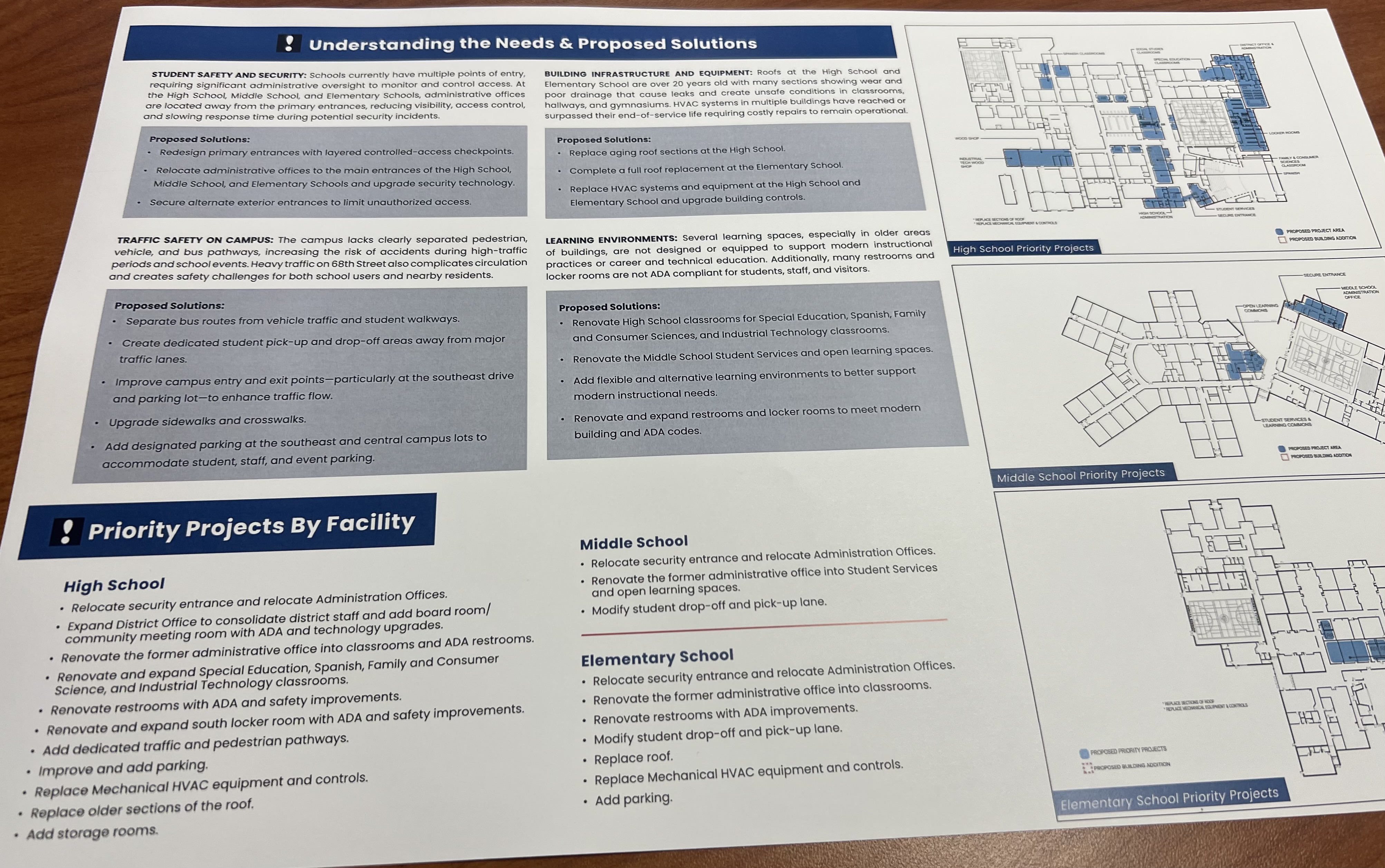
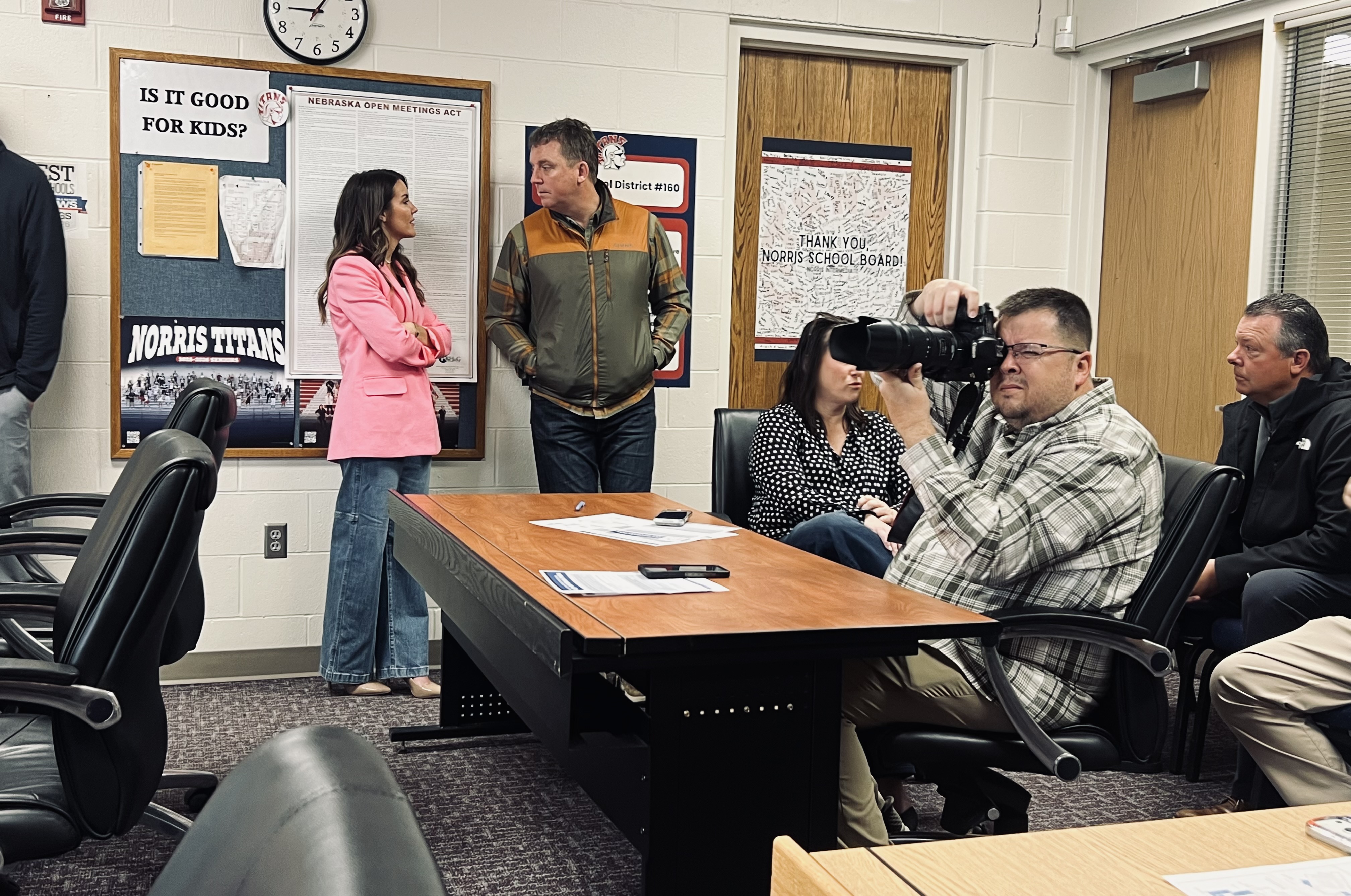
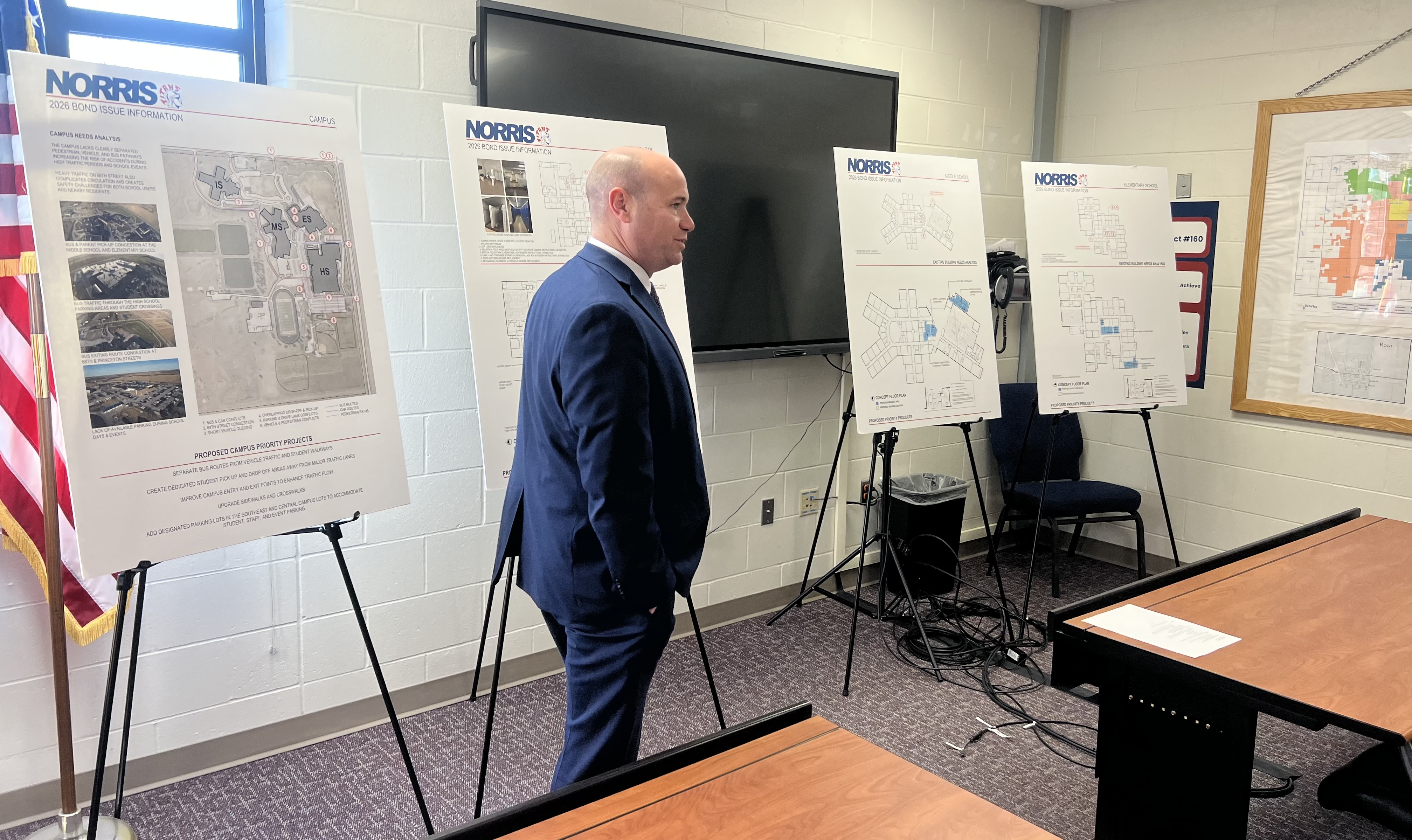
Norris School District 160 superintendent Dr. Derrick Joel greeted media members and stakeholders at the door the morning of Friday, Feb. 27, leading the group to a conference room adorned with blue prints and handouts.
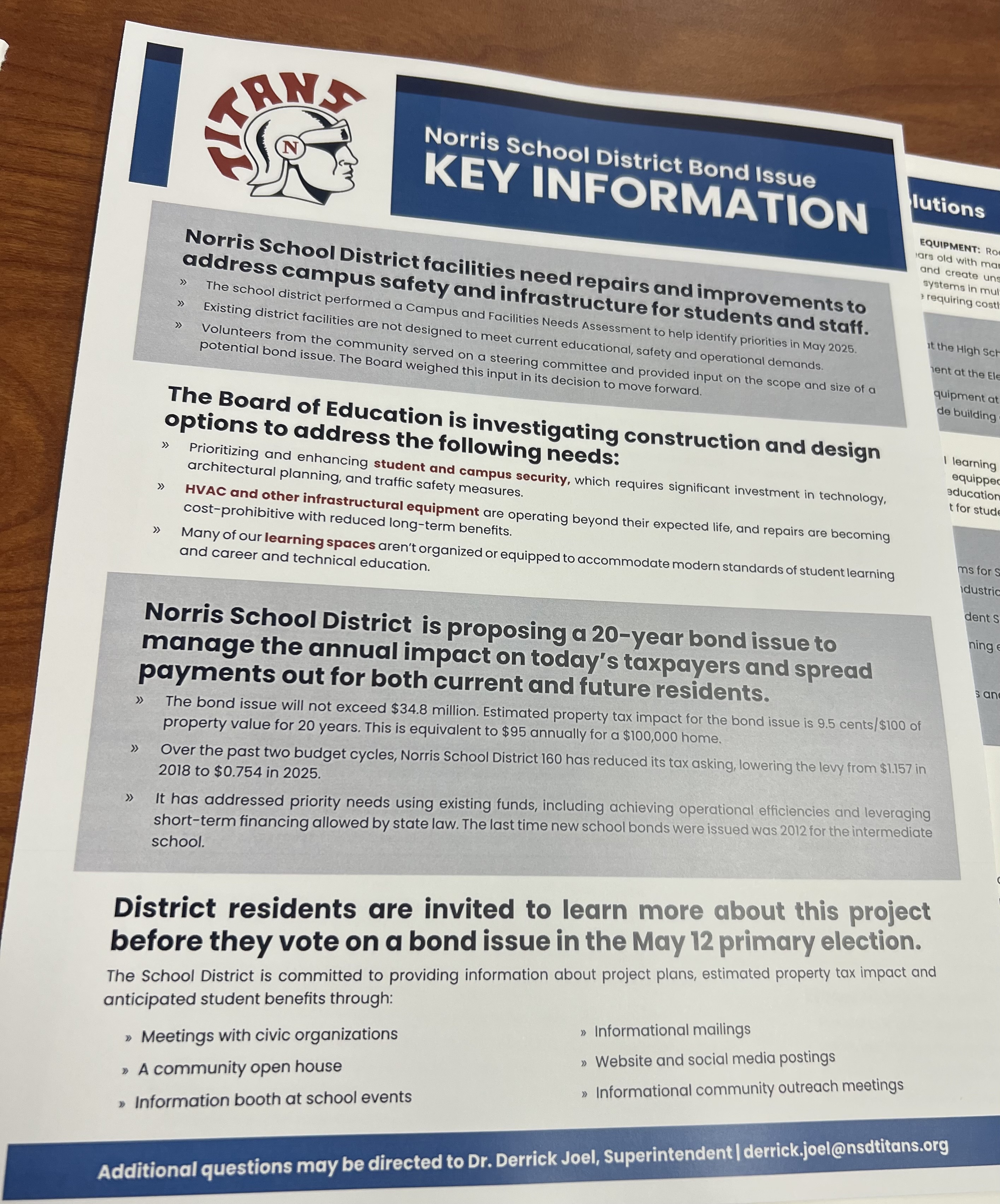
The highly-regarded district 25 miles south of Lincoln is proposing a $34.8 million, 20-year bond issue to update infrastructure and to bring their three buildings up to state safety and security standards. By opening the doors for guided tours and holding a candid press conference months before the May primary election, Norris is betting on the simple premise that transparency is the best antidote to skepticism.
They’re taking an open door approach with a community that has always loved its Titans.
For the casual observer, the Norris campus doesn’t seem all too shabby. And, in most regards, it’s not.
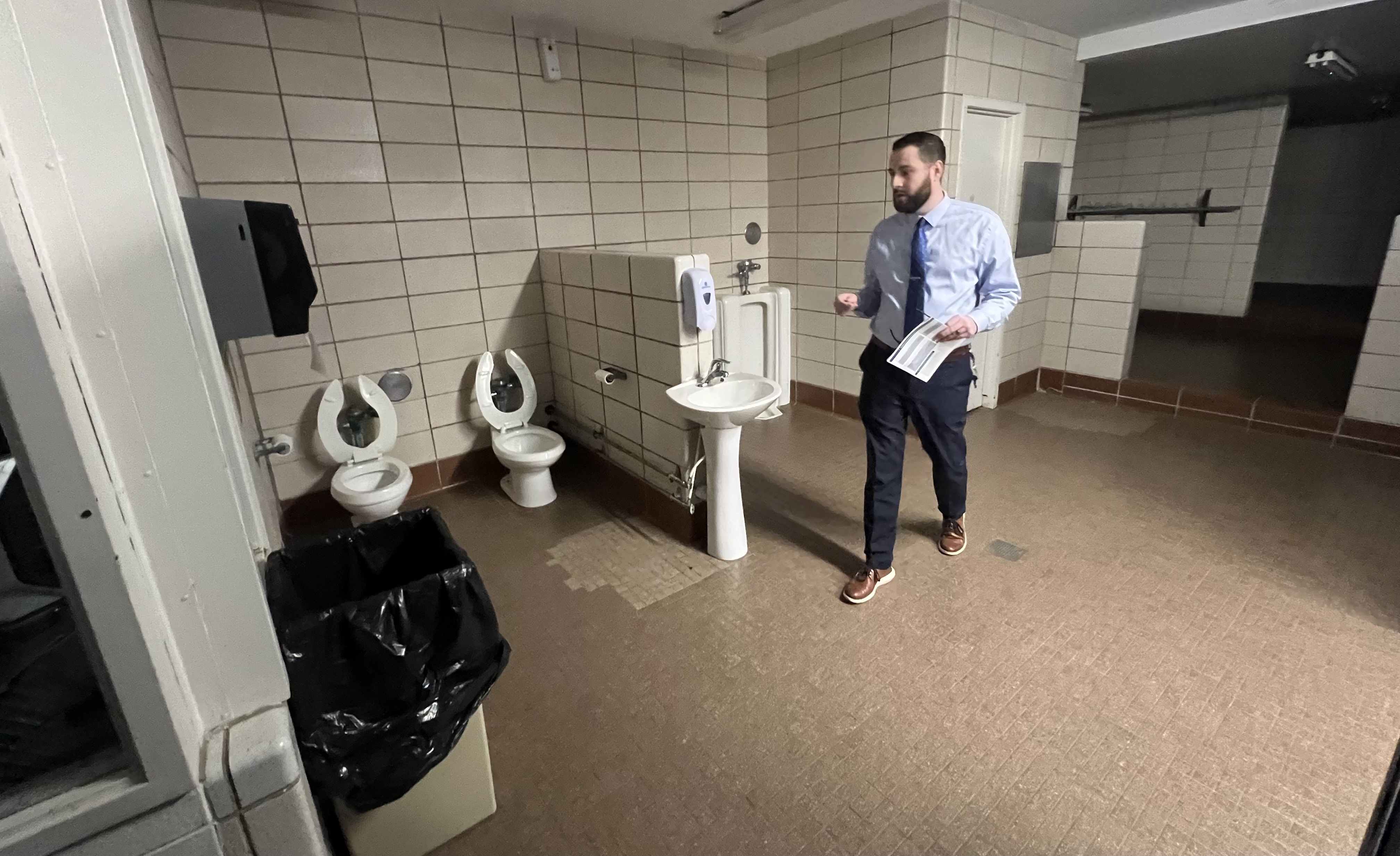
"We look pretty good," admitted School Board Treasurer Rhonda Burbach, a former teacher who retired a decade ago. "But if you peel back the layers, there’s a lot of problems."
Those layers peel all the way back to the infamous 2004 Hallam tornado, a pivotal moment in the district’s history. The storm put the district’s buildings on a synchronized depreciation schedule. Today, the HVAC equipment, roofs, and mechanical controls installed during the post-tornado recovery have all reached, and, in many cases, surpassed, their 20-year life expectancy.
"We have mechanical equipment and infrastructure that has not only reached its age but has gone past," Dr. Joel explained during the press conference. "Because we have partnered with several good companies over the years, we’ve continued to maintain our equipment, but we have reached a time where it needs to be replaced."
The proposed $34.8 million bond isn’t an expansion in the traditional sense, but an infrastructure rescue mission. The scope focuses on three critical pillars in safety and security, building infrastructure, and modernized learning environments.
Perhaps the most compelling argument for the bond is the evolution of school safety. In 2004, school design prioritized internal circulation, placing administrative offices in the center of the building. In 2026, that design is a liability.
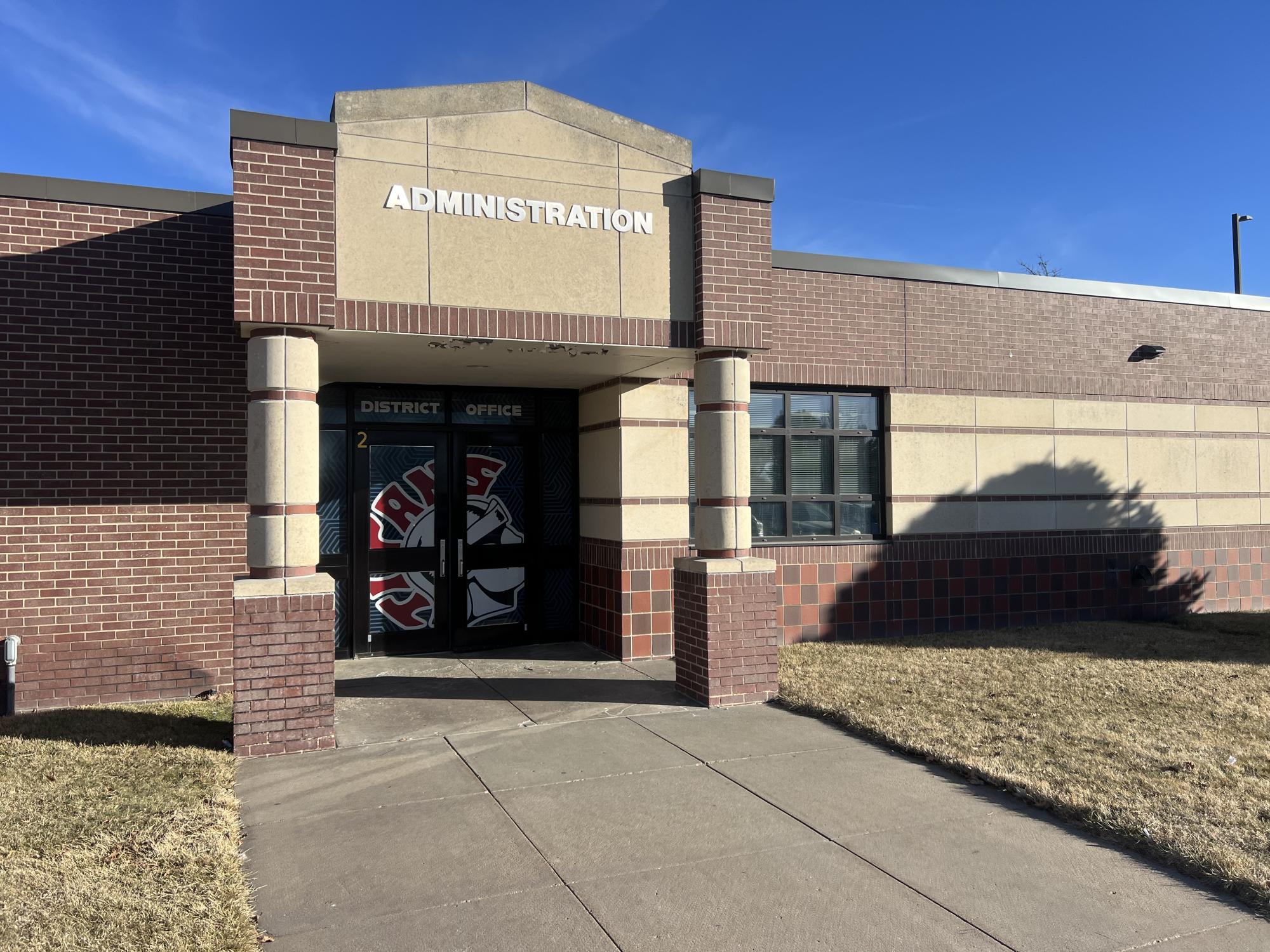
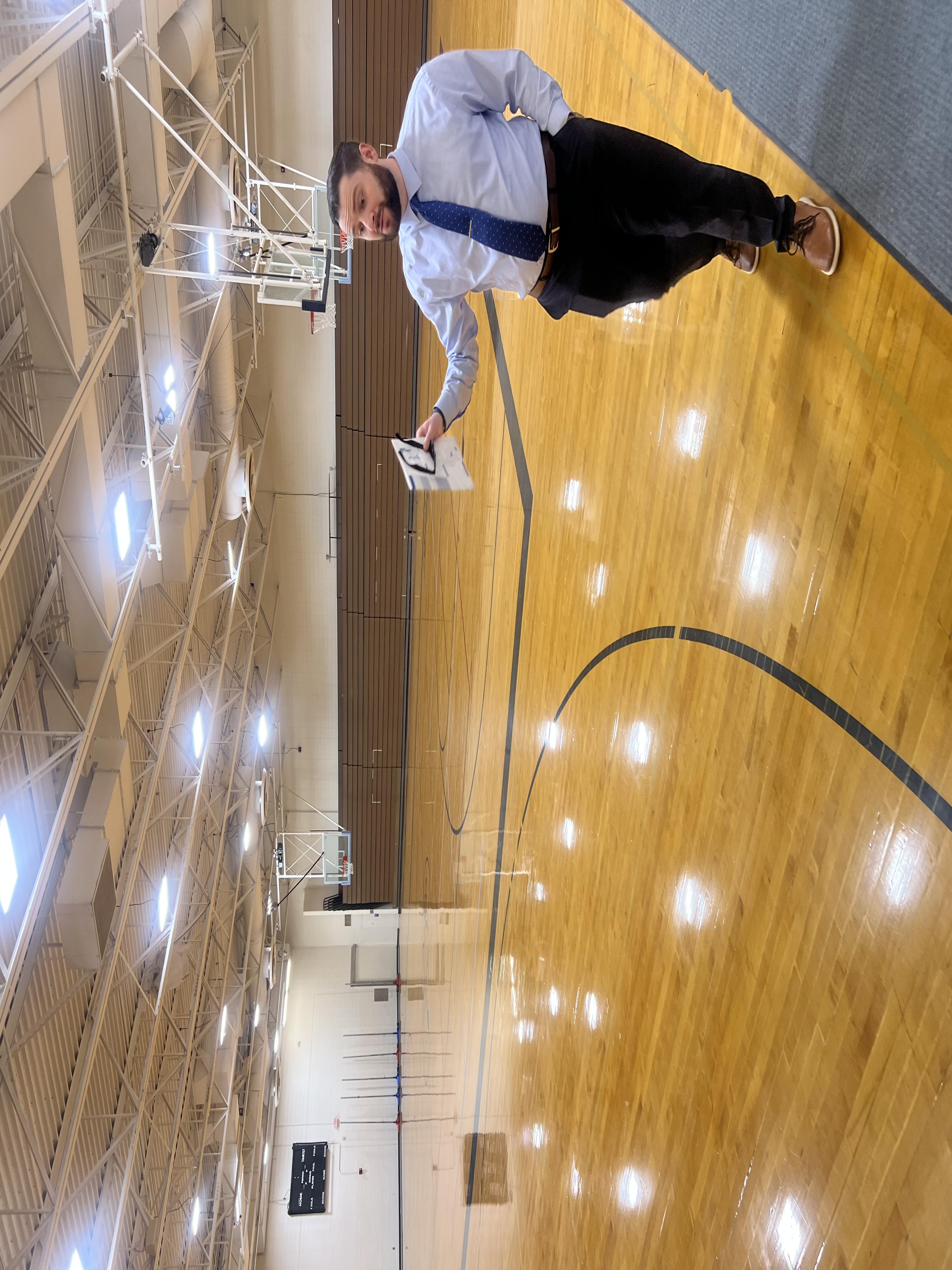
Currently, several Norris buildings have long runways between the front door and the office. The bond, if passed, would relocate administrative offices to the primary entrances, creating layered controlled-access checkpoints. It’s a move from being secure-on-paper to secure-by-design, said Joel.
"The modern standards of school safety call for a defined main entrance where there is a vestibule where the office gets eyes on people coming in," Joel continued. "They get buzzed in, they go right into the office and not directly into the building."
This safety focus extends outside the walls to the campus’s traffic flow. The school is a hub, often bustling with activity from sunrise to sunset. Yet, the current layout forces buses, student drivers, and pedestrians into a congested dance. Joel noted that the district currently has to stop traffic for seven minutes every afternoon just to allow buses to exit, a temporary "band-aid" for an infrastructure flaw that isn’t going anywhere. Bad pun intended.
One of the most striking aspects of the Norris approach is how they arrived at the $34.8 million figure. Rather than the administration handing down a number, they assembled a 80-person Community Steering Committee to find what Joel called the “bond appetite." The committee took a list of needs exceeding $40 million and whittled it down to the essentials.
"The ceiling on that feedback was $35 million," Joel said. "That just seemed to be the cap number for the committee. It just happened to add up to $34.8."
The district’s fiscal discipline is backed by a track record of tax relief. Over the last two budget cycles, the district has actually lowered its tax asking, dropping the levy from $1.157 in 2018 to $0.754 in 2025. By demonstrating they can manage money effectively in the good years, the district is asking the community to trust them with a long-term investment.
During the Q&A session, the elephant in the room was addressed. What if the bond fails?
Dr. Joel was blunt. The needs—leaking roofs, failing HVAC, and lack of ADA compliance—are not going away. If the bond fails, the district would have to shift to a pay-as-you-go model, utilizing a special building fund. However, that model is significantly more expensive in the long run.
"We’re paying the premium every time we’re bringing out a group to work on a roof, on HVAC," Joel explained. "This would allow us to do it all in one shot."
He also pointed out that under current Nebraska legislature, bond taxation for agricultural land is often more favorable than annual property tax increases in the general fund, an important detail for a district with deep rural roots.
Community member Eric Dinger echoed this sentiment.
"While no one really wants to pay more, we're going to pay for this stuff as a community one way or another," Dinger said. "They’re not all that inspirational, but they need to be done. I think the Norris community's going to step up."
Dinger and his family moved to the area from Lincoln, seeking the familiarity of a small-town feel. He and his wife are both from small towns, and their new home has fit the bill. It’s everything they were looking for.
“My daughter and I were here last night playing tennis after school, and I mean, the parking lot is still full,” Dinger said. “There are hundreds and hundreds of kids out here doing trap and playing football or running track and getting ready for baseball. This is the community hub for this region.”
Beyond the boilers and the asphalt, the bond aims to modernize the classroom experience. The tour highlighted the Career and Technical Education (CTE) areas. Welding, construction, and agriculture spaces are currently disconnected and difficult to supervise. The bond would create an open flow concept with better sightlines and collaborative spaces.
"In today’s learning environment, we have a lot of students doing online learning, so making sure that we have spaces for students and teachers to utilize outside of your traditional classroom setting is key," said Joel.
The goal is to move the district from a "catch-up" mode to a "proactive" mode. By leveling the depreciation schedule now, the district hopes to avoid the need for another bond for decades to come.
The Media Day itself was the centerpiece of a larger communication strategy. On March 2nd, the district launched a comprehensive website featuring a tax calculator, a tool which allows residents to pull their assessed property value from the county assessor and see the exact monthly and annual impact of the bond.
"I think the aim is always to cast a wide net," Joel said. "We felt that the media day was a great way, kind of a one-stop shop to get the media involved. And then on the back end, we will fill with open houses and community meetings."
This level of openness has earned the respect of local leaders.
"I'm a business person, and I spend a lot of time with leaders and have throughout my entire career, and I have a lot of respect for this group of leaders at Norris," Dinger said. "I trust Dr. Joel. I believe him when he says we need it."
The $34.8 million request is a significant one, but as Board President Jim Devine noted, it’s a "generational change."
"It requires that everybody, at least the majority of taxpayers, feel like this is a worthwhile thing to do," Devine said. "None of this was done without professional consultation. It took a lot of collaboration, and I think we’ve done that."