From Weightroom to Launching Pad: Westside High School’s rewiring of Career Readiness and the place where it happens
From Weightroom to Launching Pad: Westside High School’s rewiring of Career Readiness and the place where it happens
By Tyler Dahlgren
Spend an hour exploring Westside High School’s new College, Career & Life Center, and you’ll be floored at the things they’re doing in here. Spend another listening to students from the school’s Future Workforce Council, and you’ll be downright amazed.
The district reimagined this space, an old weight room where iron once clanged and sweat once spilled, into a launching pad for high schoolers figuring out who they are, what they want to build, and the lives they want to live after graduation.
They’re going places, alright. And all those journeys start right here.
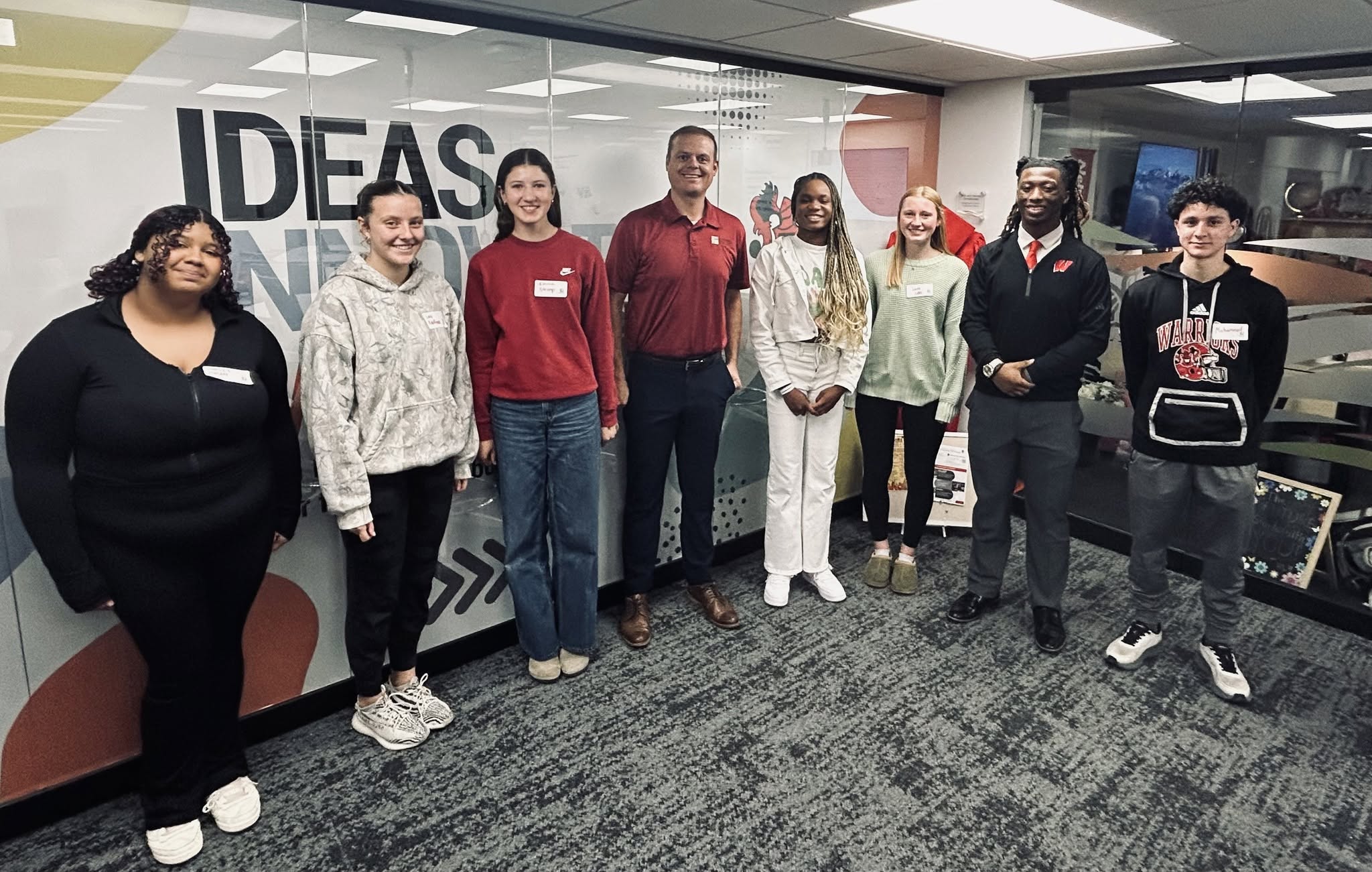
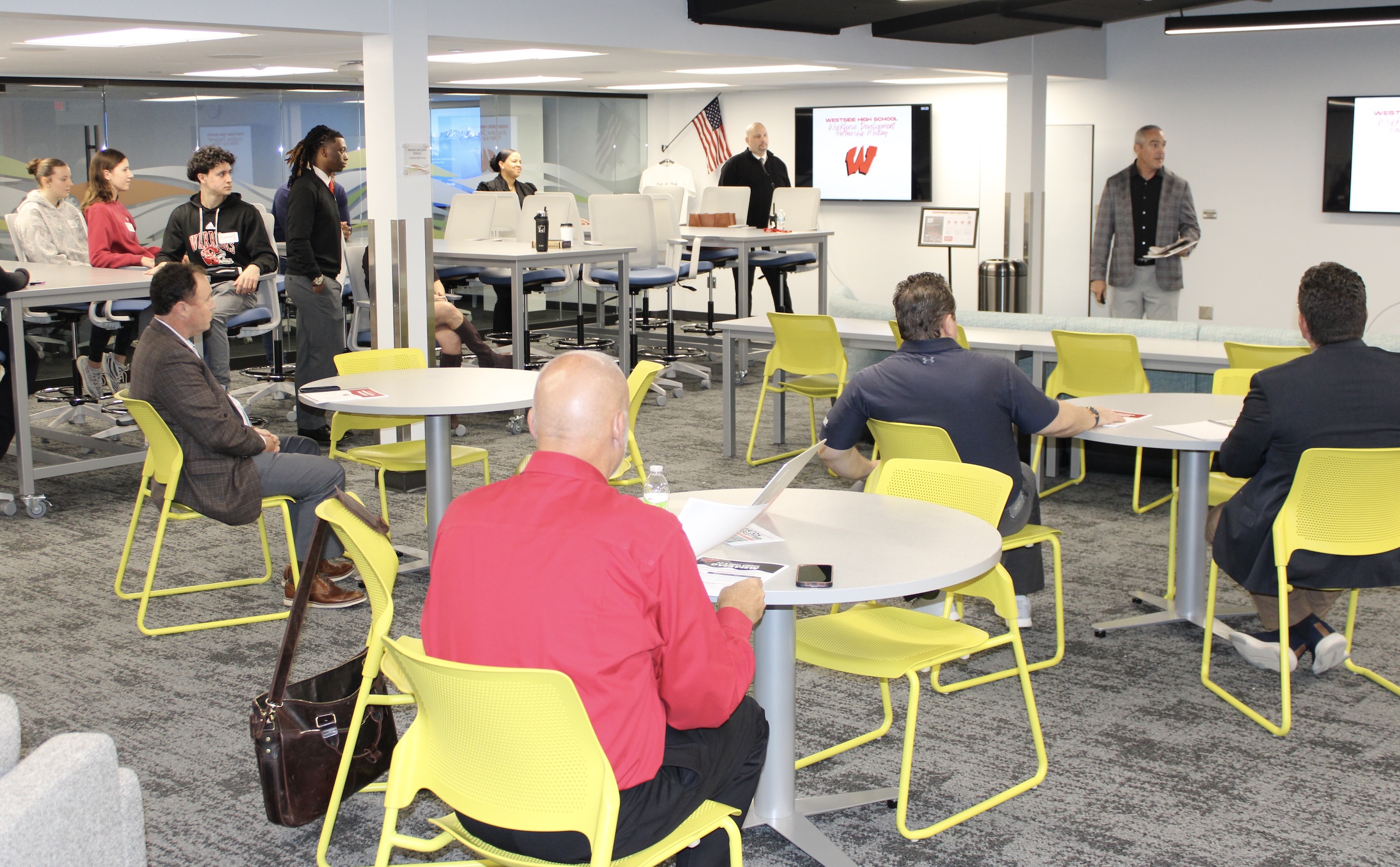
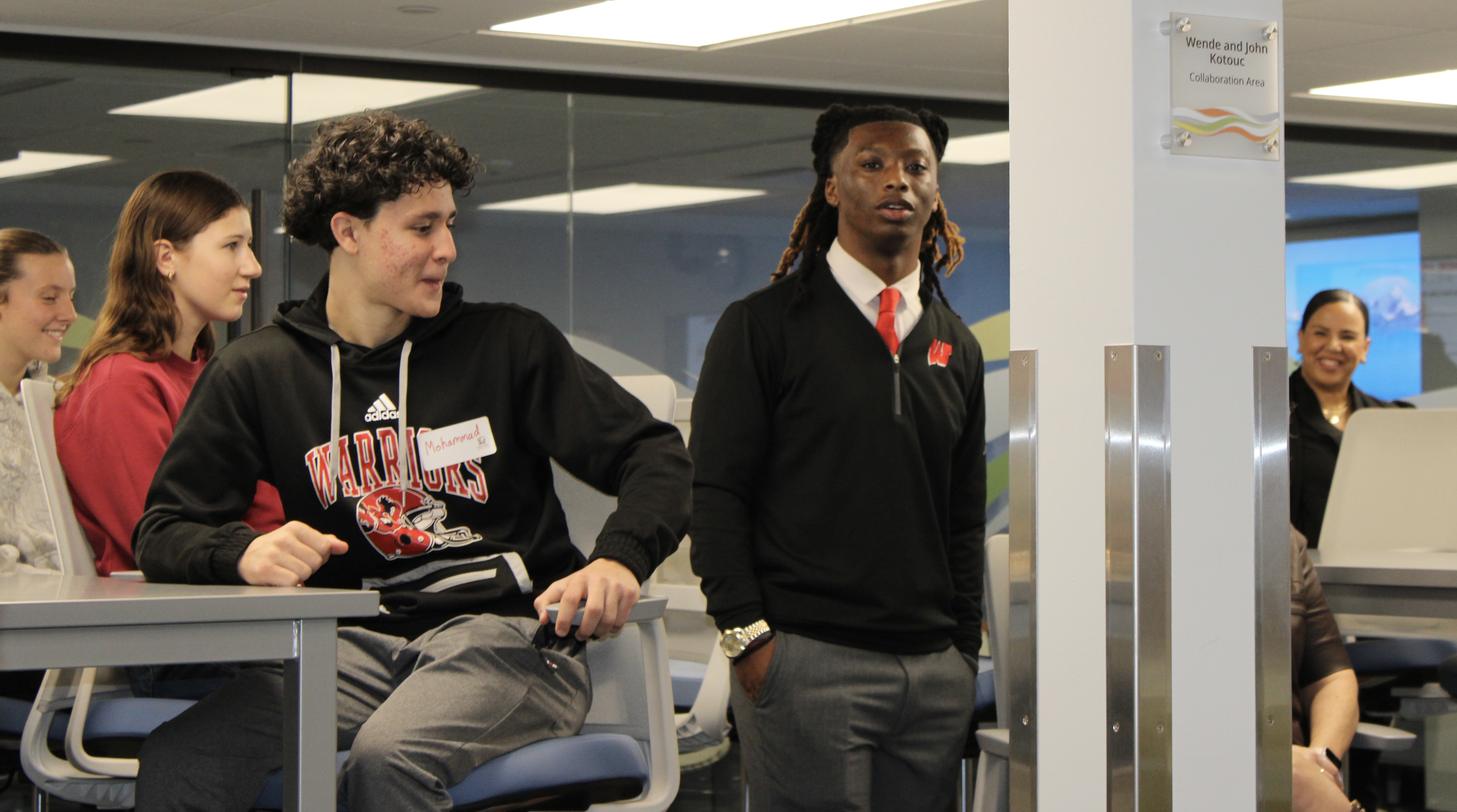
On Tuesday, November 10, Westside Community Schools District 66 hosted its Showcase for Elected Officials inside the new center on Pacific Street. Bringing together elected officials, Westside Board of Education members, district leaders, and students from the Future Workforce Council, the morning’s messaging was fascinating and clear.
“Nebraska’s future workforce is already here.”
Backed by a $36 million non-property tax facility addition raised through the Westside Foundation, the district’s push blends innovation, investment and ambition.
“We want to give every student access to real-world exploration, industry connections, and life skills, while tackling Nebraska’s "brain drain" so graduates have compelling reasons to stay, or return, to the state and the Omaha area,” superintendent Dr. Lucas told attendees.
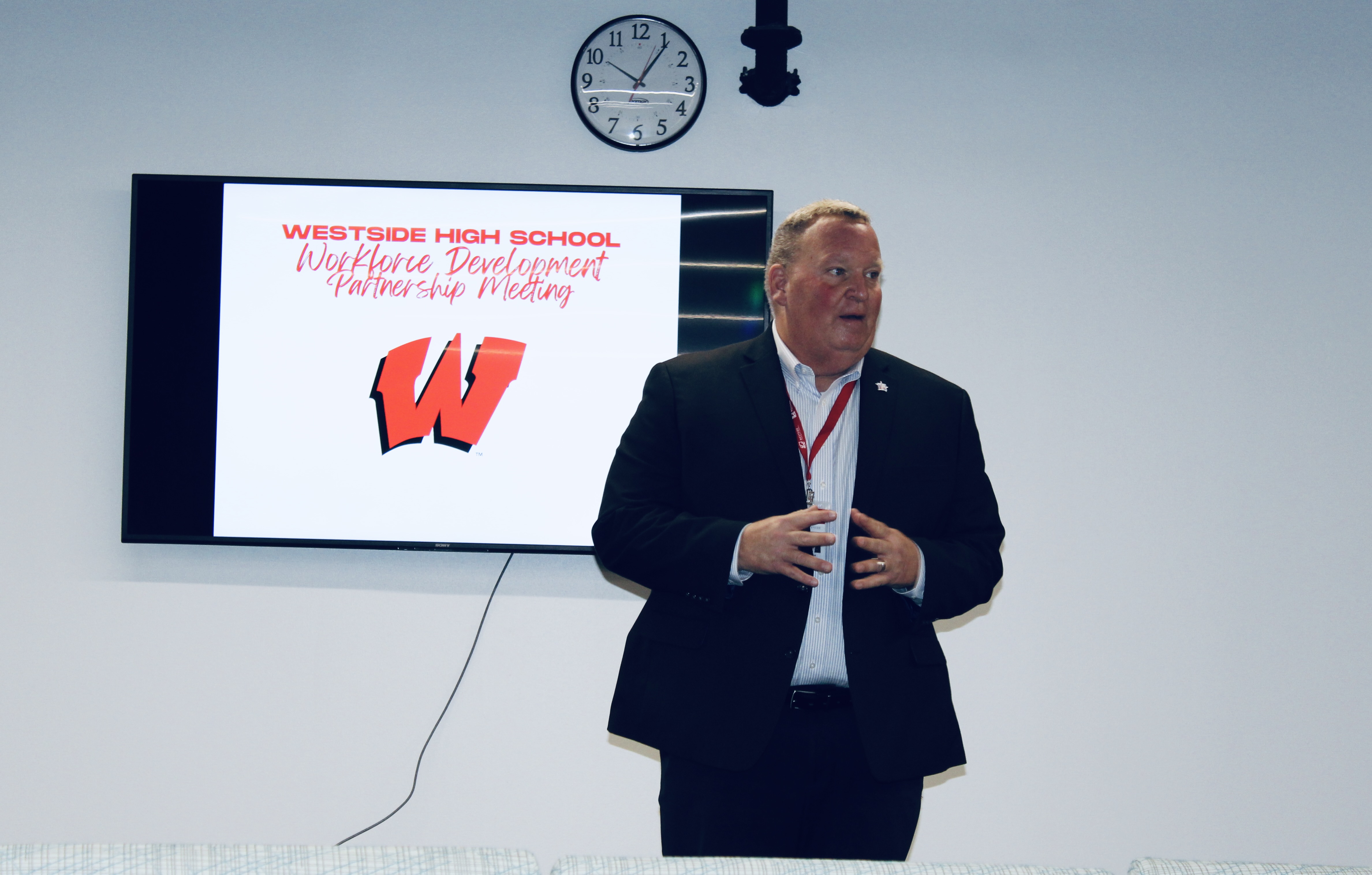
"You don't need to have an uncle that knows about doing this or you don't need to have a parent that knows about how to navigate that," said Dr. Mark Weichel, reflecting on the reality many families face when weighing four-year universities, junior colleges, military service, trade school, or entering the workforce directly.
As college counselor Vicki Londer put it, and Weichel echoed, whether a student is headed to Wayne State, UNL, Harvard, the trades, or straight into a job, the goal is to have someone in their corner helping them get there.
During the showcase, administrators and students spotlighted how Westside turns that philosophy into daily practice, diving into the Innovation Lab, HATCH, Avenue Scholars, Future Ready Pathways, Project Lead the Way, and a new endeavor called Find the Why!, all anchored by a modular schedule that gives students an introduction to adulthood before graduation.
The space was designed to remove friction from post-secondary planning.
This year the center expanded its reach with virtual college visits, an idea sparked by Dr. Lucas after recognizing that some colleges simply don’t have the time or budget to travel to Omaha. The goal had been 18 virtual visits for the year. Eleven weeks into the semester, the center had already hosted around 25, with two schools asking to return in the spring because the fall sessions went so well. Londer shared that after talking with a representative from Indiana University at an annual conference, the representative decided to come visit Westside to see it for themselves.
Lucas also pointed out Westside’s growing network of industry partnerships. To date, the tally of industry partners has reached 39. And that number is growing.
"We want to work with everybody, that was the intention."
HATCH: Real Businesses Before Graduation
Senior Jax Minor is the ideal and unofficial spokesperson for HATCH. Minor, who runs her own jewelry and service-based businesses, has been immersed in entrepreneurship since she was a freshman.
HATCH operates in a room inside that center that would make some universities envious. In here, students aren’t just studying business concepts from a textbook. They are building real ventures, pushing ideas past high school, and learning what it actually takes to run something.
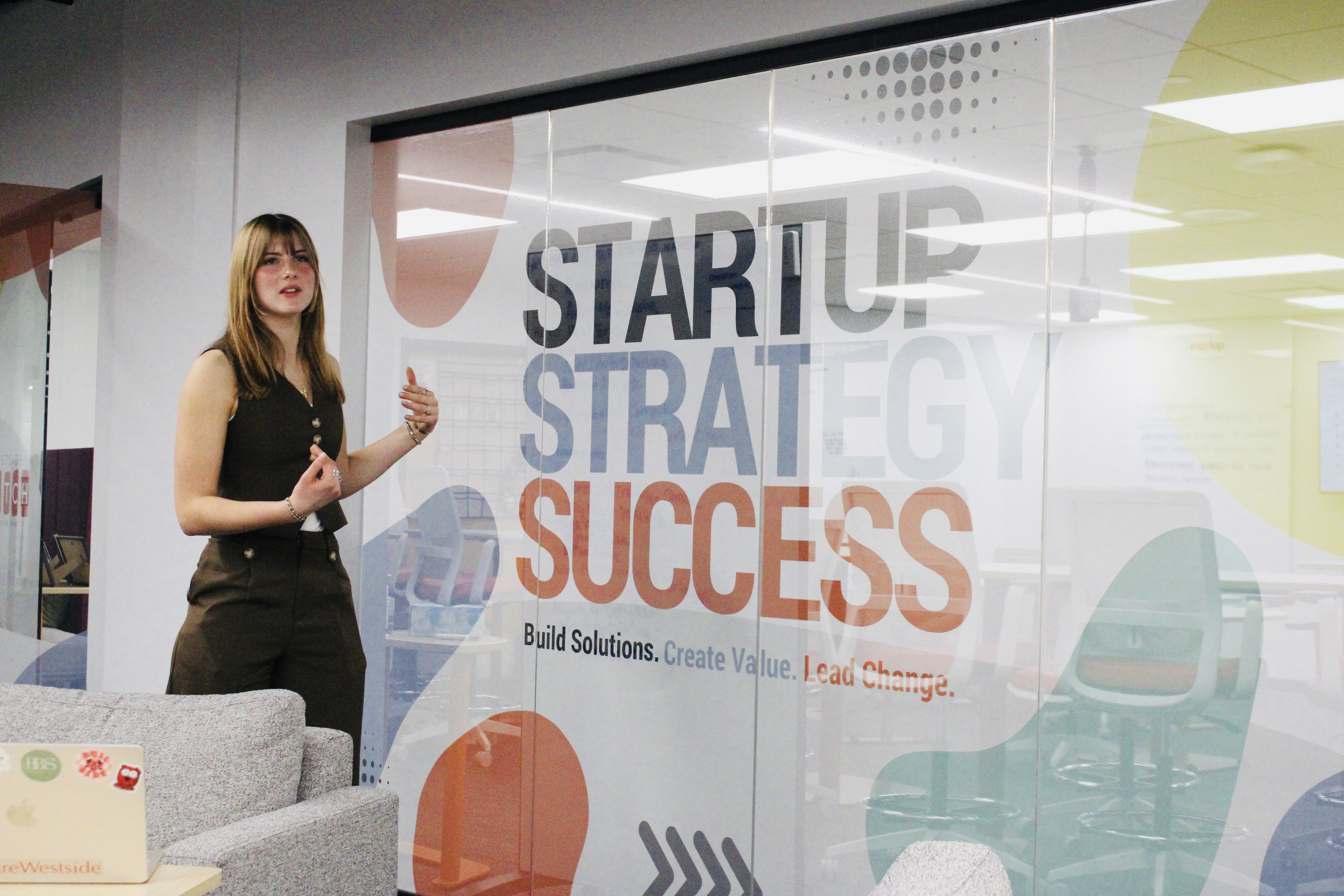
In here, they’re encouraged to dream and then build. They develop and hone skills in collaboration, public speaking, and presenting in rooms full of professionals. Through events like JTank, students connect directly with CEOs, CFOs, and local community leaders, landing job shadows and getting their names on the radar of Nebraska’s business community.
Across the cohort, the projects are real, varied and successful. Clothing and apparel lines (including students supplying sports gear for Westside), lawn care, two car detailing businesses, they do it all. Hatch students learn to form LLCs, handle taxes and manage finances.
"It really just eliminates that kind of fear when you sometimes think like, 'Oh, I'm going to go be a business major in college,'" Minor said. "And it's like people don't really know what that means, but you can join Hatch and learn all about what it actually means to be a business major, to be in entrepreneurship, to start your own business and to be your own boss."
Entrepreneurship teacher and HATCH facilitator Michelle Jochim has been with Westside for five years. She’s constantly blown away by what her students dream up in what they call “The Startup Studio.”
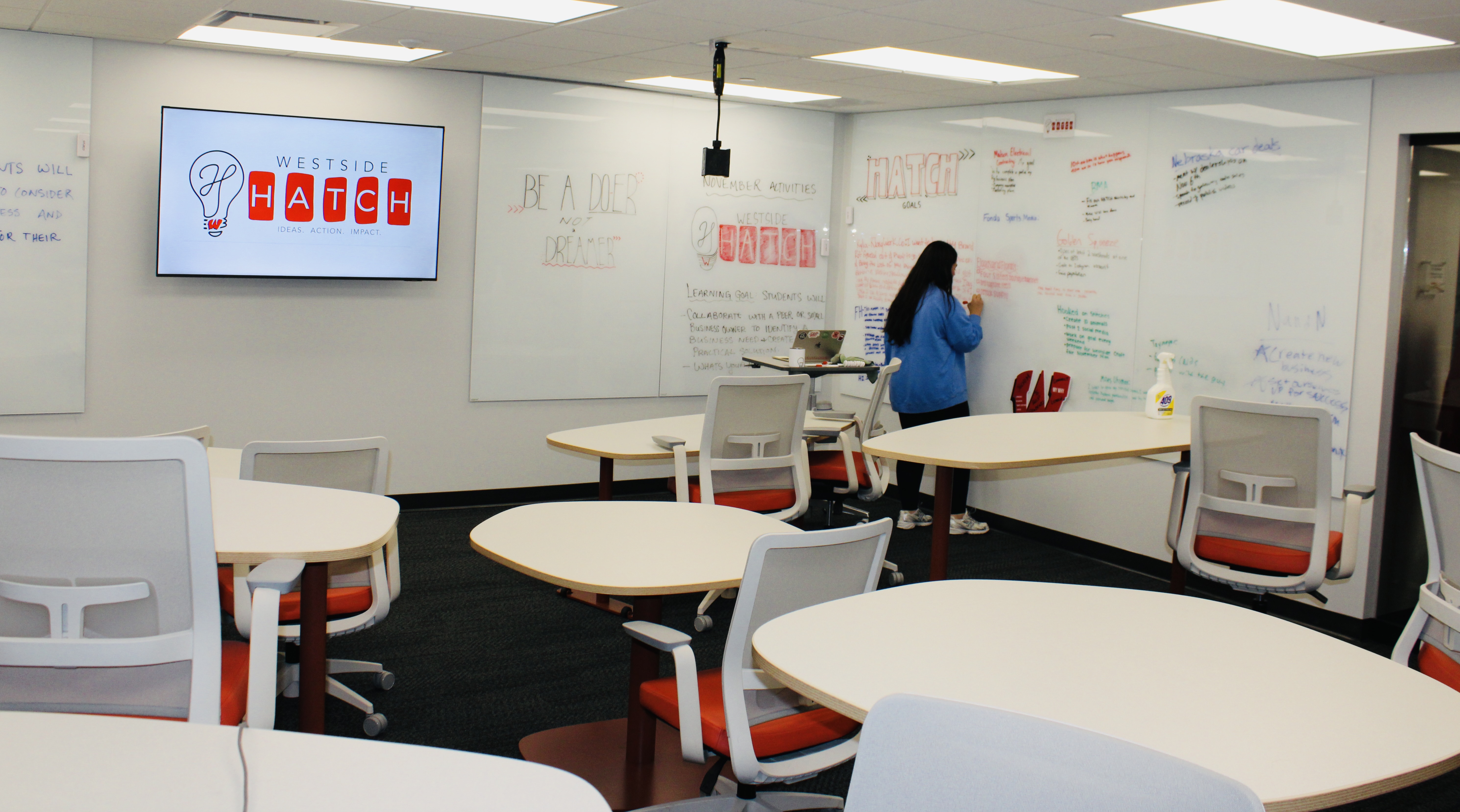
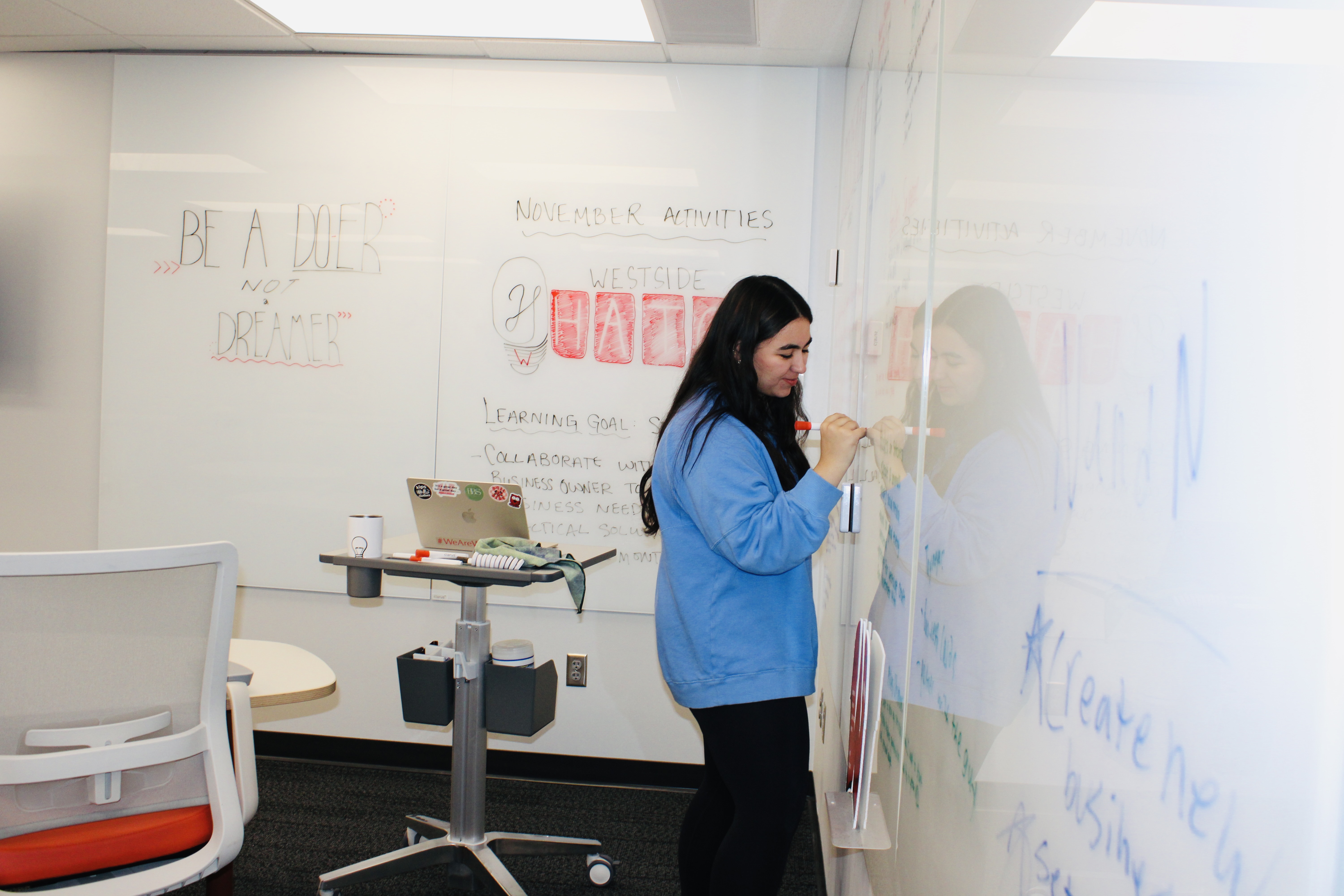
“The students are the ones who create the atmosphere and set the tone for this space,” she said. “We’re bouncing ideas off of each other all the time. The thing I think the students enjoy most is the feedback they get from their peers.”
Minor sees Hatch as a counterpunch to brain drain, explaining to the group that students who might otherwise assume they have to leave the state can take a business they built in high school and grow it right in Nebraska.
“The networking that we get to do is invaluable, too,” said Jochim. “We were just at Creighton’s Business Symposium, which was really cool. This is just a space where we’re trying to figure it out. The students have entrepreneurial mindsets, and we’re in here discovering direction.”
Future Ready Pathways: Trying It On While It’s Free
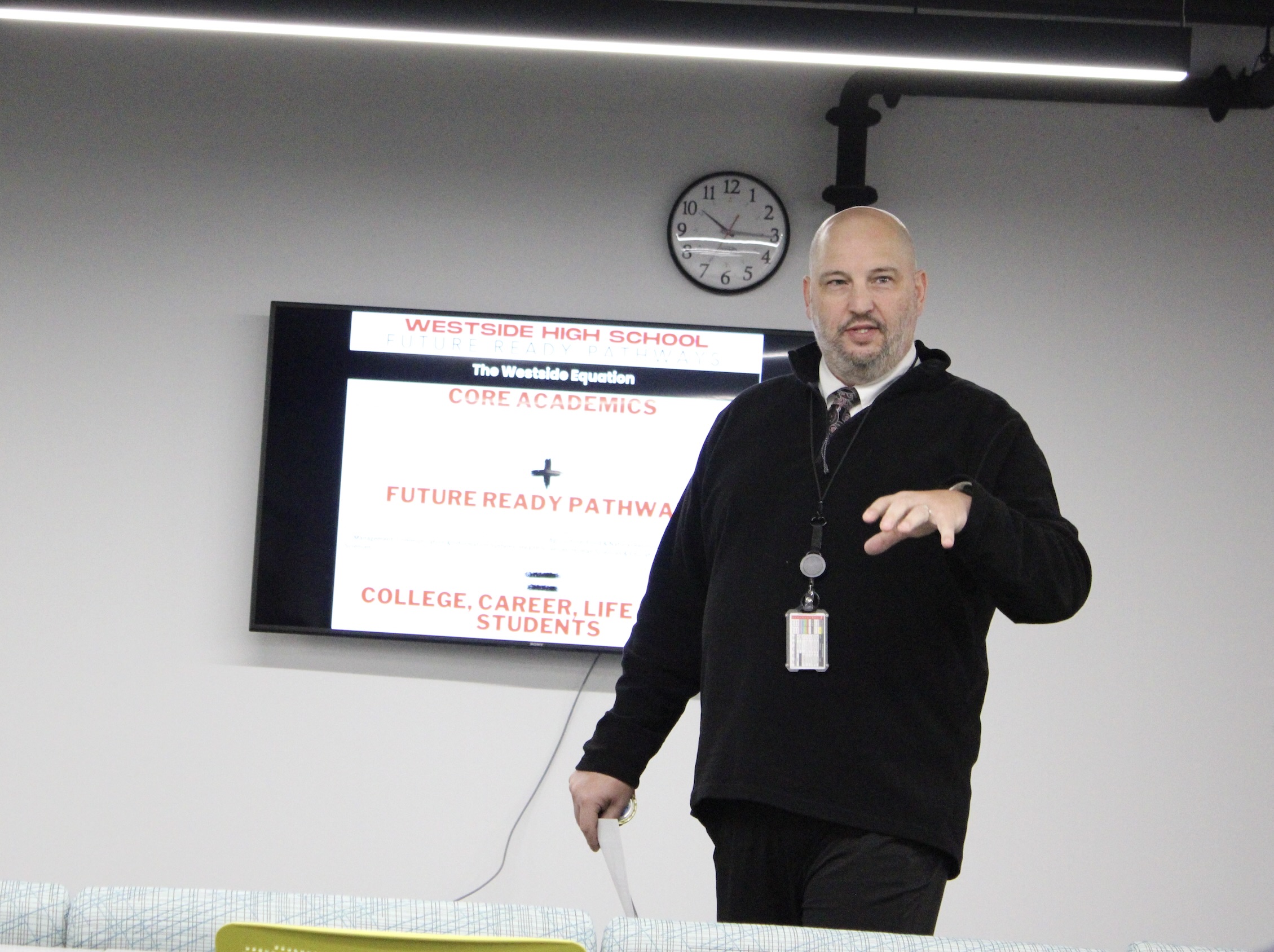
Principal Dr. Jay Dostal introduced Westside’s Future Ready Pathways with an insight it didn’t take Westside long to figure out.
Every high school has core academics and graduation requirements. Pairing those with structured pathways (an introductory course, an intermediate course, and a capstone course in a focused subject area) dramatically boosts readiness.
Take health sciences as an example. A student might begin with physiology and anatomy as a foundational science course, move into health sciences as an elective, and finish in advanced health sciences as a capstone. That sequence gives students a chance to test their interest and, just as importantly, to discover early if a field isn’t for them.
Dostal shared two personal family stories to illustrate why discovering fit early matters. His daughter once said she wanted to be a nurse, took a related course, and then, after watching a movie featuring Kevin Bacon with a compound fracture and plenty of blood, realized blood wasn’t for her. Figuring that out in high school saved time and uncertainty. His son, on the other hand, transferred into Westside as a junior aiming to become a therapist, took AP Psychology as an intermediate step, and later shifted at UNL toward special education after completing a college semester of courses aimed at his earlier major.
"I’d rather have them do that in high school when it's free than when they leave high school," Dostal said.
Last year, Westside introduced a medal for students who complete a three-course Future Ready Pathway sequence without even advertising it ahead of time. Out of 384 seniors, 70 percent earned a medal without prior promotion. Now, with guidance built into registration meetings (including upcoming February planning), the district is actively helping students map pathways.
Dostal said that pathways thrive when business and industry partner with schools, whether through internships that can turn into local jobs or industry-recognized certifications. Westside already offers certifications such as forklift, CNA, commercial drone piloting, and welding, with goals to expand into areas like ServSafe and hospitality and tourism.
Just outside the center, a color-coded map of Nebraska’s career education clusters reminds students daily of the wide range of careers available. The visual also reinforces that success isn’t defined solely by a four-year university, whether a graduate chooses the military, a two-year college, trades, or workforce entry, ideally in or returning to the Omaha area.
Dostal knows that cycle firsthand.
“I’m a product of Westside,” he said. “I graduated in ‘96, and then I went to a lot of different places. But I ended up back in Omaha, and I don’t want to leave because this is a great place to raise a family and I love it here.”
Project Lead the Way: Rigor, Real Simulators, and Scholarship Value
Director of Secondary Teaching and Learning Kim DeLaCruz framed Project Lead the Way as a combination of advanced placement rigor and career and technical education.
“Project Lead the Way is a ‘gold standard’ for hands-on, applied learning,” she said.
To offer the curriculum, teachers complete 80 hours of specialized professional development to become certified. Westside offers six Project Lead the Way courses. Three engineering courses (Introduction to Engineering Design, the largest with roughly 54 students, Principles of Engineering, and Civil Engineering and Architecture) have been fixtures in Westside’s skills and technical sciences department for at least a decade.
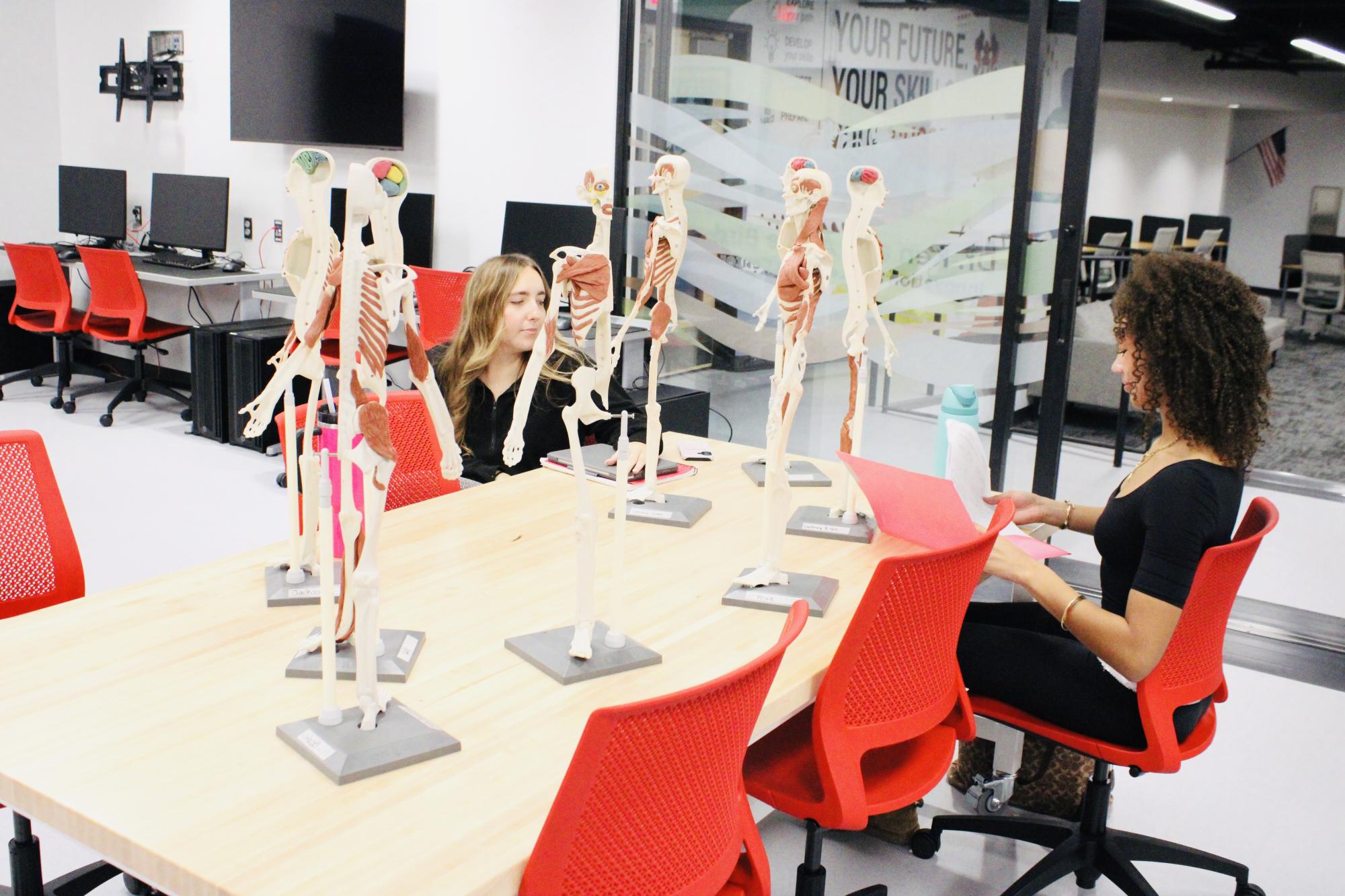
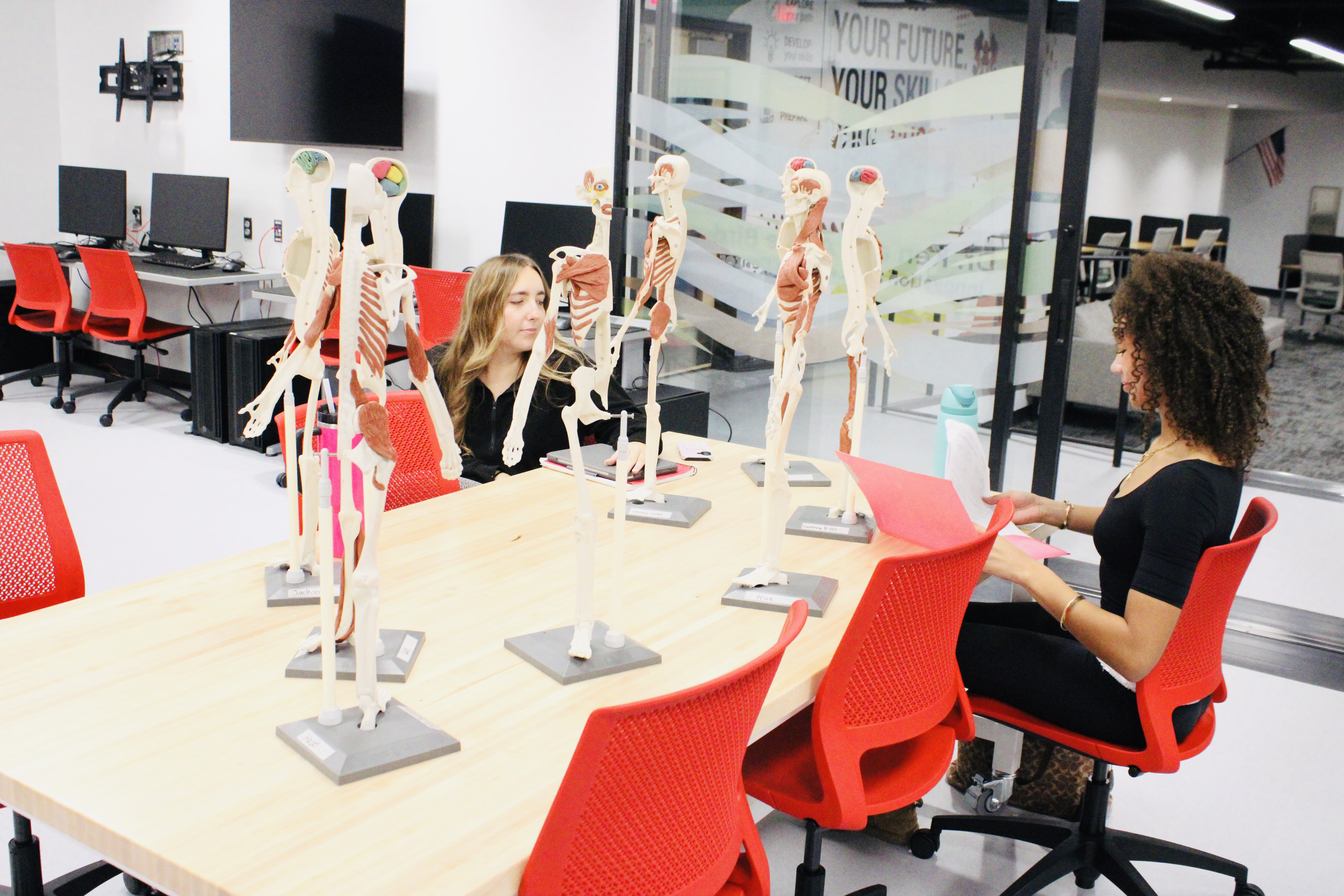
More recently, the district added courses tied to high-demand regional needs, including aerospace engineering, driven by strong student interest in aviation, and human body systems, where students step into simulated roles, such as acting as a physical therapist and working through how to interact with a patient chart. Next year, Westside plans to add cybersecurity as a teacher completes training, rounding out the computer science side of Project Lead the Way.
Lucas highlighted a bonus families don’t always realize until they look closely. Some colleges and universities award scholarships specifically to admitted students who take Project Lead the Way courses in high school, he said, pointing to a senior who visited Milwaukee School of Engineering and learned that having Project Lead the Way coursework could translate to $3,000 a year over four years. That’s $12,000 in scholarship support, a major incentive for students and a major focus for counselors and families.
Find the Why!: Solving Real Problems for Real Employers
Up next was Find the Why, a partnership Westside recently launched with the Find the Why! organization, alongside collaboration with the Omaha Chamber and regional groups.
As CEO and founder Todd Smith described it, Find the Why connects business and industry leaders across Nebraska with students by turning real-life workplace challenges into problems students can tackle. For Smith, partnering with Westside was a no-brainer.
“You are in a place that I consider one of one,” Smith said. “We are in 41 different states, three different continents, and I haven’t seen anything better than this. I haven’t seen a school have a better foundation and better innovation than this group.”
The model is challenge-based, with students completing Westside-Only challenges, statewide challenges and teacher-team curriculum connected challenges. For students exploring a field, it’s a chance to solve authentic challenges and show potential future employers how they think and work, something that also caught the attention of the Omaha Chamber during a visit a couple of weeks prior to the showcase.
Most importantly, Find the Why! produces another opportunity for Westside students to connect with industry partners. It teaches them accountability, too, and gives them a headstart on their futures.
Exploring The Dr. Ken & Annie Bird Innovation Lab
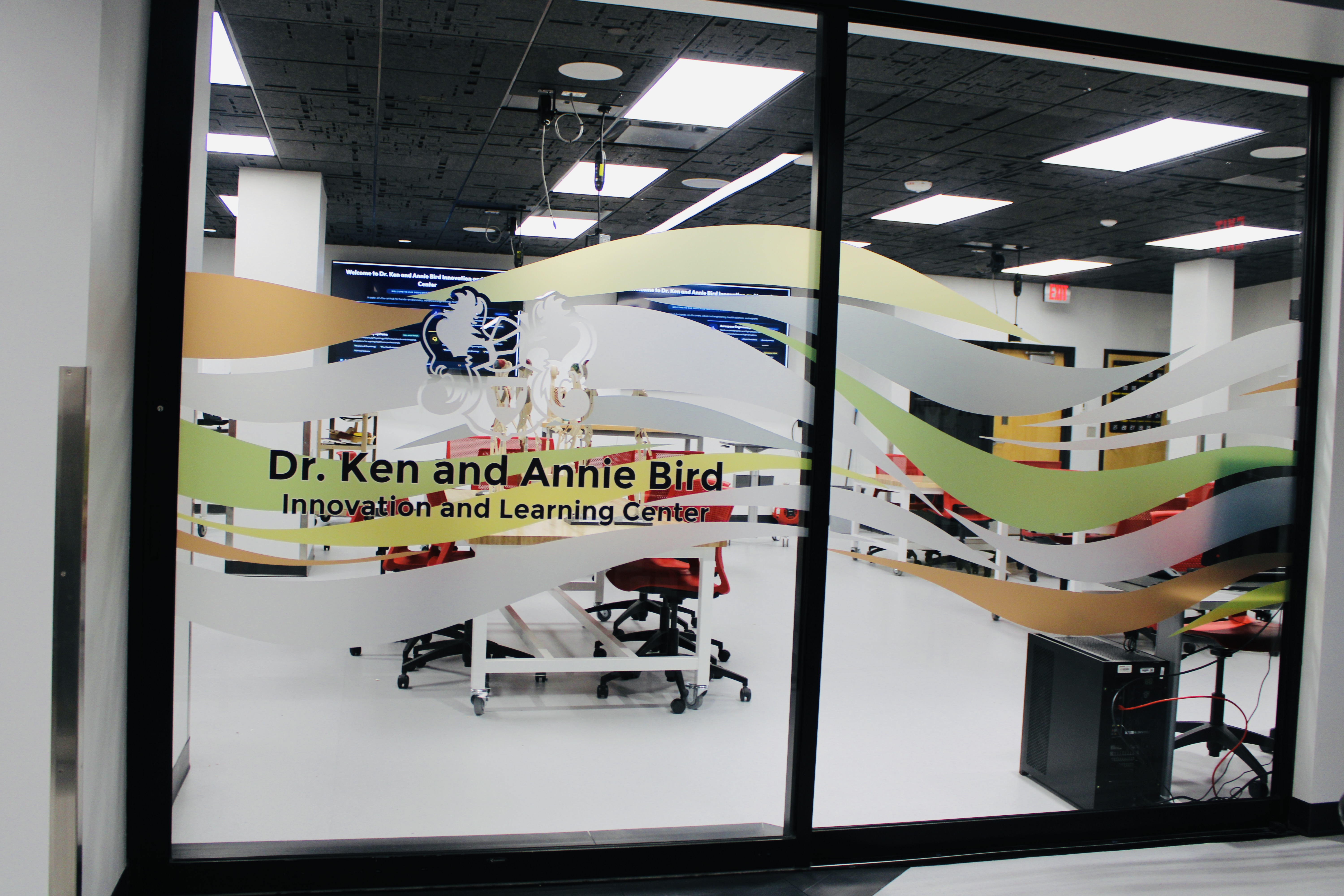
By this point our heads were spinning, and we hadn’t even made it to the aerospace engineering, commercial drone piloting and other innovative courses being offered in the Dr. Ken & Annie Bird Innovation Lab.
“One of the main reasons I was excited about this was getting a chance to teach a new course that’s so geared towards real job training and earning real credentials before going into the workforce,” said Innovation Lab teacher Ben Powers, who’s been teaching for 16 years, but never in an environment quite like this. “I almost feel like a brand new teacher again, because we’re building new curriculum and trying new things. It’s been a really exciting year so far.
Powers mans the lab alongside Courtney Blair, a fellow teacher who said the exposure Westside is granting its students can’t be understated.
“Especially on the medical side, students being able to explore and find the things they enjoy and the things they may not enjoy so much,” Blair said. “From a staff member perspective, I always feel so supported in my development and how I’m able to provide instruction to students and give them hands-on experiences. We’re learning alongside the students, which is pretty cool.”
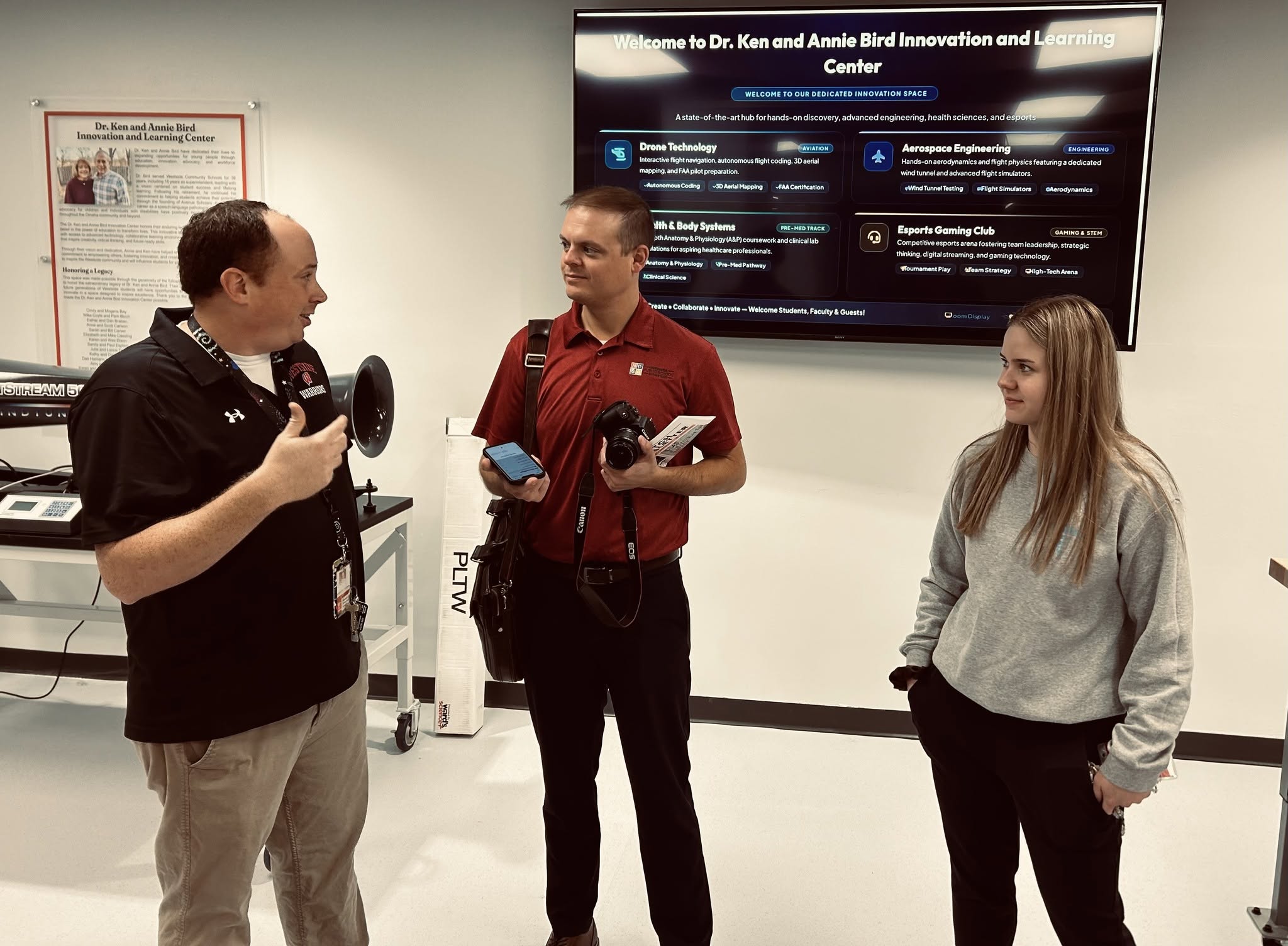
Powers said he and Blair are the guides. It’s fun for them to show the kids how many employment possibilities there are in the aerospace industry, for example.
“Our role is to show them these little side roads they can go down,” he said. “And then watching where they take that or where they find an interest has been exciting. A lot of the time, it’s just us teachers getting out of the way.”
Inside a Day on the Mod Schedule
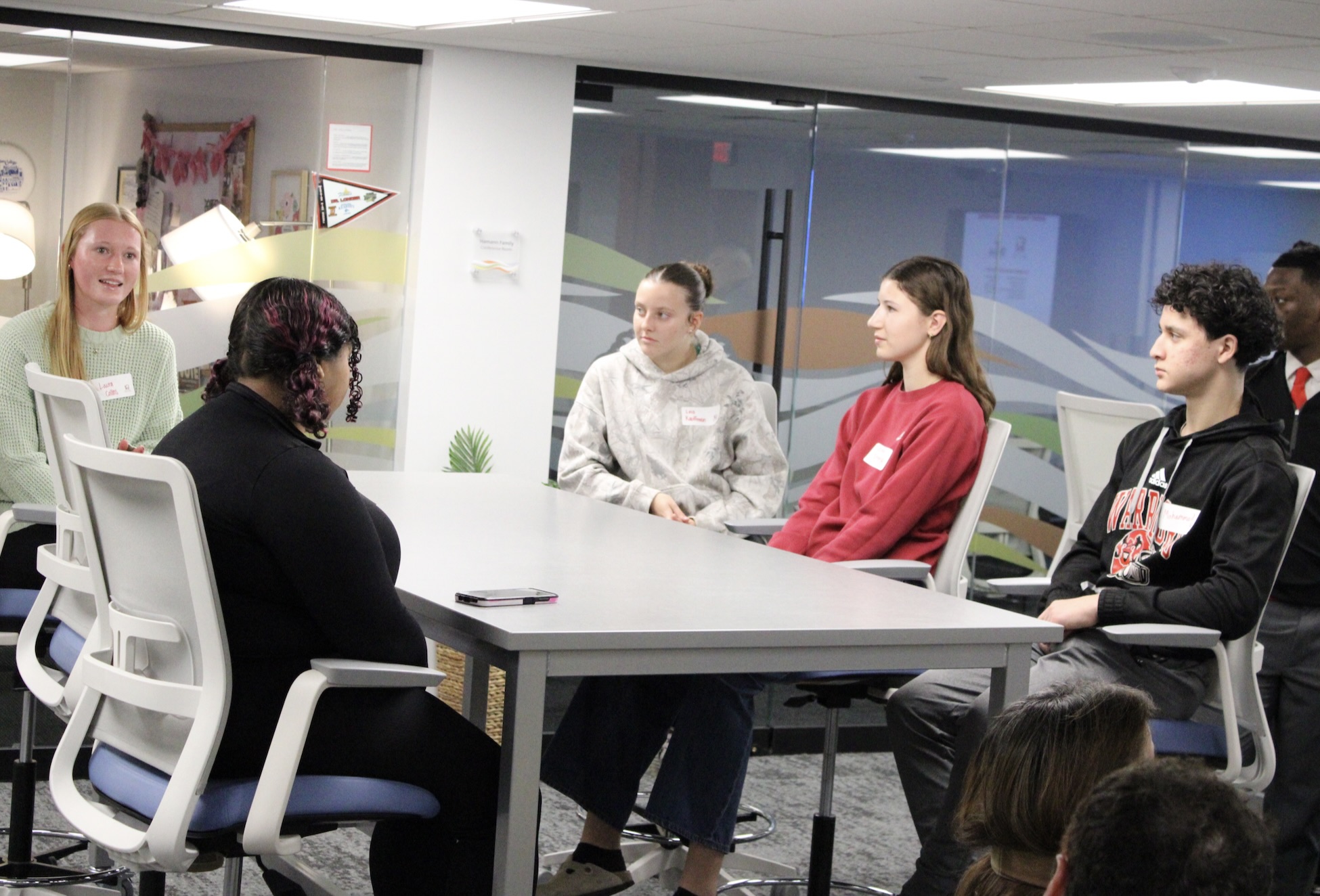
During a roundtable discussion after a tour of the center, students and Dostal pulled back the curtain on what Westside actually feels like.
For Westside students, clarity doesn’t arrive overnight. It’s not supposed to, and that’s kind of the entire point. Senior Daisy Johnston admitted she used to struggle to pin down what she wanted for her future, feeling almost as if every day brought a different job idea before she finally settled on a direction.
"To have a school that's able to get you there means far more than I think most kids realize because I finally feel more confident in myself to go somewhere versus I'm on my own," Johnston said. "So I'm really grateful that the school has spent so much time getting kids where they want to go confidently."
Junior Laura Collins pointed to the individual attention behind the support she receives, teachers and administrators investing in students not just as a group, but one by one to help them meet their goals. Senior Marley Mason talked about doing an immersion day at Children’s Hospital, about how she arrived still somewhat unsure, and left more confident, excited, and prepared for her future after seeing the work firsthand.
The daily rhythm itself is unique. Unlike a rigid "A/B" schedule, Westside’s modular schedule shifts from day to day. On a Tuesday, Dostal walked through junior Emma Stromp’s schedule.
She starts in band, moves into an independent study mod, then health sciences and Spanish four, hits a double mod, English and language composition, lunch, marketing, AP Calculus, and AP U.S. History, leaving her with 39 minutes plus lunch that day.
Stromp noted that freshman year often covers foundational graduation requirements like personal finance and daily living, opening up in later years to stack multiple sciences, like pairing chemistry and physics, or taking AP Biology alongside higher-level physics, and pursue dual enrollment. Even on days she doesn’t have a traditional lunch break (two days a week), she brings her lunch and makes it work in class.
“It gets busy, obviously, but it’s definitely worth it,” Stromp said. “Especially the dual enrollment stuff. We’re just getting such a head start.”
Johnston, who participates in band, show choir, choir, and scholars programming (and once pushed through a junior year with 13 classes and no second-semester lunch) now has four mods in a single day and sees her earlier effort paying off.
“Everything I did, I needed to do to get where I am today,” Johnston said.
Senior Chance Stevenson-Tipler said the schedule mirrors college life and demands constant time management and awareness. Rather than memorizing a static timetable, like high schoolers have done forever, Westside students often check what’s next when the bell rings. The day moves fast, and it’s fun.
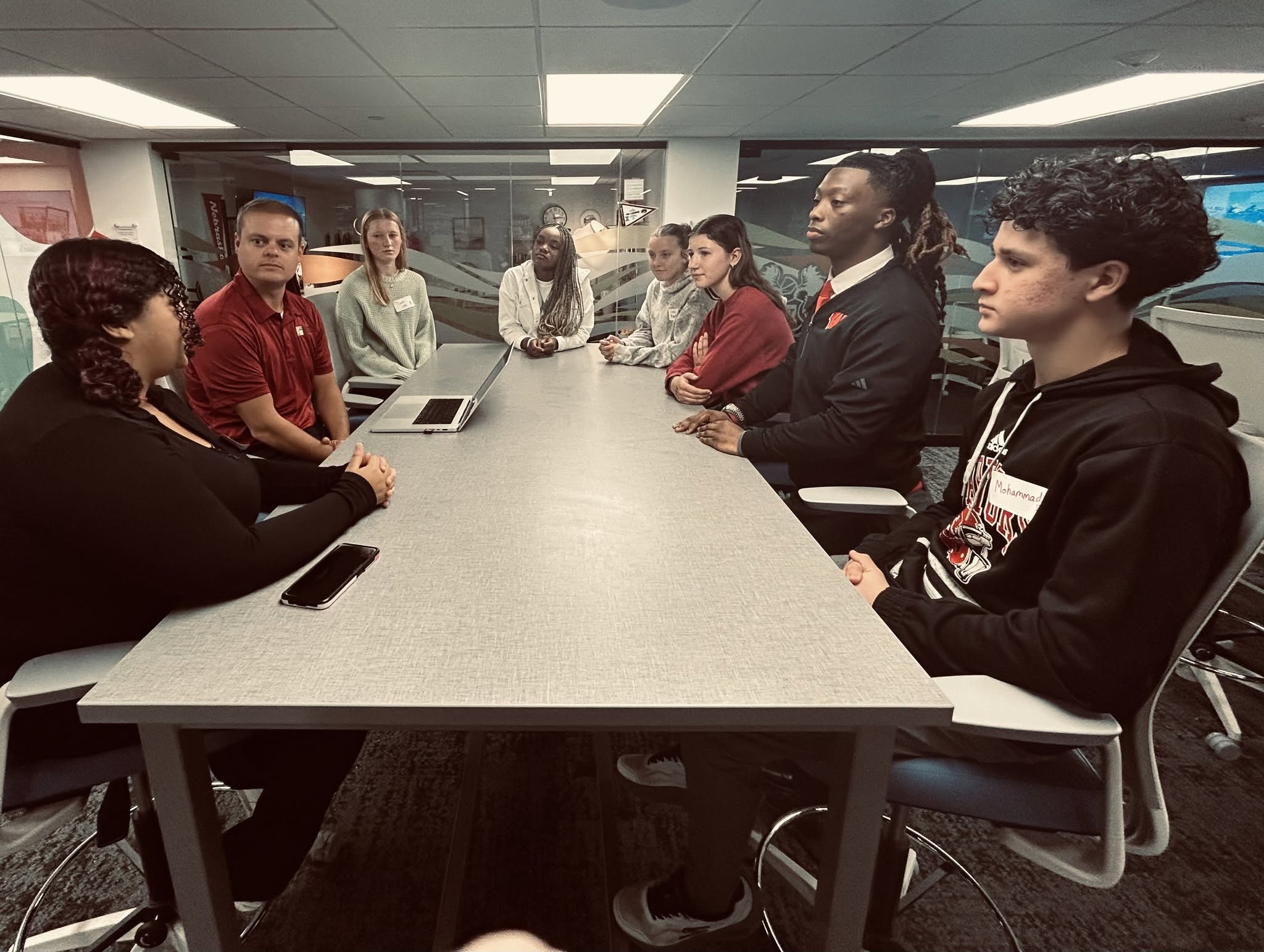
“What makes this all so great is, when you look at a college schedule and then you look at ours, they’re very comparable,” Stevenson-Tipler said. “It’s excellent. It requires you to manage your time effectively, and it requires us to be on our toes. That time management piece is such a big thing, with all of us being high achieving and super involved people.”
Dostal noted that open windows and independent study mods also teach students to advocate for themselves, seeking out teachers during the day rather than waiting, and to communicate comfortably with adults.
Just as important is how upper- and lowerclassmen interact across mixed-grade classes and activities. Stromp talked about learning of opportunities like a UNMC program simply by talking with peers in band, and finding practical advice from upperclassmen on clubs and classes. Stevenson-Tipler recalled hanging out with seniors as a freshman, watching how they handled FAFSA and scholarship applications, learning from their mistakes, and feeling prepared when his own turn arrived.
His advice to eighth graders eyeing high school and wondering what happens in rooms like the Olson Family College and Career Center was simple and direct.
"There’s a little bit of ‘It’s not just what you know, it’s who you know,’” Stevenson-Tipler said. "Who you know will get you there, and what you know will keep you there. You got to put yourself out there, but you also have to be able to back yourself up once you put yourself out there."
Junior Leia Kauffman urged incoming students to get involved broadly, to take part in initiatives like Find the Why!, clubs, activities, or sports, which will make the path toward college easier.
Johnston’s advice was similar and succinct.
"It’s not that deep,” she said. “You're going to have a great time. Just go for it."
When asked about building life skills like time management and communication, habits many people don’t hone until their twenties, Johnston spoke candidly about her own impulsiveness and tendency to run behind, from a 7:30 scramble instead of 7:25. Shifting from 7:30 to 7:29, she said, is a real win because practicing those habits now means she’s doing the heavy lifting before stepping into a job.
"You're saying the hard work is going to be paying off basically," Stevenson-Tipler quipped.
"Yes," Johnston nodded. "My hard work will pay off."
Her school is sure of it. You can bet on that.