Fueling the Fight: Brady Public Schools and its community feed volunteer firefighters containing Cottonwood fire
Fueling the Fight: Brady Public Schools and its community feed volunteer firefighters containing Cottonwood fire
By Tyler Dahlgren
The Cottonwood Fire burned to the south of Brady, a fast-moving wall of heat driven by relentless winds that put homes and ranches and livestock in immediate danger overnight. The blaze, the largest in Nebraska history, jumped roads and threatened the Sandhills.
Brady Public Schools superintendent Ann Foster received a call from a community member on the fire’s front lines on Thursday night. After a brief and succinct conversation, Foster knew the school, a cornerstone of its small community just north of I-80, had to be an anchor.
"He said, 'We’re going to be evacuating Jeffrey Lake. We have guys and gals out here, we need food and water. Can the school help?’" Foster said.
The superintendent called Brady’s school board, who was right in-step with her. Their initial plan was to use the school as an evacuation center. Foster sent out an "all-call" to families inviting displaced families into the school. The doors were open.
In a testament to the "Brady Way," the school remained empty of overnight guests. Not because people weren't displaced, but because neighbors, friends and families had already opened their doors.
"In true Brady fashion, everyone who was evacuated had someone take them in," Foster said. “That wasn't too surprising, but emblematic of how close our community is.”
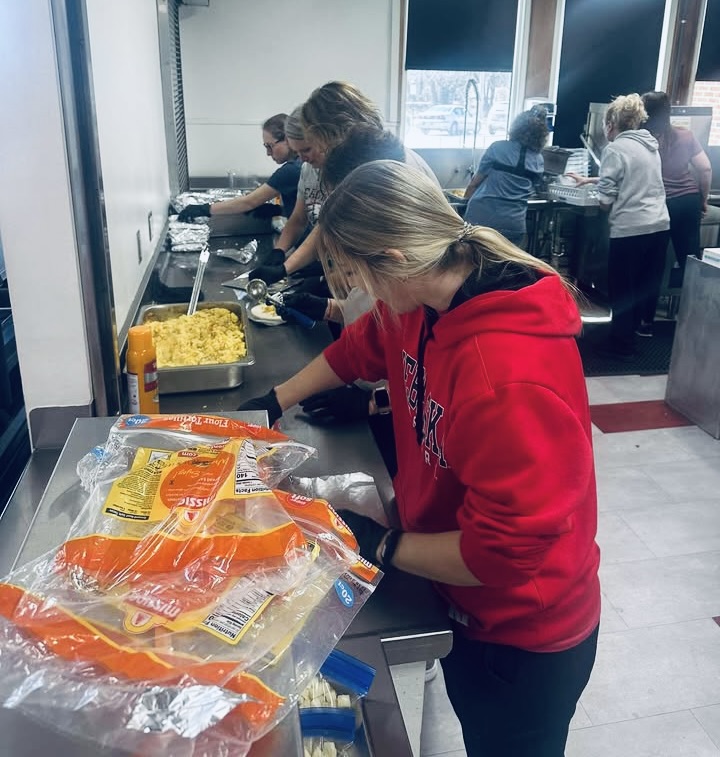
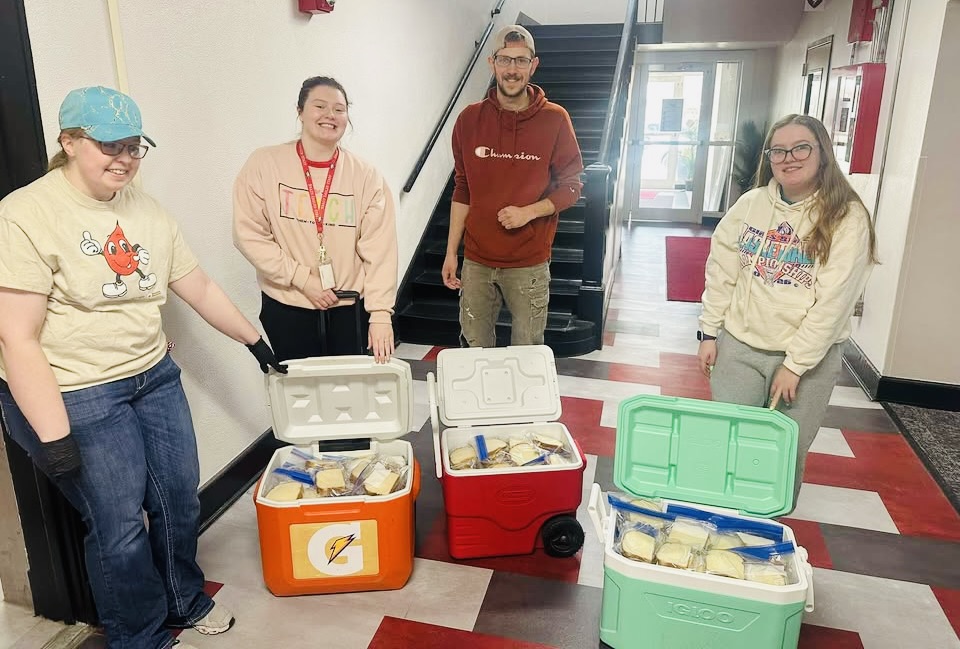
With no one to house, the district’s mission flipped on a dime. The school would not be a bedroom, but it would be a kitchen. In those first few days before help from the National Guard and the Rocky Mountain CIMT1 arrived and offered reprieve, the team at Brady had prepared more than 1,000 sandwiches and 500 breakfast burritos.
While the school was the engine, the fire hall was the heartbeat. Darci Sanger, a para-educator at the school, spent over 24 hours straight at the hall. Her husband, Ryan, is the assistant fire chief (and the school’s maintenance director), and their 17-year-old son, Cinch, was on the front lines as a cadet.
"They just needed somebody at the fire hall to coordinate," Sanger said. "It helped us a lot with the food the school made because we could keep them fed with stuff they could grab and take off with while they were switching shifts."
The logistical coordination was precise and centered in rural resourcefulness. Whenever a need arose at the fire hall, Sanger would relay it to Foster at the school.
"It was almost unbelievable, just how quick people were to help provide anything we needed," Foster said. "We would say we need energy drinks, and we would get cases by the truckload. Someone communicated we needed eggs, and we ended up getting over 100 dozen eggs."
Inside the school kitchen, 5th-grade teacher Jamie Messersmith and her mother took the helm. Eggs sizzled and an assembly line which never waned on volunteers worked tirelessly for hours and hours. Messersmith, who lives just a block from the school, didn't wait for a formal assignment. Her instinct was to do exactly what people around Brady always have done.
"It just seemed kind of natural that I would pop over and just be here," Messersmith said. "My mom has always taught that if there's someone who needs help, you help them. It wasn't anything that someone would have to think twice about."
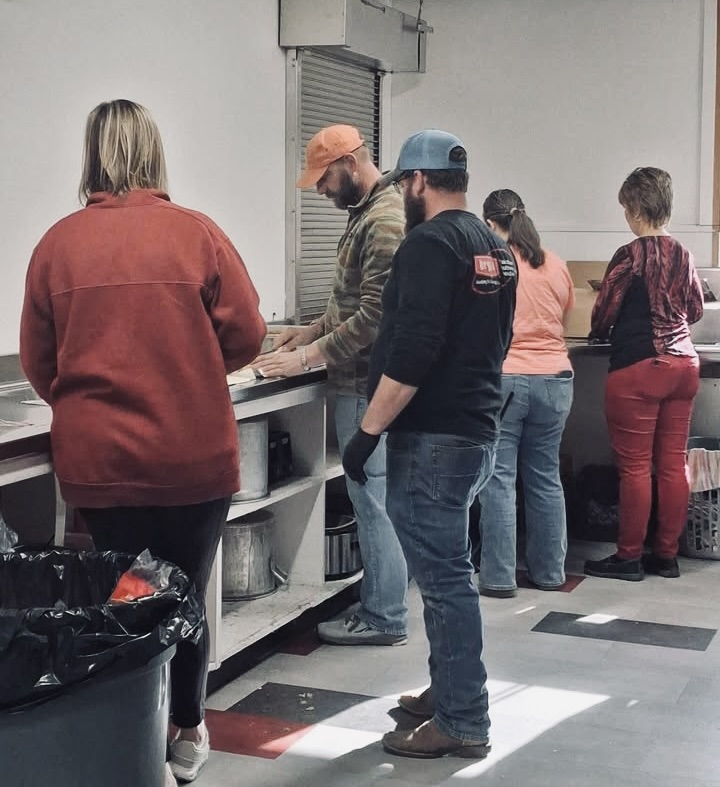
The people of Brady didn’t think twice, either. It was all-hands-on-deck.
“It was very warming to see everybody just put aside everything that they had going on in their lives to work on this one goal,” Messersmith added. “I even met a couple of people that I had seen in the community but had never had an opportunity to talk to. It was really nice to come full circle.”
The team realized quickly that the firefighters didn't have time for a sit-down meal. They needed fuel that could be eaten quickly and, more often than not, with one hand on-the-go. This led to the assembly-line production of 500 breakfast burritos and over 1,000 sandwiches.
At one point, a single church donation brought in six pallets of bread, over 100 loaves (and probably more than that), all of which were transformed into sustenance for the weary crews.
For the staff, the line between school employee and invested community member vanished entirely. In Brady, those roles are really one and the same. They always have been, in fact, and everybody was in this together.
"We are truly one community," Foster said. "Our staff, they live here, our kids go here, they see their coworkers who are displaced or have fires in their yard. They just truly want to help."
That sheer interconnectedness was visible everywhere you looked. School board members volunteered alongside grandparents who showed up saying, "I have two hands, how can I help?"
Students, seeing their teachers and parents at work, jumped in without hesitation. They helped move livestock on family ranches. They worked furiously to cut wire and they showed up to the school eager to chip in.
Messersmith recalled a student walking into the kitchen, without being asked, and saying, "Okay, what do I need to do?"
"I see this in the adults and I see it trickling down to the children," Messersmith said. "The children are teaching us how to work together and put aside all the things that come in an adult’s world. It goes down to brass tacks. What are we here for? Well, we’re here for each other."
The school eventually canceled classes on Friday and Monday. On Friday, the uncertainty of the fire's path made it a necessity. By Monday, it was a gesture of grace.
"The fires still were not out yet. The town was pretty smoky," Foster said. "It was important, for the people who had volunteered and our local guys, to just be able to take care of themselves."
The atmosphere in Brady is now one of exhaustion and relief. While containment percentages rise by the day, the comprehensive wellness of the community has become the top priority. The school has already coordinated with DHHS and crisis teams to ensure that the emotional embers are watched just as closely as the physical ones.
“We have some staff members who are really, really impacted by it,” Foster said. “They've had fires in their yard, they've had spouses or themselves working on the fires. And so just then taking care of them and their mental health. Out in Western Nebraska, ranchers aren’t typically quick to ask for help, so we just have to keep checking on each other.”
In the midst of everything, Brady kept their students’ wellbeing center focus.
“We talk about how we're all one, and the common thing that we have are the children, and that's something that I really noticed through this experience,” said Messersmith. “All of our connections, all of our efforts, all of the love that we share, it all boils down to the children. We have grandparents and teachers and superintendents and all of these people that have these connections because of the children. That's really why we are all connected the way we are.”
Reflecting on the whirlwind of the last few days, the staff doesn't see their 1,500-meal feat as extraordinary, but rather the only logical response to having neighbors in need.
"There’s no manual on how you navigate a natural disaster like that," said Foster. "But it’s important to just lead with love and compassion. It wasn’t about the fire chief or the superintendent. Titles were not a thing. It was just humans helping humans."
Foster said that there’s no playbook or step-by-step manual for navigating a natural disaster like this, but the kitchen at Brady Public Schools never went cold and their community heroes never went hungry.
That’s something to be proud of. Out here, selflessness always is.
“Here's what I know; I love our community, and I love our people,” she said. “There's no way to be completely prepared for something of this magnitude, but it's important to just lead with love and compassion and to support those around us.”