Behind the Scenes of a Reunification Drill: Our day in Grand Island
Behind the Scenes of a Reunification Drill: Our day in Grand Island
By Tyler Dahlgren
Five miles separate Seedling Mile Elementary and Grand Island Senior High, a 10-minute bus ride that Lee Jacobsen used for one final rundown before the district held a large-scale school reunification drill.
The first of its kind for GIPS, the drill was a carefully coordinated practicum, a live-action stress test of a five-year safety evolution. As an intruder moved through the halls, the gears of a well-developed logistical machine began to grind, moving "students" (played by staff) from a state of crisis at their school to a state of recovery miles away at Grand Island Senior High (GISH).
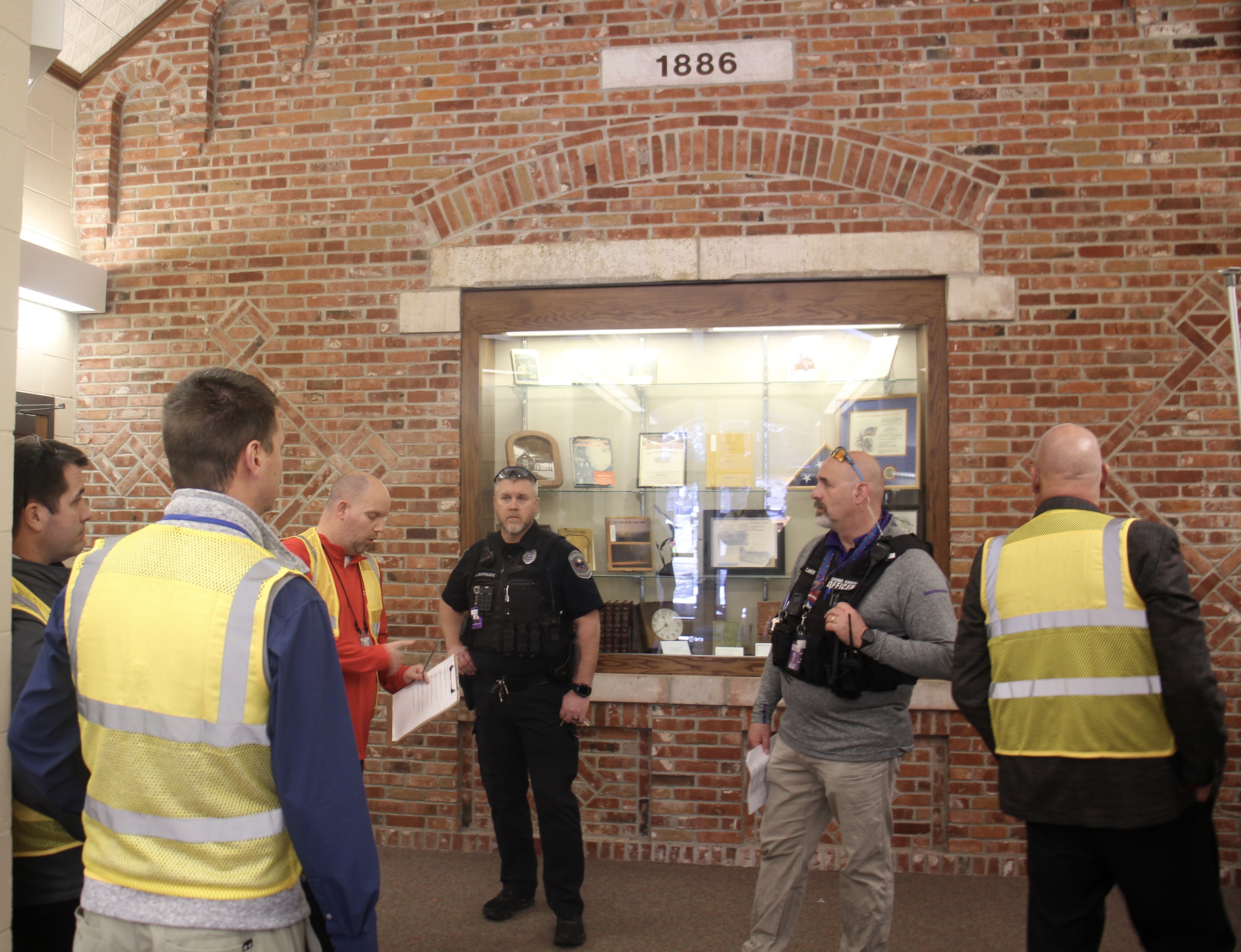
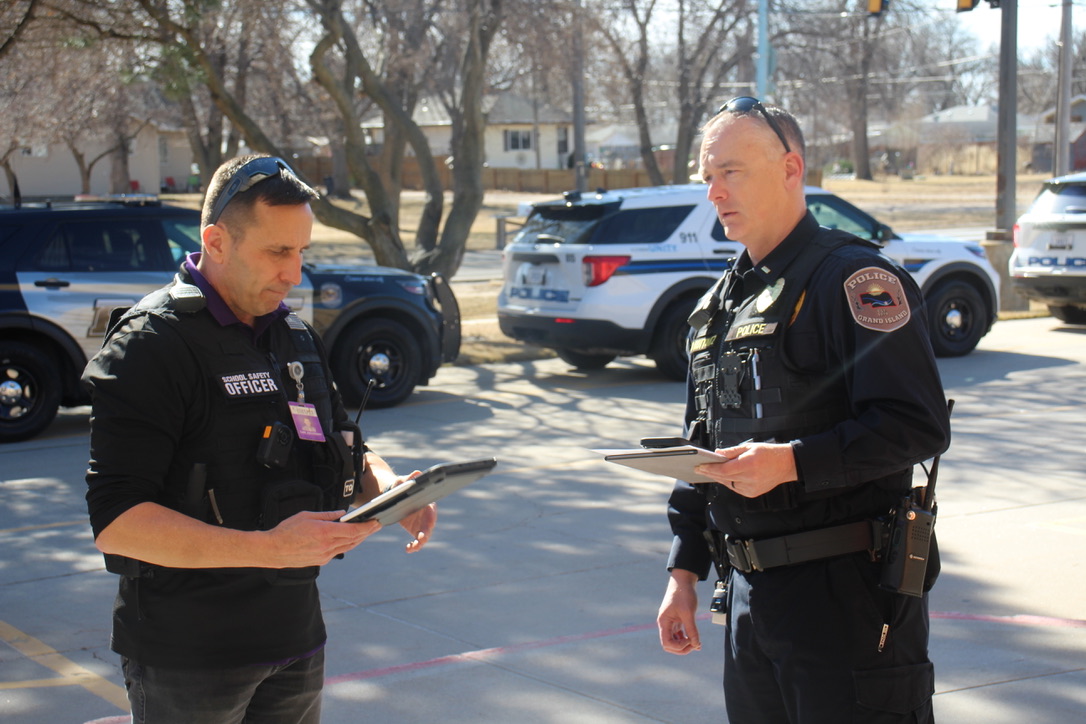
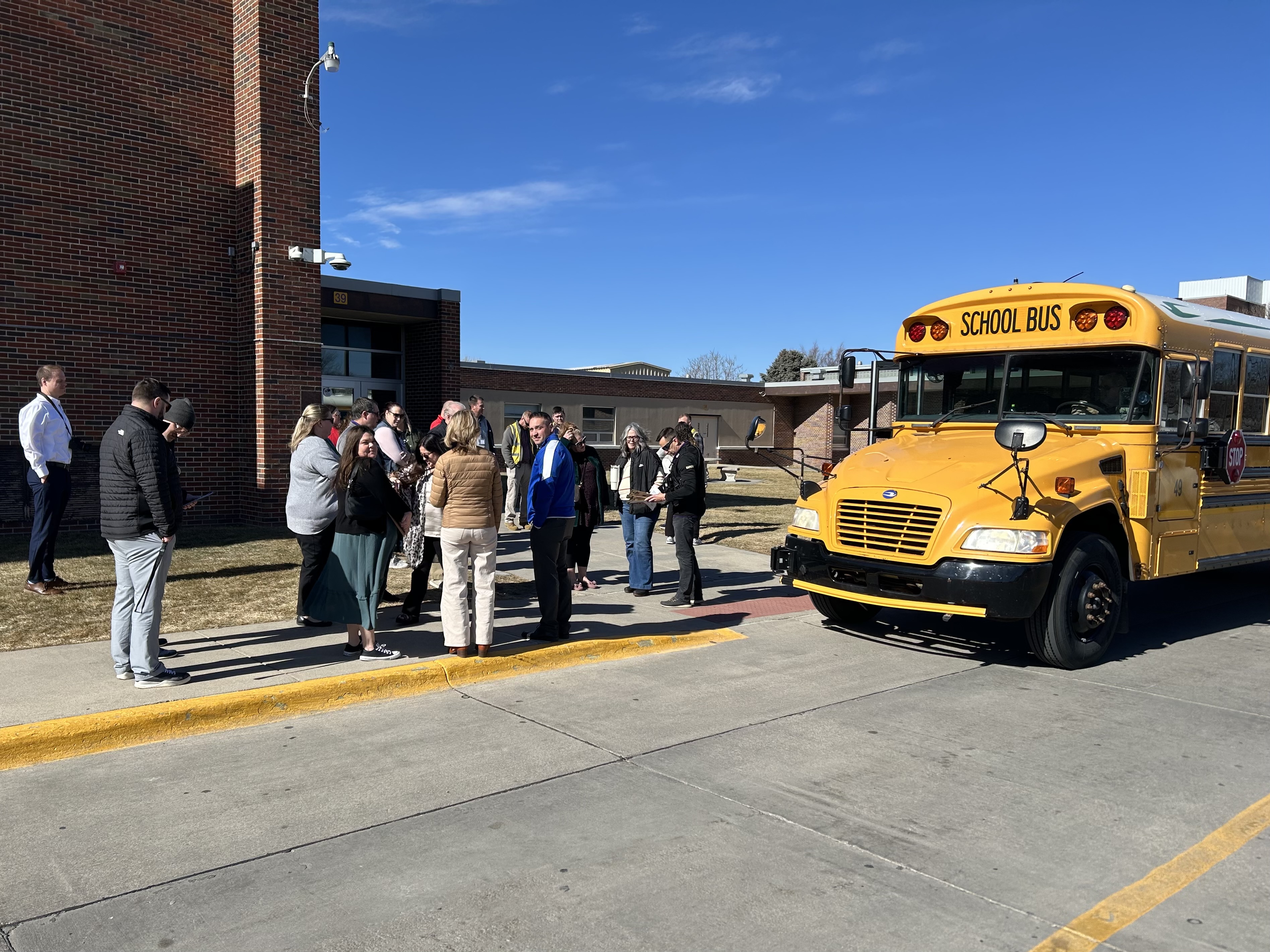
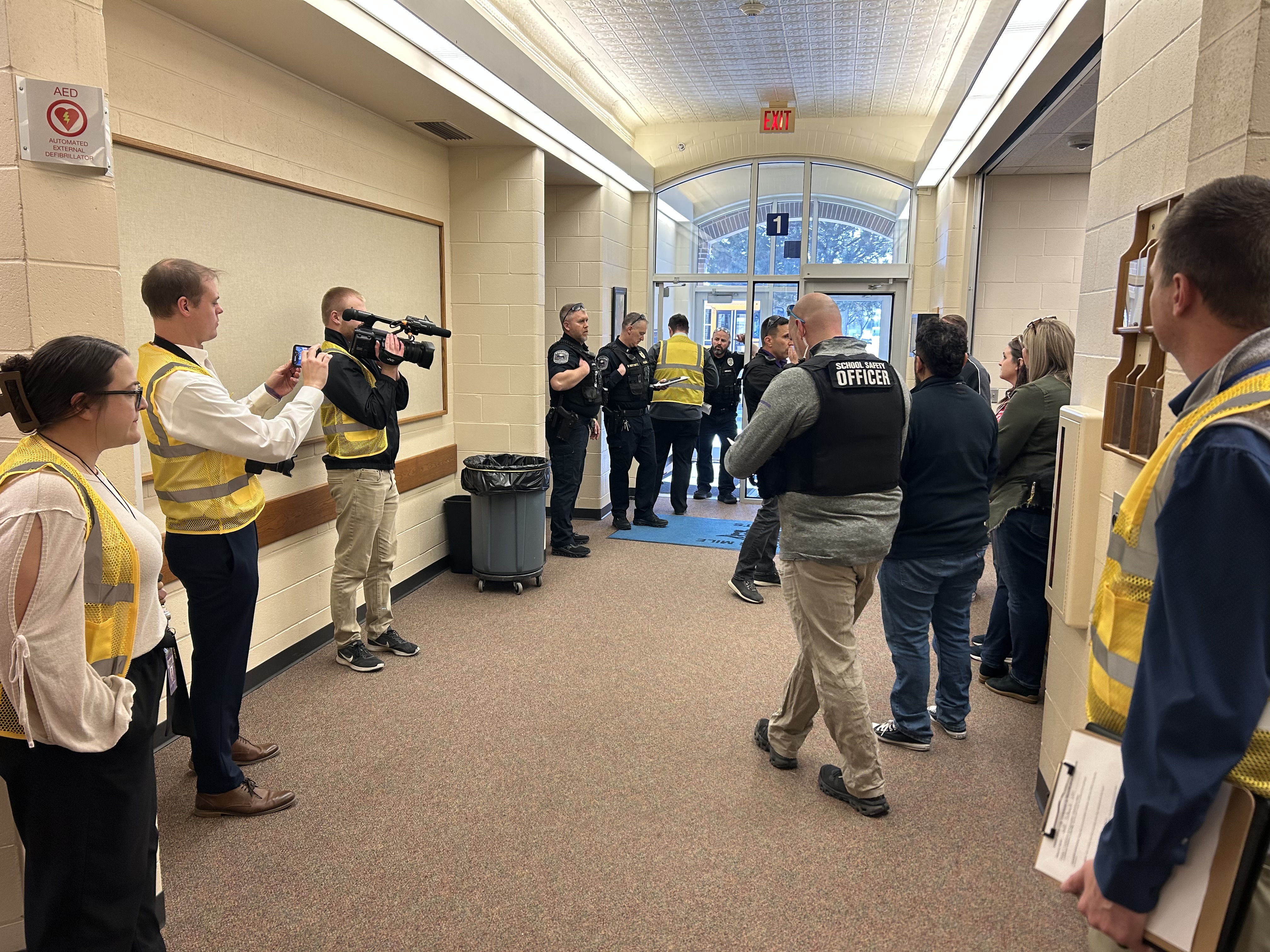
The drill began outside of GISH, where staff tasked with role-playing as parents and students joined a group of observers from places like Lincoln, Kearney, and Norfolk before boarding a school bus and departing for Seedling Mile, a historic building on the eastern outskirts of town that closed after the 2024/25 school year. There, they were greeted by several officers from the Grand Island Police Department. The school went into lockdown, and the drill commenced.
The goal, to move an entire school population across town and reunite every child with the correct guardian while ensuring 100% data integrity and physical security, was reached. The day was detail-oriented, given that Jacobsen has spent more than half a decade building toward this moment. While the district has always had plans on paper, Jacobsen’s philosophy is rooted in the "human factor."
"Recovery starts when the crisis begins," said Jacobsen, a former law enforcement officer who transitioned to GIPS Safety Coordinator in 2019. “In the real world, when you factor the human element into anything, things change from what’s written down. We’ve upgraded our Standard Response Protocol (SRP), making sure we fine-tune our evacuation drills so that when we evacuate, we have an assembly area where all of our students are accounted for physically and medically.”
The drill served as a beta test for both human intuition and the Synergy Education Platform, a digital tool designed to streamline the process of checking students out to their parents that GIPS started using this year.
“Technology was a double-edged sword,” said Jacobsen. “While the app provided good real-time updates, ‘talk-to-type’ errors in Google Chat created confusing instructions for staff. We are now emphasizing the need for physical backups, such as ‘Go-Kits’ with pens, clipboards and paper rosters.”
The drill was not a solitary effort, but a prime example of inter-agency cooperation. Jacobsen said the district’s strong relationships with the GIPD and the Grand Island Emergency Center are intentionally maintained, and communication lines are always open.
"It can just be a phone call away, and that's always better," Jacobsen said of his relationship with the GIPD.
This collaboration extends to a Rule 10 committee, where community stakeholders like the Red Cross and Salvation Army provide input to ensure the school’s plan aligns with the city’s broader emergency capabilities.
The simulation didn't end with a "clear" signal at the elementary school. Instead, the drill entered its most complex phase: the evacuation. Participants were loaded onto buses and transported across the city to Grand Island Senior High, the designated reunification site.
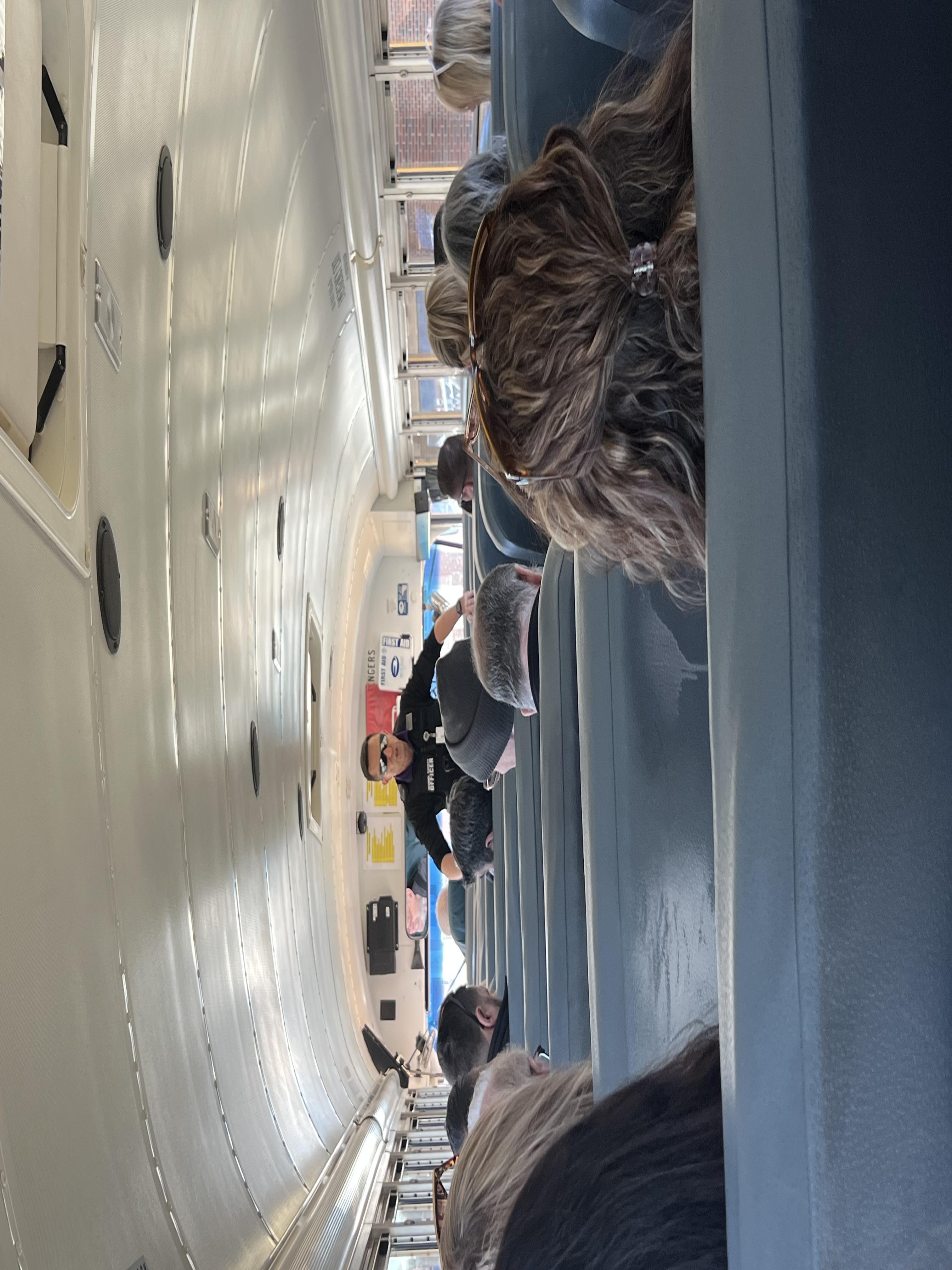
Observers on the bus saw firsthand the tension, even in a simulation, of moving people through a city during an emergency. For Jacobsen, this transit period is a critical window for communication. One of his most innovative strategies involves the "15-minute rule" for older students.
"We ask that they give us 15 minutes before they use their phones to text," Jacobsen explained. "When they text their parents, we want them to say first: 'I am okay.' If I’m a parent and I get that text, it makes me feel a lot better."
This redirected use of technology turns a potential distraction into a tool for community-wide de-escalation. Once at GISH, the Standard Reunification Method (SRM) took center stage. The process is a triple-check system designed to prevent the nightmare scenario of a student being released to an unauthorized person.
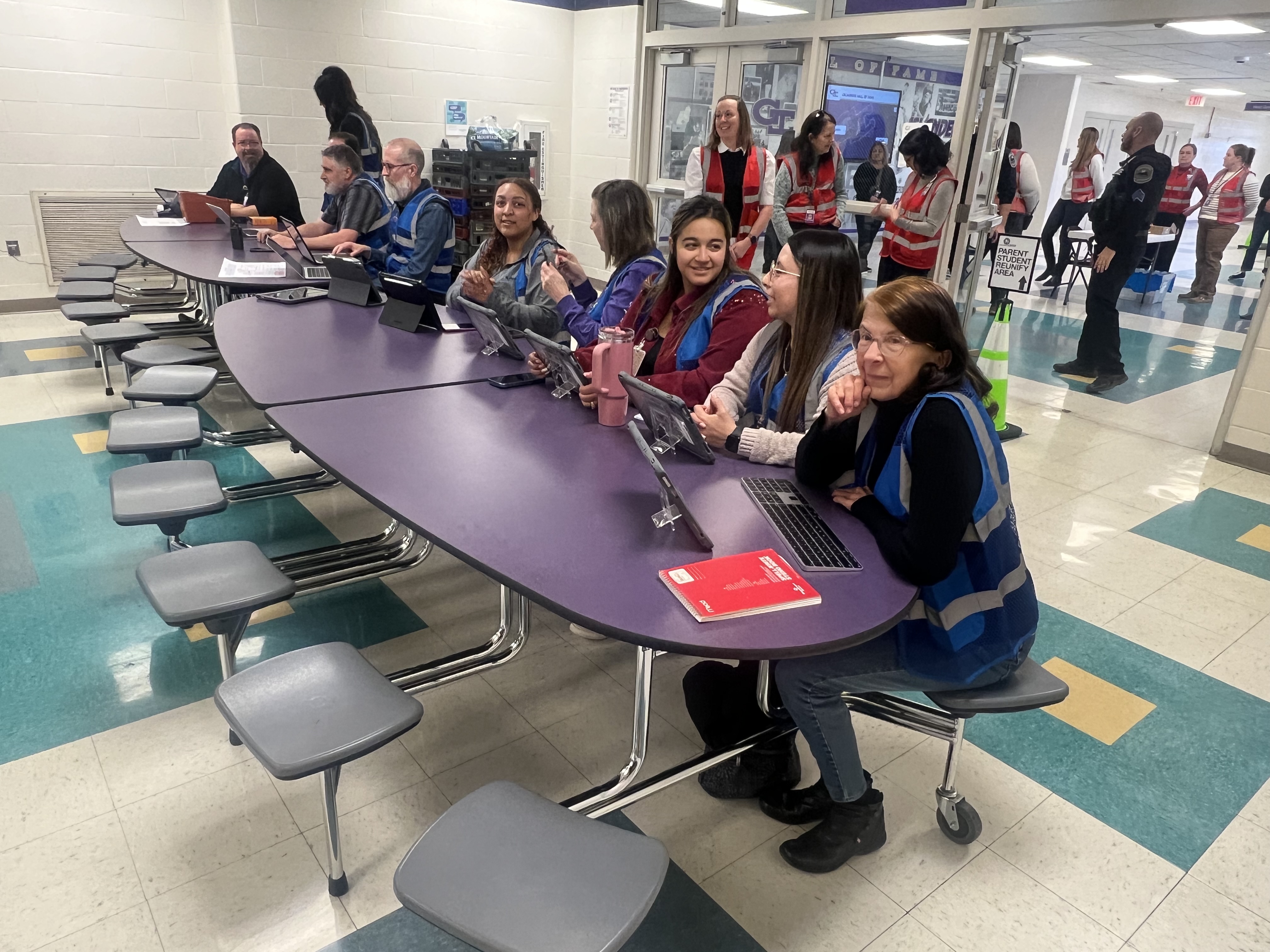
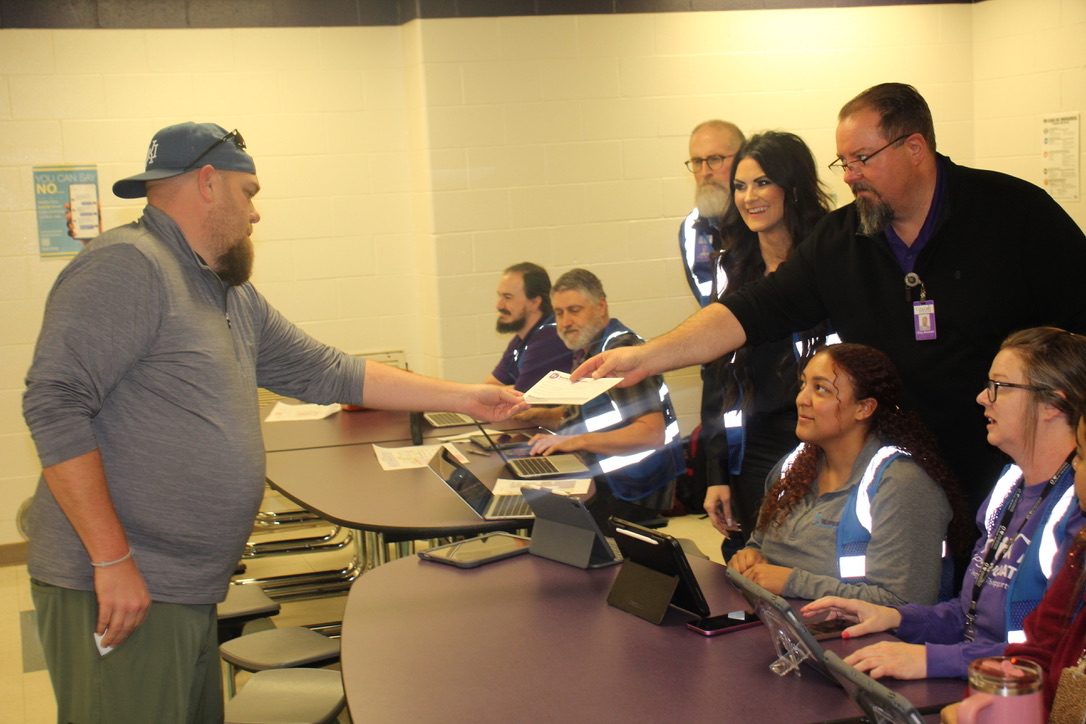
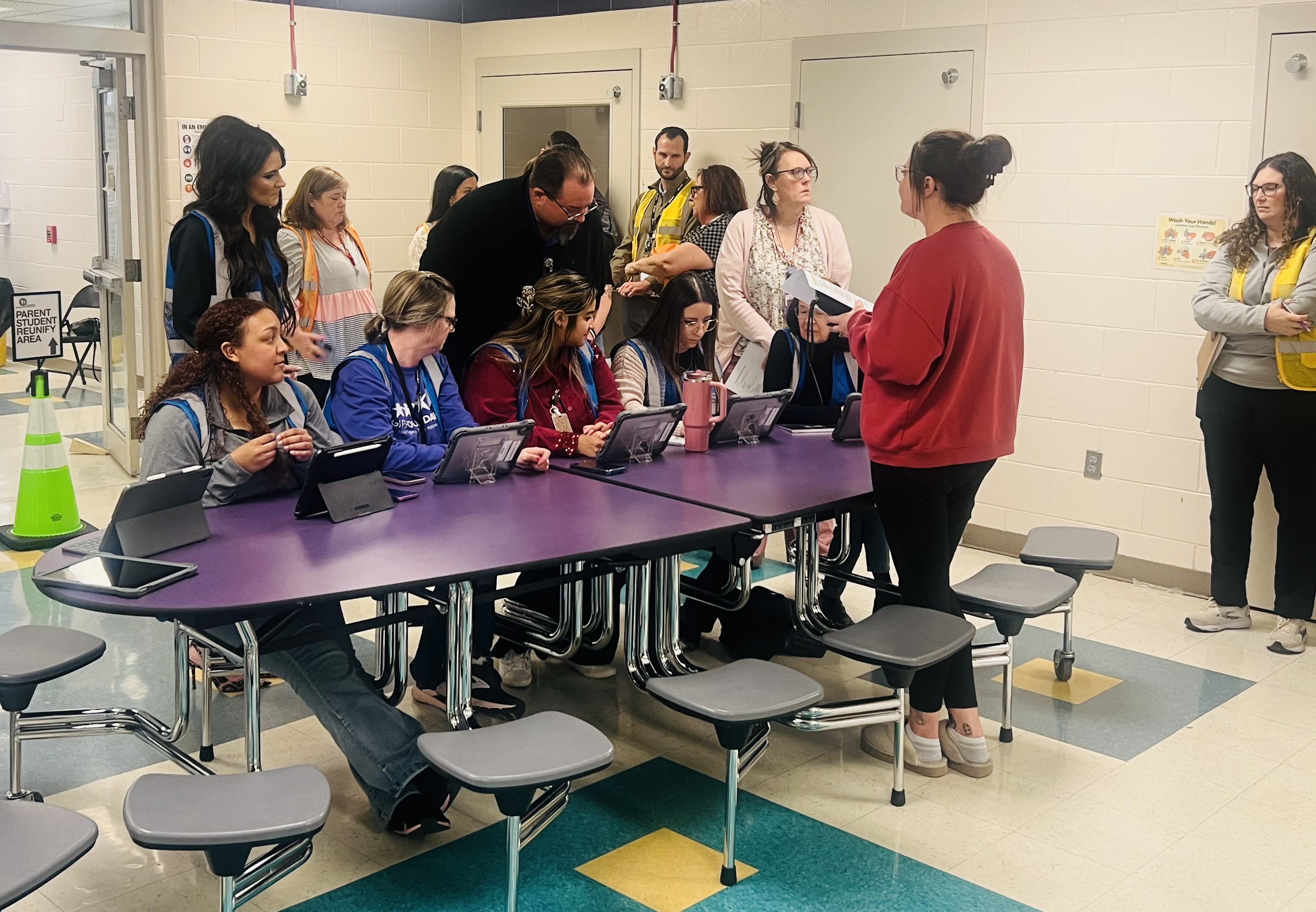
Greeters were stationed at the entrance to manage the influx of anxious "parents." The checkers were tasked with the verification of IDs against the school’s digital database. The reunifiers served as the final link, bringing students from the holding area (the gym) to the parents in a controlled environment.
“We learned that the reunification wait can feel like an eternity for a child,” said Jacobsen. “Our updated plan includes providing water, snacks, and covering gym windows to shield students from the distress of arriving parents.”
Ultimately, the drill was a success. ID verification was 100% accurate, and staff received a 4.8/5 rating for professionalism. However, the simulation did exactly what Jacobsen hoped it would by revealing the cracks that only appear under pressure. One of the most significant learning opportunities arose from a "Double Check-out" bug discovered in the Synergy software. The system allowed a student to be released twice without a "Hard Stop" alert.
"Technology is wonderful until you don't have technology anymore," Jacobsen said, emphasizing that while digital tools are the primary engine, "pen to paper works every single time."
Perhaps the most poignant moment of the drill involved a simulated medical emergency. A scenario was thrown in where a student was "injured" and diverted to a hospital. In the chaos, the parent of that student reached the reunification gym before the staff realized the child wasn't there. This led to a new "Silent Trigger" protocol, using radio codes to discreetly move parents of injured students to a private crisis room before they ever enter the public staging area, shielding them and other parents from unnecessary trauma.
For Jacobsen and the safety team at GIPS, February 12th was not the finish line. In fact, it was the baseline. The district is already looking toward the next five years, with a heavy focus being placed on language access (there are 19 different language groups within the district) and threat assessment (integrating safety within MTSS).
At the end of the day, the staff was equally exhausted and empowered. Everyone, from the IT & Data Team to the Crisis Response Team to the building administration, succeeded in their role.
“Everybody did wonderful,” he said. "We haven't made it upstairs yet to perfection, but we’re going to try to get there."
The reunification drill proved that while you can't predict every crisis, you can certainly out-train the chaos.