The Handprints on Arnold: How one school in The Sandhills has redefined "student-run"
The Handprints on Arnold: How one school in The Sandhills has redefined "student-run"
By Tyler Dahlgren
You’d be amazed at all the handprints Arnold students have left on their hometown and even some surrounding counties through the years.
Here in this Custer County village of 600, students don’t just study business, art and science. They run a graphic design firm, manage a commercial-grade greenhouse, and manufacture products that are installed on street corners, county roads and race cars. Yes, you read that right, and we'll get to it shortly.
The culture at Arnold Public Schools is one of impact. They’re intentional about offering real-world experiences and the chance for their students to leave a mark on this small and charming community in the Nebraska Sandhills. From the 911 road signs guiding emergency services to the custom decals on fire trucks and the sprawling "jungle" of the school’s greenhouse, the students of Arnold are the architects of their own education.
They know it, too. And, around here, the kids don’t make a habit of wasting opportunities.
School House Graphic Productions: A Vinyl Legacy
The tradition of student entrepreneurship in Arnold got its spark near the turn of the millennium, when the husband-and-wife shop and art-teaching duo of Clay and Julie Moore saw an opportunity to solve a small but certainly time-consuming local problem.
The Sandhills Open Road Challenge (SORC), a high-octane, 55 mile open-road race, draws droves of racing fans to the area every summer. Traditionally, the race organizers had to outsource the hundreds of vinyl numbers and sponsor decals for the cars.
The Moores saw an opportunity. They figured that with a single plotter cutter, effectively a giant "Cricut" machine, their students could do the job themselves.
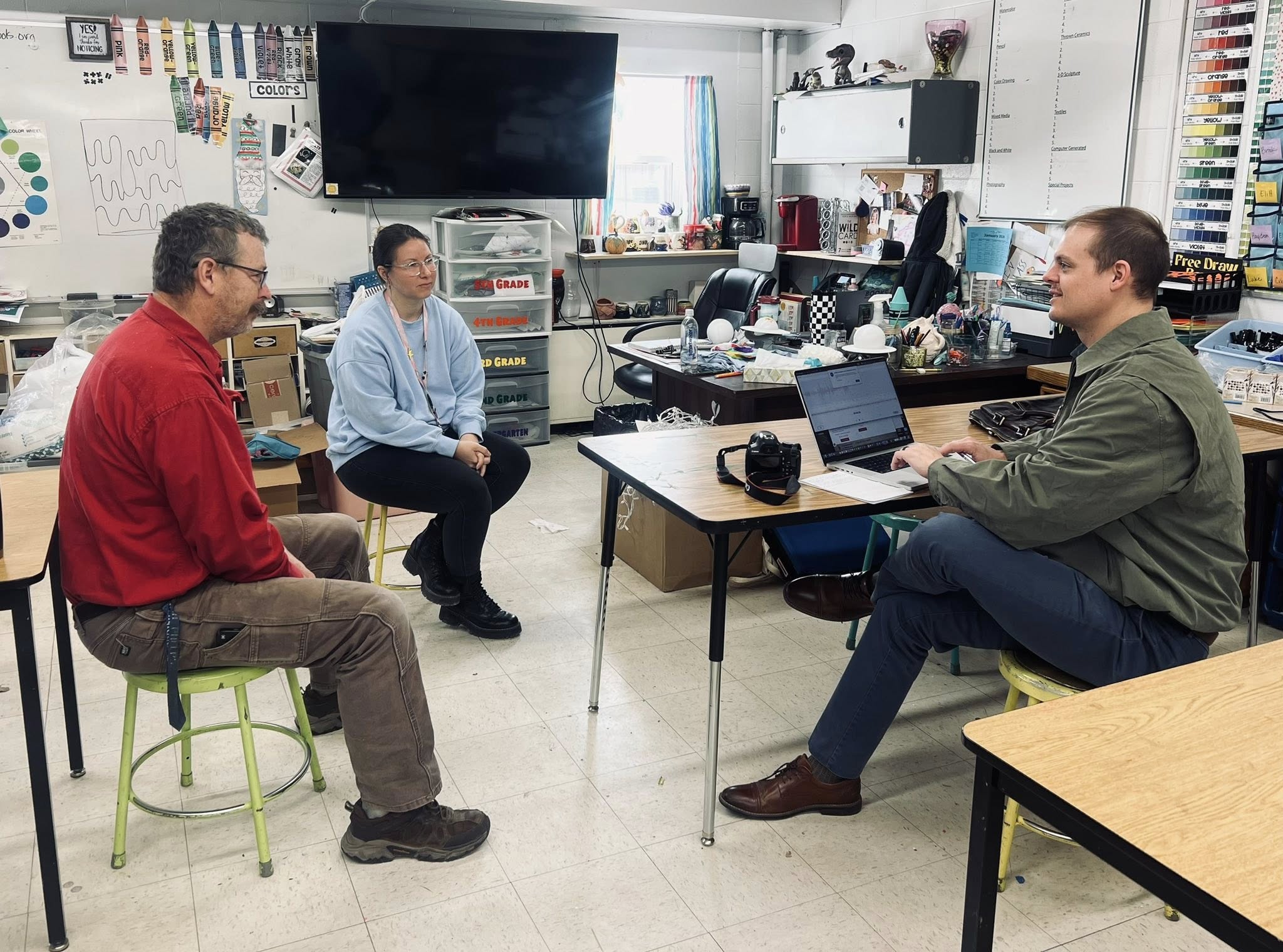
"They started with that one small cutter," said Katie Berglund, who teaches K-12 art in Arnold these days while helping to carry the tradition forward. "They made money off of that, put it back into the business, and grew. Now, it’s evolved into a full-scale operation."
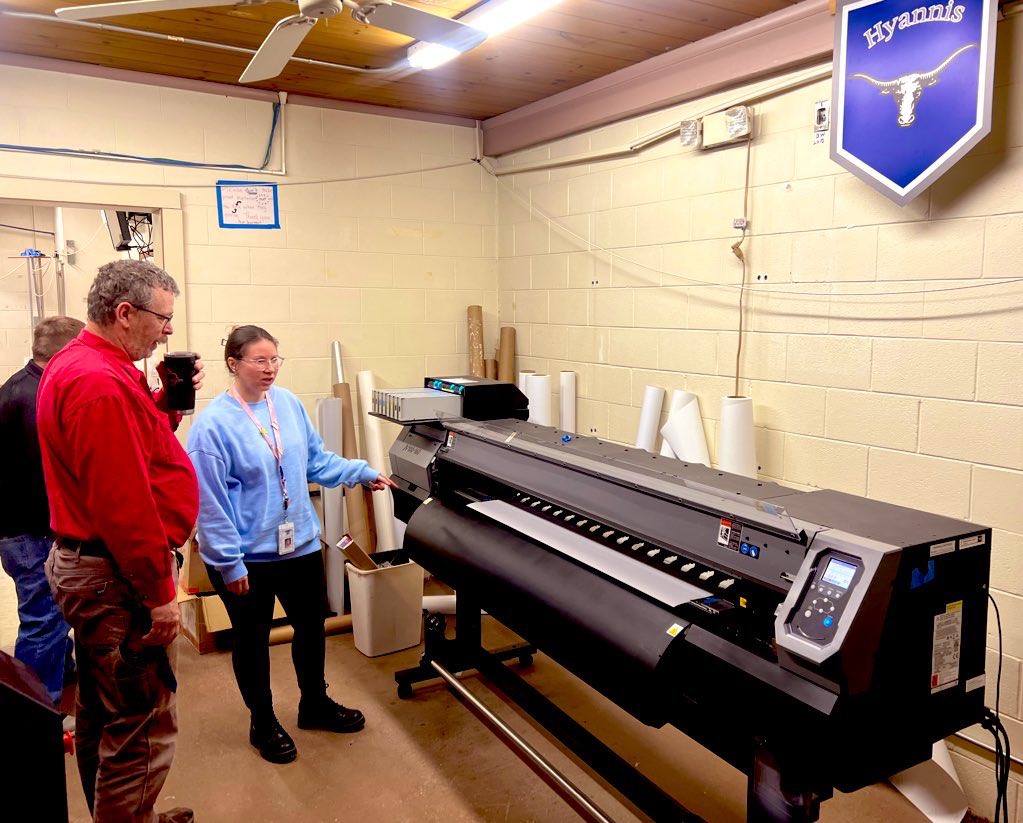
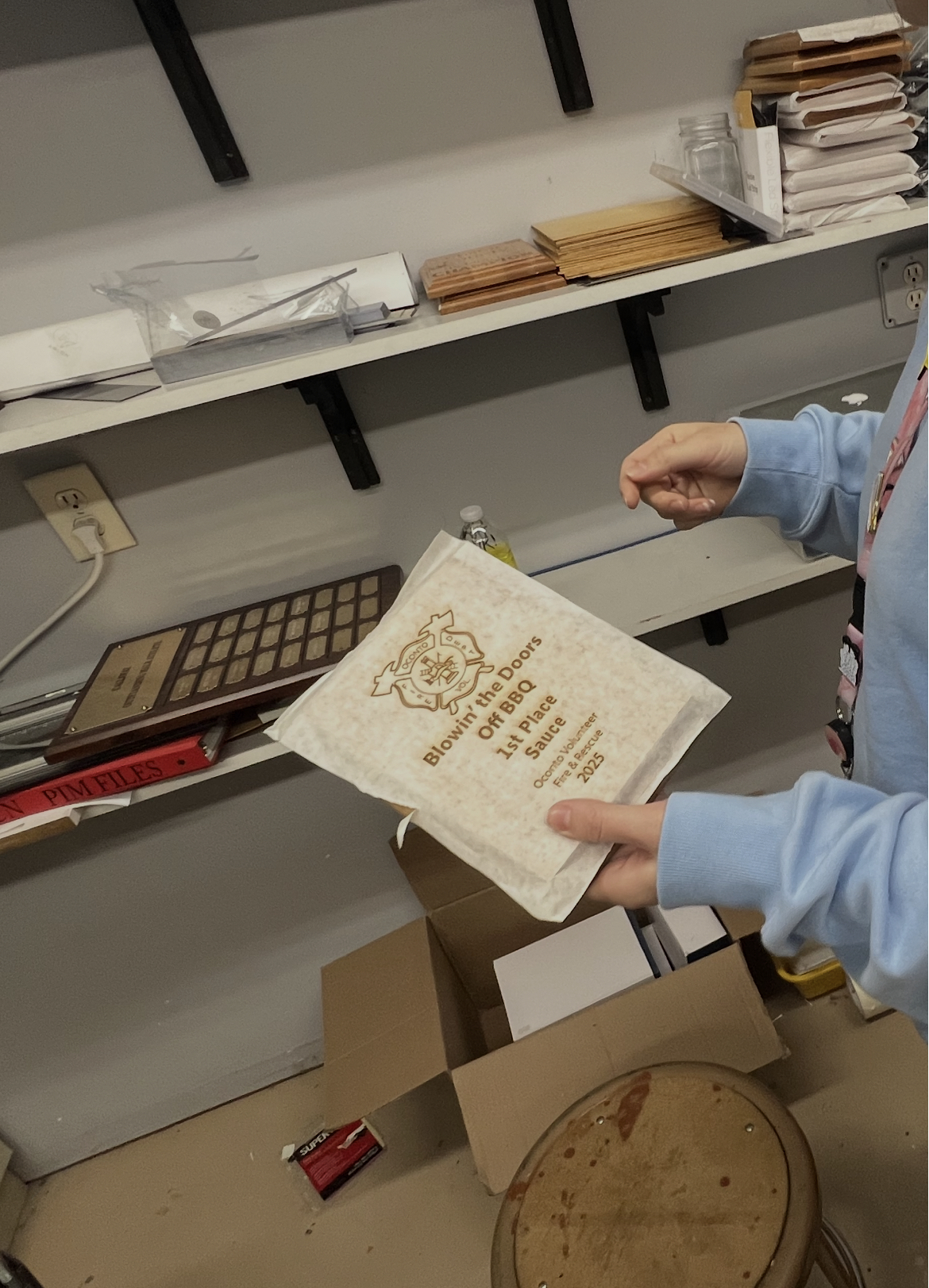
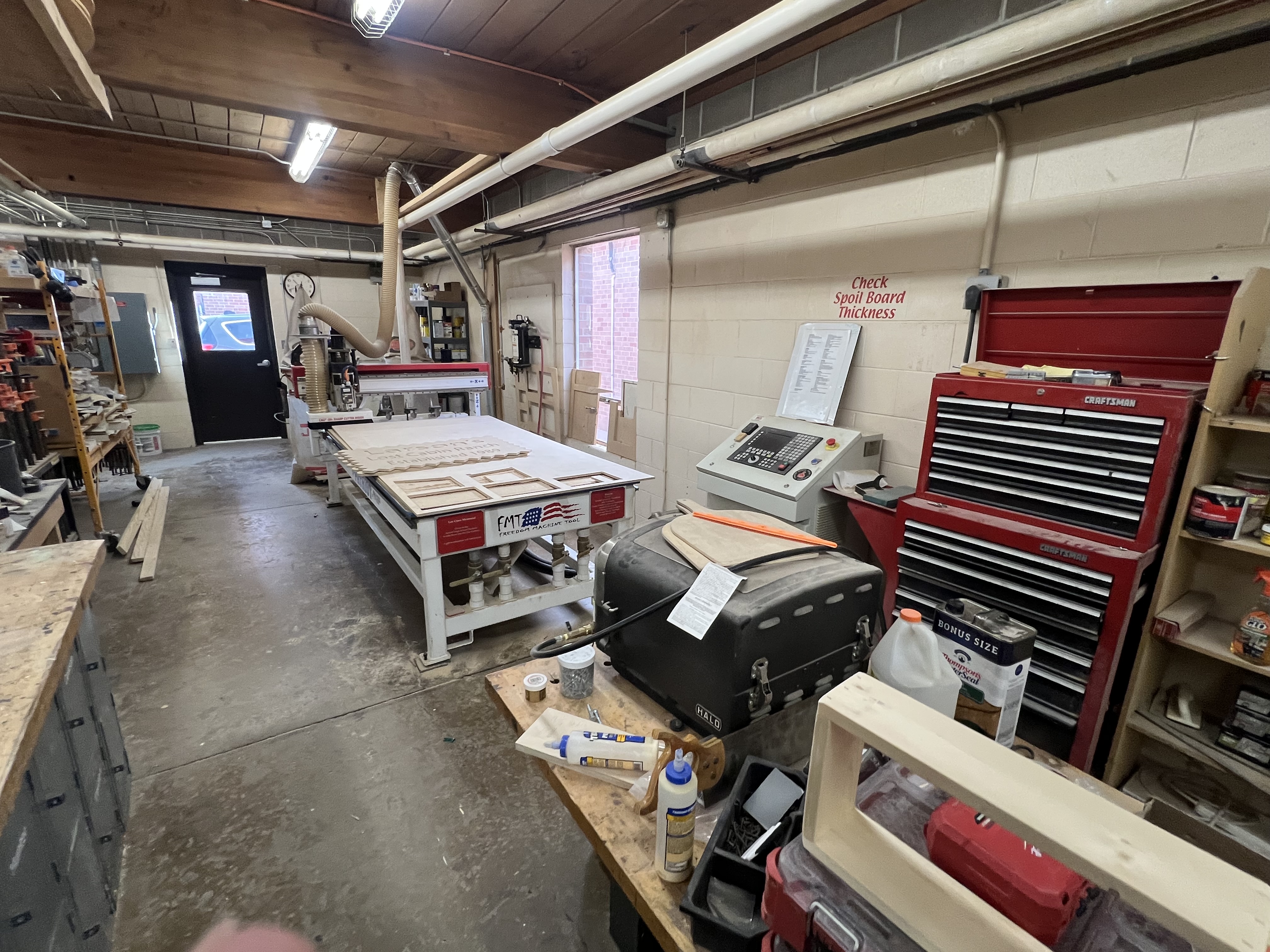
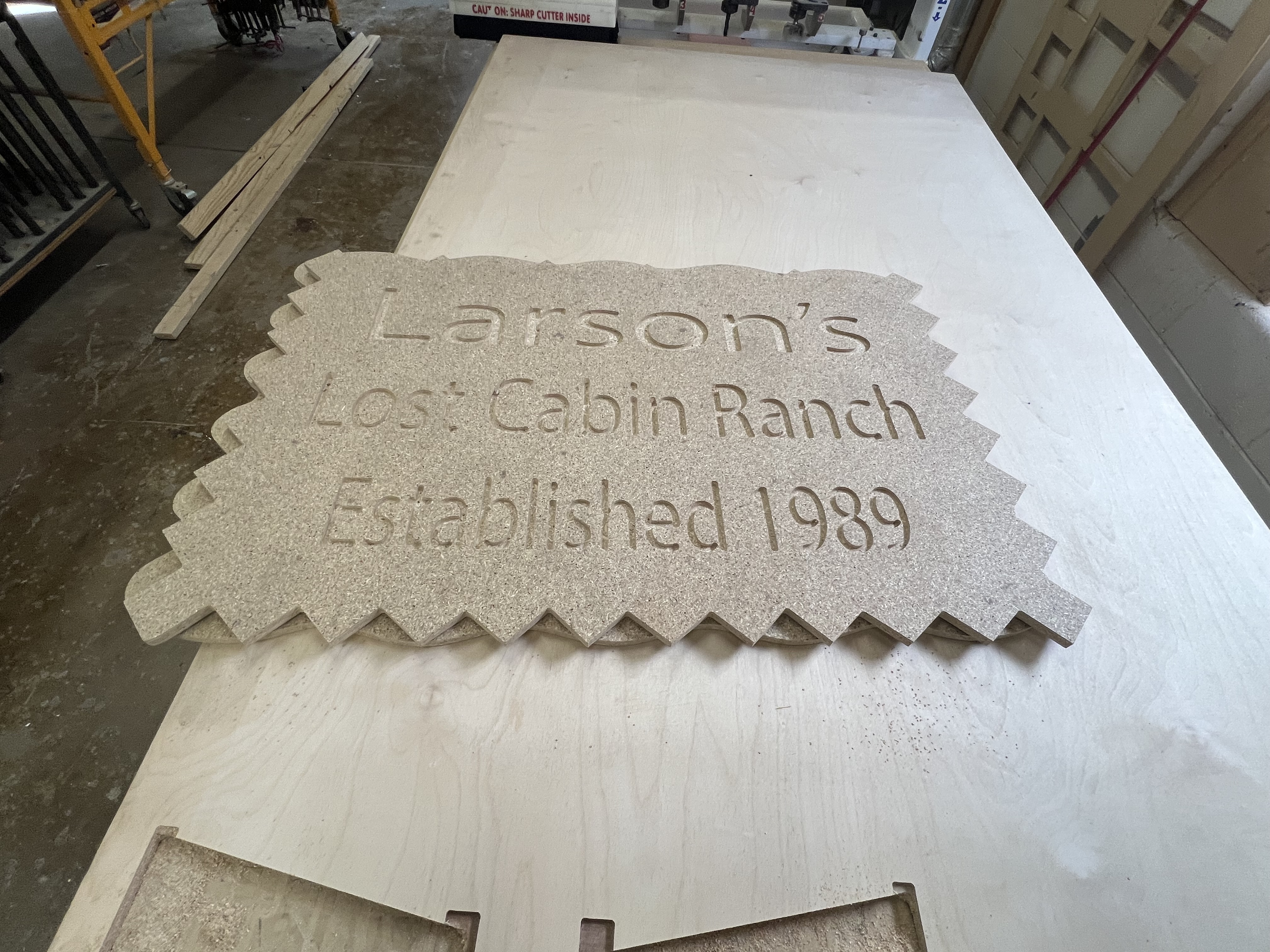
Today, School House Graphic Productions (SHGP) is a production powerhouse. Under the guidance of Berglund and Industrial Tech teacher Todd Phelps, students handle the entire lifecycle of a project. They aren’t just pushing "print." They are welding frames for signs, using CNC machines for precision cutting, and operating a commercial-grade laser engraver.
Real-world experiences that will undoubtedly benefit the students when they journey off into, well, the real world. The impact is visible for hundreds of miles. SHGP has produced and installed 911 road signs for Custer, Cherry, Thomas, and Blaine counties. Students are brought on as school employees throughout the summer, when they really crank the production up a notch or two.
"Our handprints are all over the entire area," said Phelps. "We’ve done sheriff vehicles, fire trucks, and even a full wrap for a traveling Cajun food truck. The kids applied that wrap themselves."
For Bergland and Phelps, the summer transformation into a professional workplace is always a fun sight to behold. The school employs six to eight high school students full-time, working 8:00 AM to 3:00 PM. These students manage the hustle and bustle, dealing with deadlines and communicating with clients.
"One student would come in and do the billing and jobs in the morning, then go be a lifeguard in the afternoon," Berglund recalled. "It gives them that one-on-one experience. They see a project from the first email to the moment it walks out the door."
From Soap to Aquaponics: School House Gardens
While SHGP was pitching in on the town’s visual landscape, a new kind of growth was beginning in Arnold’s science department. Six years ago, 7-12 Science Teacher Melissa Sandager was asked to incorporate Agriculture into the curriculum.
Given their location, the serene Sandhills sprawling for miles in every direction, Sandager saw how that made perfect sense. There was one small hurdle, though.
"I told them I didn't know anything about Ag," Sandager said. "I said the kids might have to help me with this, but I'm willing to do it."
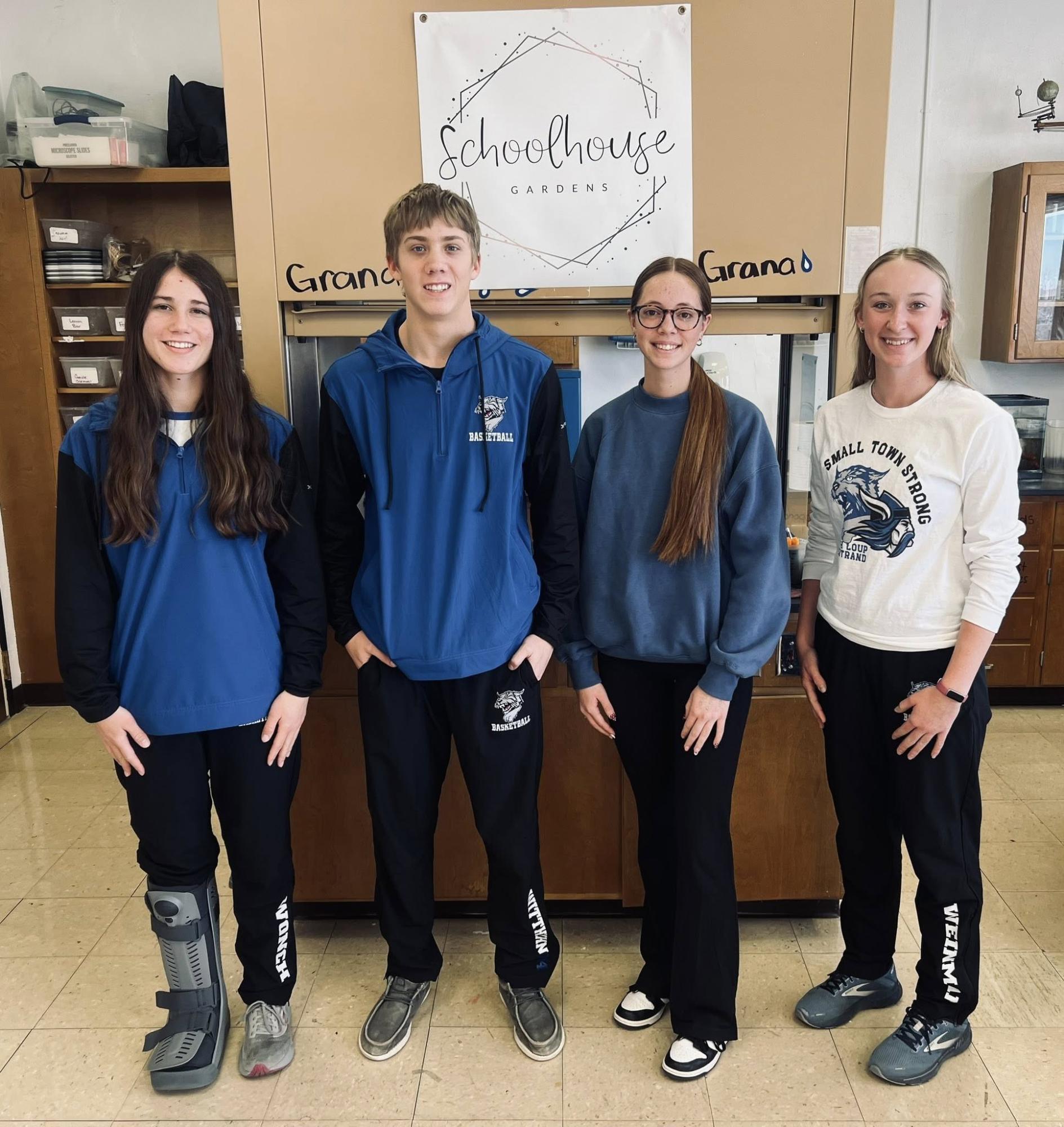
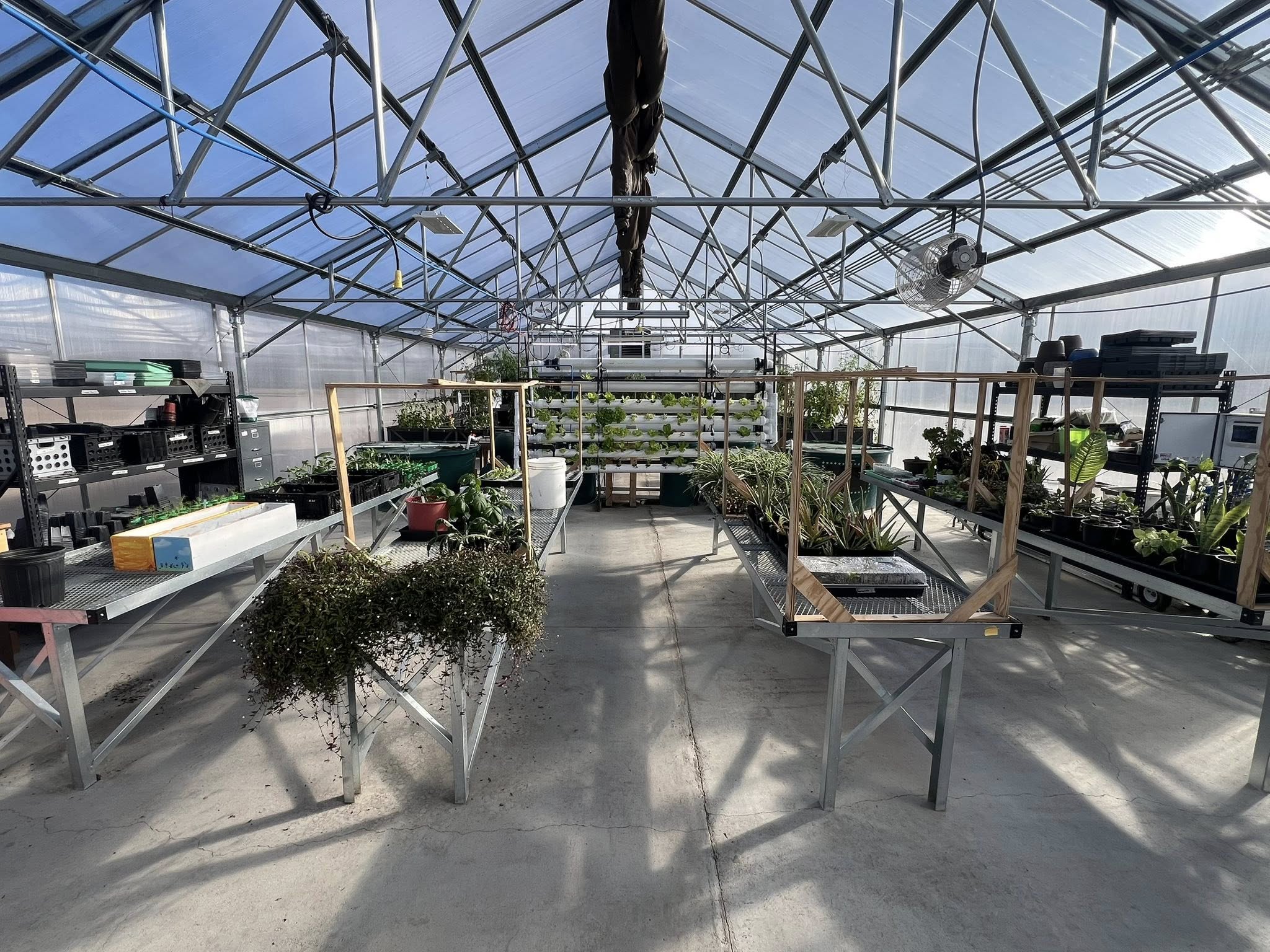
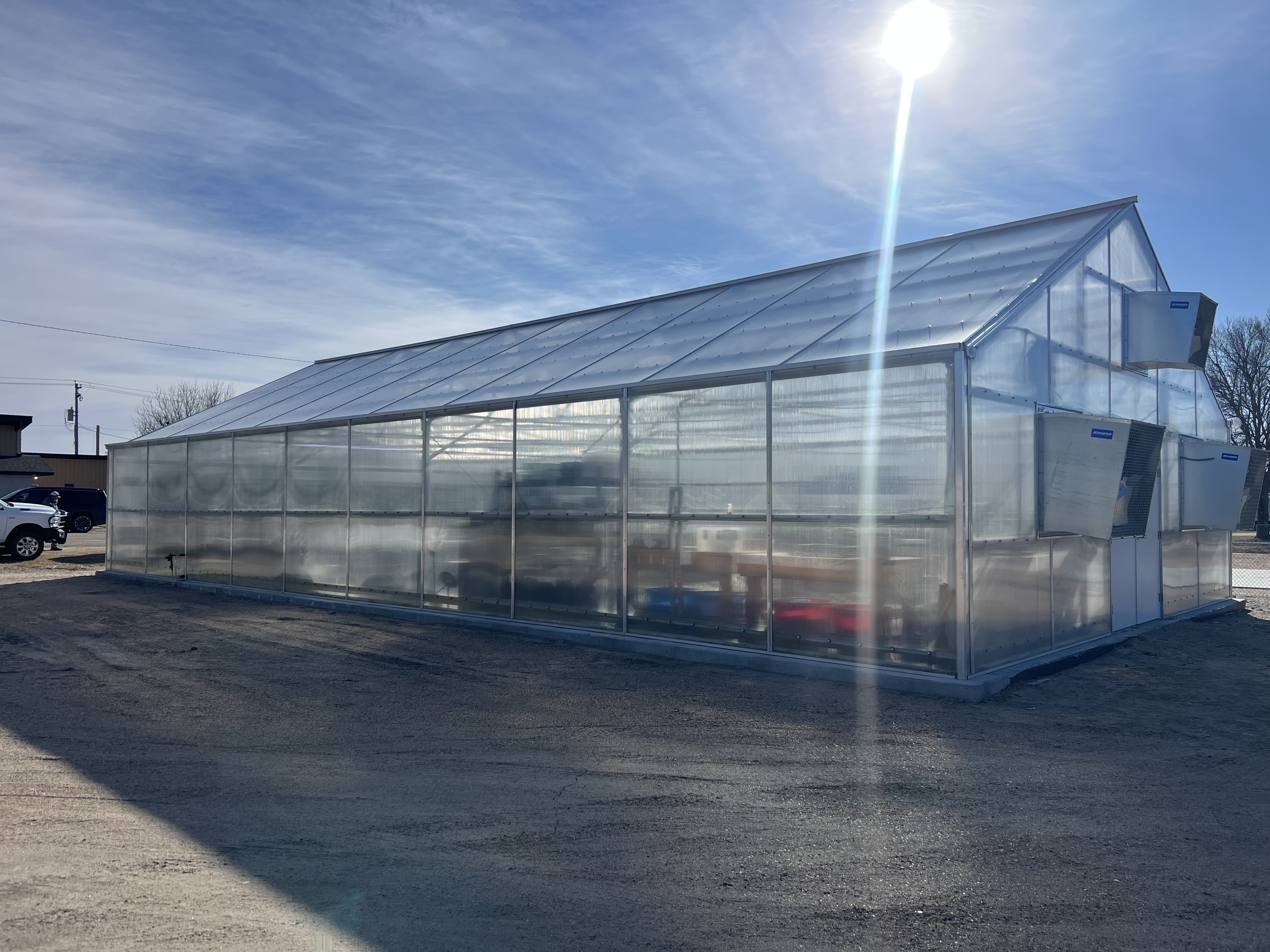
What started as an Applied Science class with three students has blossomed into a full-fledged program with 27 students and a 40x60-foot state-of-the-art greenhouse. They’ve come a long way in a short amount of time, and their journey began with a failed batch of goat’s milk soap.
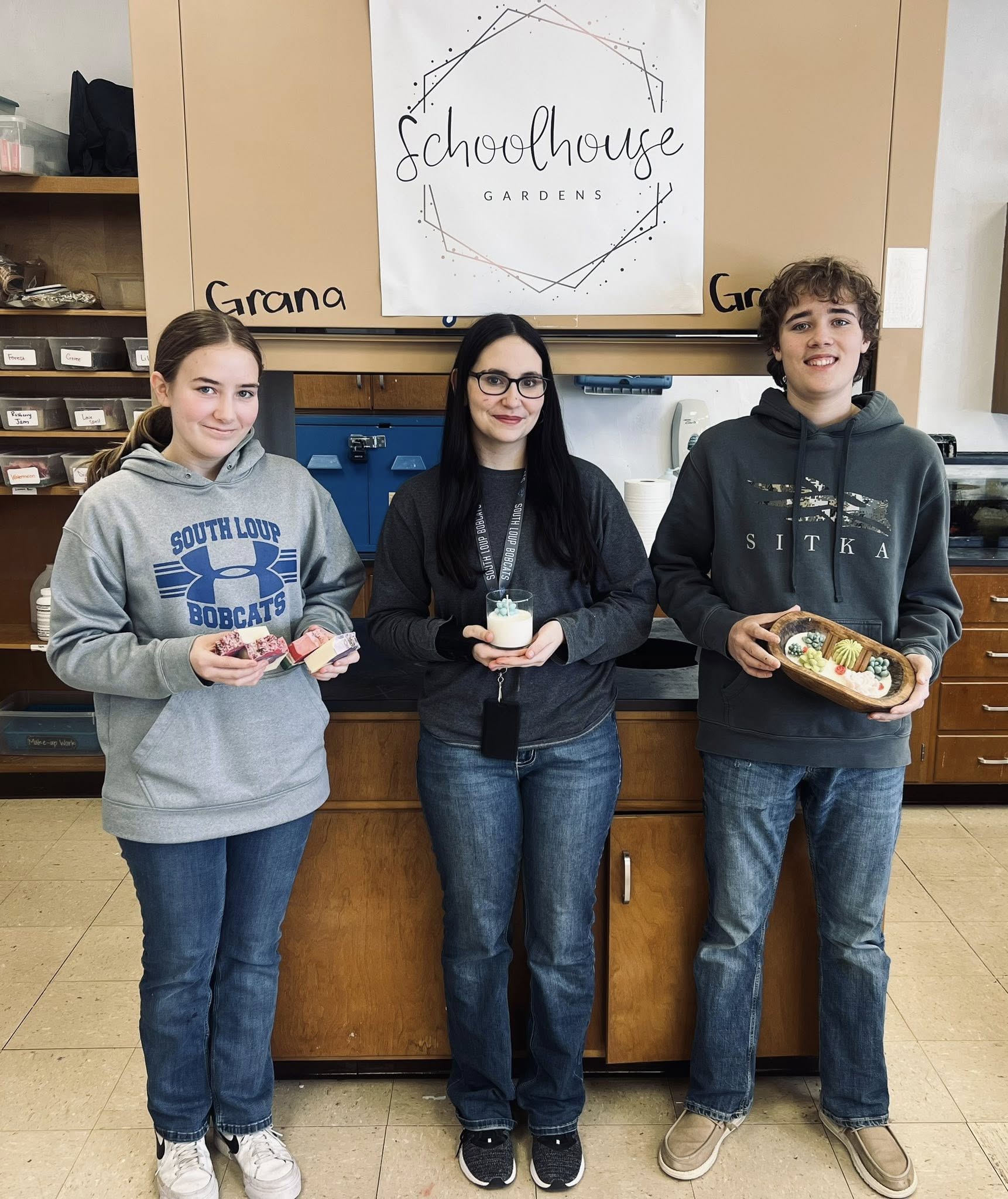
"It turned out terrible at first," Sandager admitted with a chuckle. "But we kept trying. It didn’t take long for the students to get it right. Then we started giving it to teachers, and they told us we should sell it."
The entrepreneurial spark caught fire, much like it did with School House Graphic Productions 25 years ago. The students moved from soap to plants, eventually taking over Sandager’s classroom with so many tomato and pepper starts that it eventually began resembling a jungle.
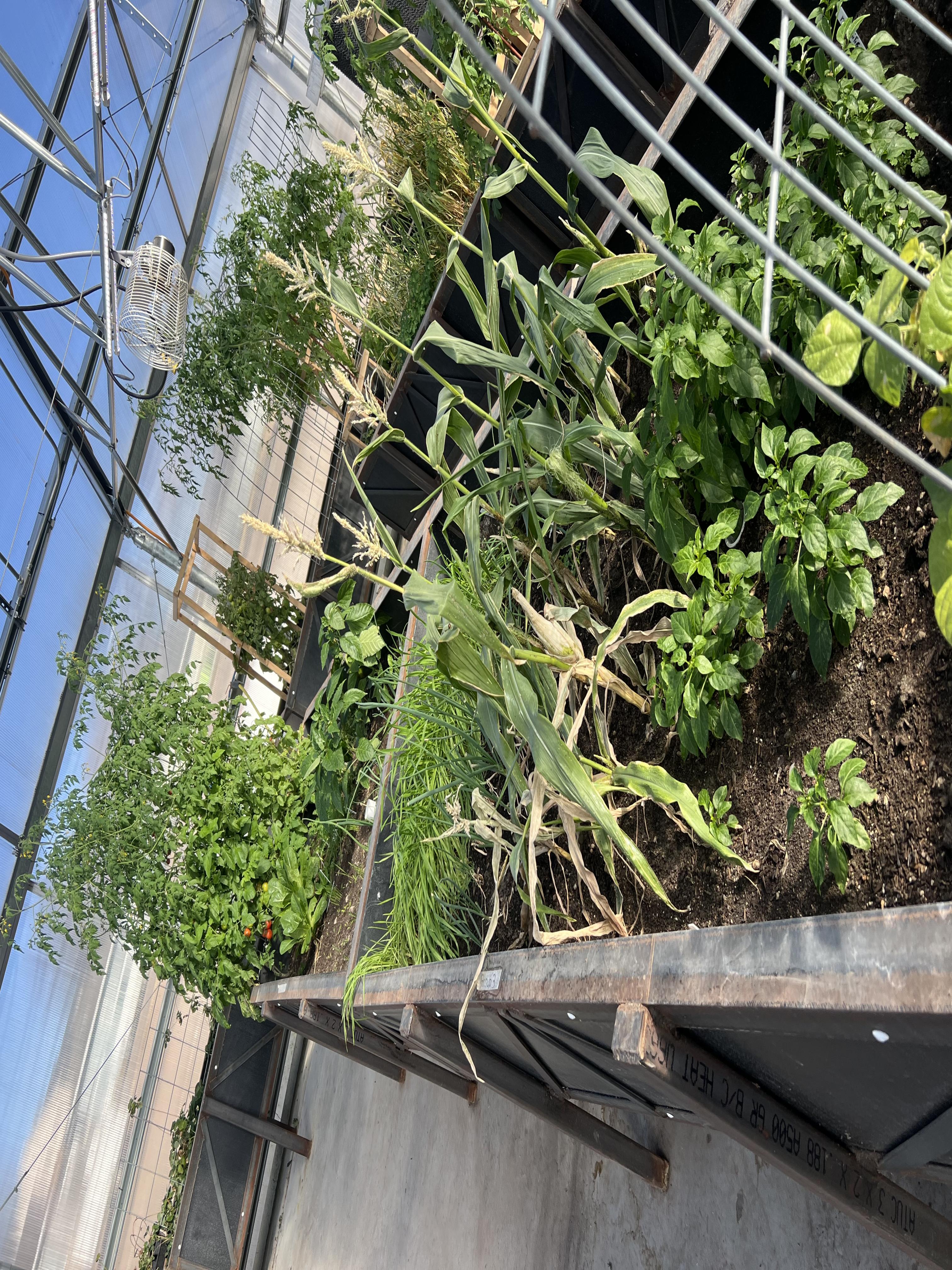
"We were tying them to everything," she said. “And then we had a little fundraiser sale out front and sold the soaps and sold those plants. It was a hit with the community, and the kids really liked it. They liked being able to take care of the plants, see 'em grow. And so then I went to Mr. Morgan and I said, ‘Hey, is there any way we could just get a little tiny greenhouse?’”
Recognizing the students' passion, the school board and local donors stepped in. They didn't just buy a small shed; they invested in an eye-popping facility. Today, School House Gardens is a diversified business. To avoid competing with a local nursery, the students found their niche in houseplants, candles, and wax melts.
They also manage a complex aquaponics system, a lettuce wall fed by fish tanks, and a worm composting operation. The program has raised nearly $8,000 in recent years from sales alone, while grants and community donations have poured over $80,000 into the facility.
"It’s driven by what the kids come up with," Sandager said. "If a kid wants to make wax melts, we figure out how to make wax melts. If they’re interested in forensics or zoology, that’s where the curriculum goes. I get to see their strengths outside of being a 'strict' science teacher."
The Mark They’re Leaving
It’s surreal for the students, seeing their work out in the wild. When they talk about the handprints they hope to leave on their community, they’re also talking about legacy, albeit unknowingly.
"You've learned how to use different programs and actually make something," said Josie Lehmkuhler, a junior. "Then you see it posted up on a building around town and it’s like, 'Wow, I made that.'"
The skills being built are the soft skills that employers can sometimes find lacking in the modern workforce. Communication, accountability, problem-solving, teamwork and countless others. Being a student entrepreneur provides a quick course and, over time, a boost in all the right life skills.
EvaLynn Wonch, a junior who works for SHGP in the summer, said that the business side was the biggest eye-opener. She’s grown since joining the team, and that’ll serve her well someday. It’s serving her and her classmates well now.
"Communication is a big thing," Wonch said. "Emailing customers, ordering materials, stuff you wouldn't do unless you were part of a business. We get to experience that for ourselves."
That sentiment is echoed by the administration. Superintendent Joel Morgan sees these programs as the ultimate preparation for adulthood.
"Learning responsibility, deadlines, and accountability at a young age is vital," Morgan said. "Even if they don't go into graphic design or agriculture, the skills lead to a hobby or the ability to take on their own projects. It’s a meaningful experience all around for our students. And that’s always what we’re trying to provide. Meaningful experiences.”
The success stories are already piling up. Berglund points to Bailey Schwarz, a 2021 graduate who didn't discover her love for graphic design until her senior year. Flash forward five years, and Schwarz has turned that experience into a blossoming career.
"She went to school for it and is now doing graphic design work in Virginia, all because she took a class and found a passion,” Berglund said. “She used to come back and work here in the summer even after she graduated because she enjoyed it so much."
Teachers love telling those success stories, and they always do so with pride. After all, those stories serve as proof that this venture has been worthwhile. In Arnold, they have every intention of sticking with it.
A Community-School Synergy
Perhaps the most unique aspect of Arnold’s success is the deep, symbiotic relationship between the school and the town. In many rural areas, the school is the heart of the community. That’s true in Arnold, where the community is also the muscle behind the school.
When the shop classes were building a new concession stand and a building for the greenhouse, for example, they hardly did so alone. Like in most small towns, word spreads and people show up. It’s always nice being able to count on that.
"One day we had seven or eight different community members show up because we needed to get the roof on," Phelps remembered. "They just showed up and helped the kids put it up."
This support goes both ways. During the SORC race in August, the scene at the local shop is one of calculated and productive chaos. Dozens of students, some as young as six or seven, swarm over 170 high-performance cars, applying numbers and sponsor stickers. They operate like a well-oiled machine. Most of them have done this before.
"The sports teams come in to volunteer. The volleyball team, the football team, they all work together for three days," said Berglund. "It’s amazing to watch. You don’t even have to supervise. They just go and do a great job of representing their school."
That level of trust speaks volumes. The kids from Arnold are dependable, and people know it. There’s been community investment in the equipment, the 3D printer donated by the Community Foundation or the CNC machine funded by local donors, because they realize they’re investing in the future of their own town.
“The community, they're the people that order things from us,” said sophomore Callan Witthuhn. “They all just support us. We can definitely feel that through the year.”
True to their forward-thinking nature, the district has introduced STEM labs and 3D printing to its students as early as the fifth grade. By the time a kid enters high school, the software and the machines aren't all that intimidating. By then, they're simply seen as tools for their next big idea.
And in Arnold, big ideas are welcomed.
"Our administration always lets us run with our ideas," Sandager said. "They say, 'Sure, let's see what it can turn into.’”
Sandager and her fellow teachers try to do the very same for their students.
“Whatever interests them, we just run with it.”