Bring Your Muck Boots: Cross County ag students see an embryo implanted at their own livestock facility
Bring Your Muck Boots: Cross County ag students see an embryo implanted at their own livestock facility
By Tyler Dahlgren
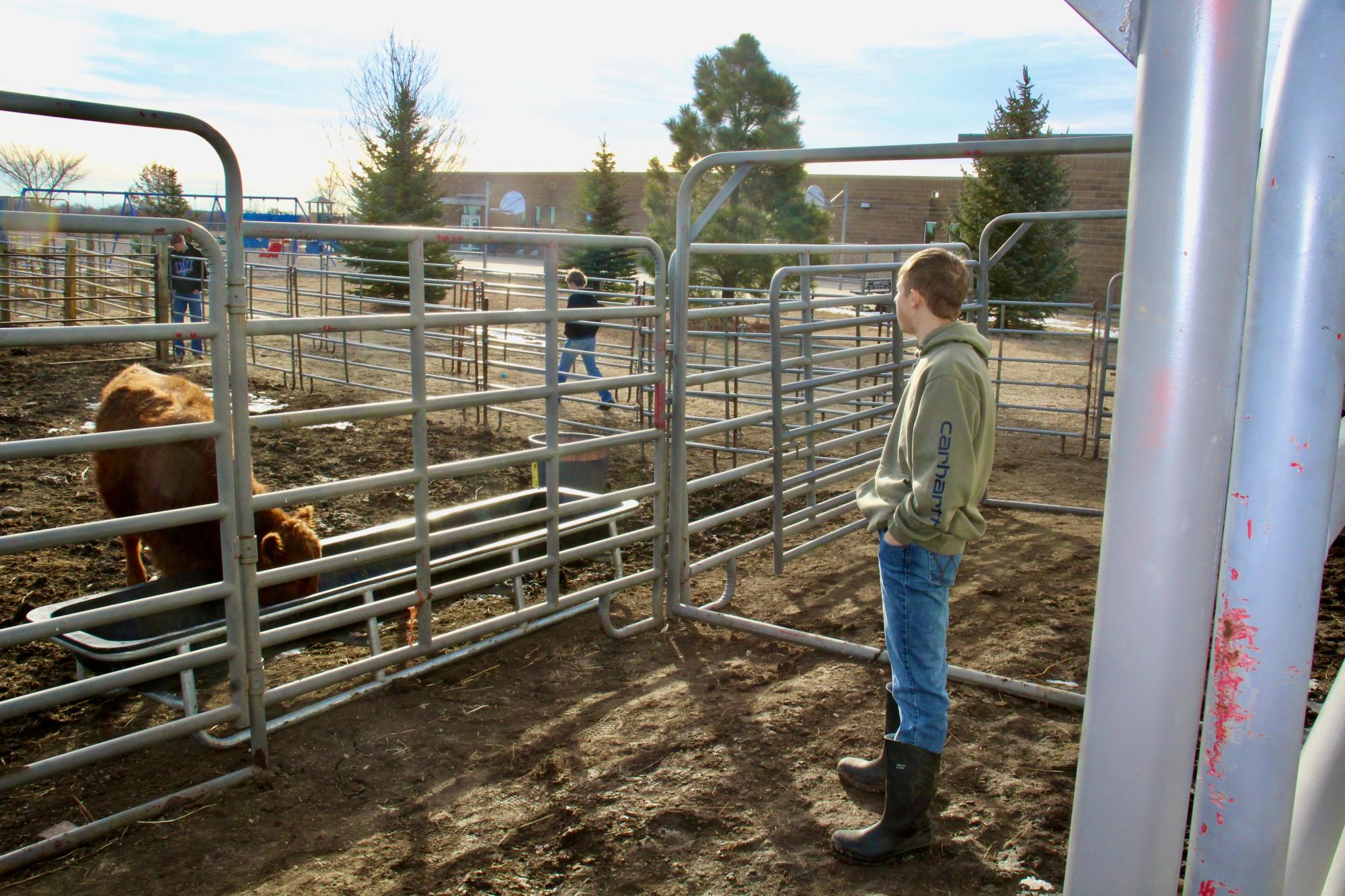
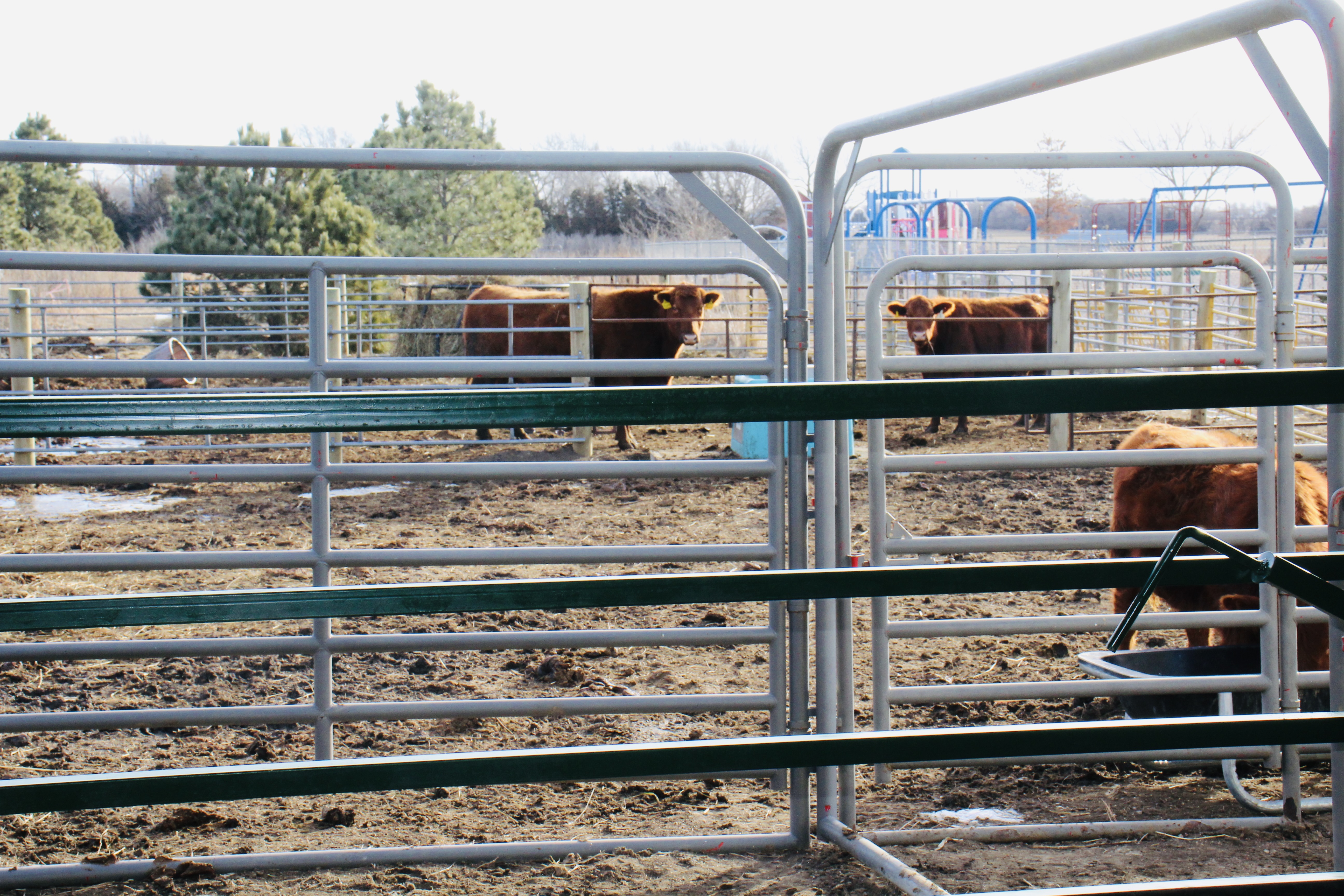
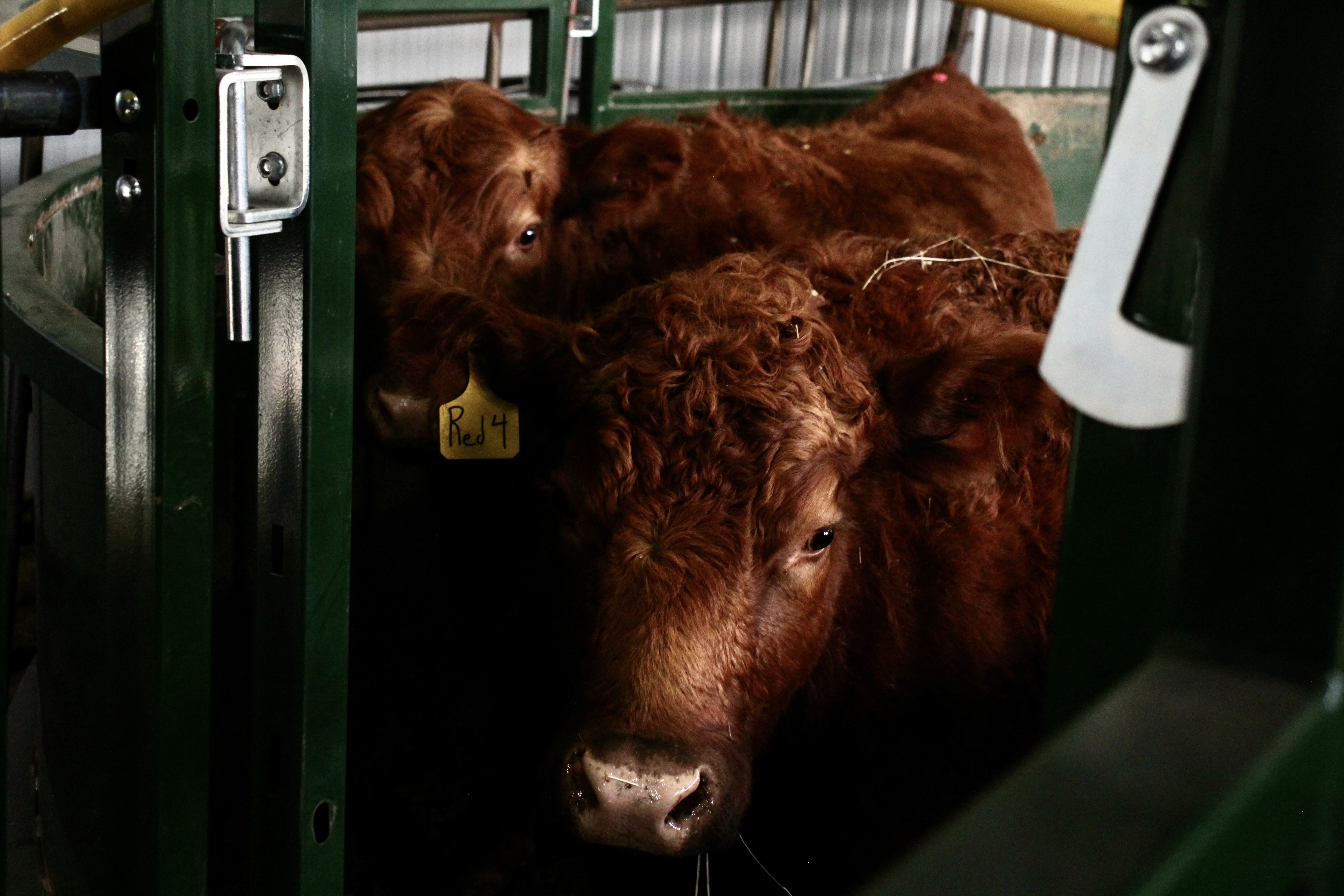
On the north edge of Stromsburg, just beyond the hum of classrooms and busy hallways, six cattle roam a pen and try their best to ignore the Cross County students sent to corral them.
Inside the nearby shop, it’s all the usual hustle and bustle. One of the top agriculture programs in the state, they move fast in here.
Superintendent Brent Hollinger points to the spot where a wall once stood, back when the ag shop was a “little tiny welding shop” and a computer lab with windows kind of felt like a design flaw. The walls were blown out. A 12-foot garage door went in. The wood shop expanded. A greenhouse rose outside. And then, with the help of a $125,000 alumni donation, a livestock working facility unlike any other in Nebraska schools was constructed.
In their new facility, students safely handle animals, administer vaccinations, monitor feed rations and record weights. On this unseasonably warm Thursday morning in February, the facility is buzzing with activity, much like it usually is. Today, they’re preparing for something new.
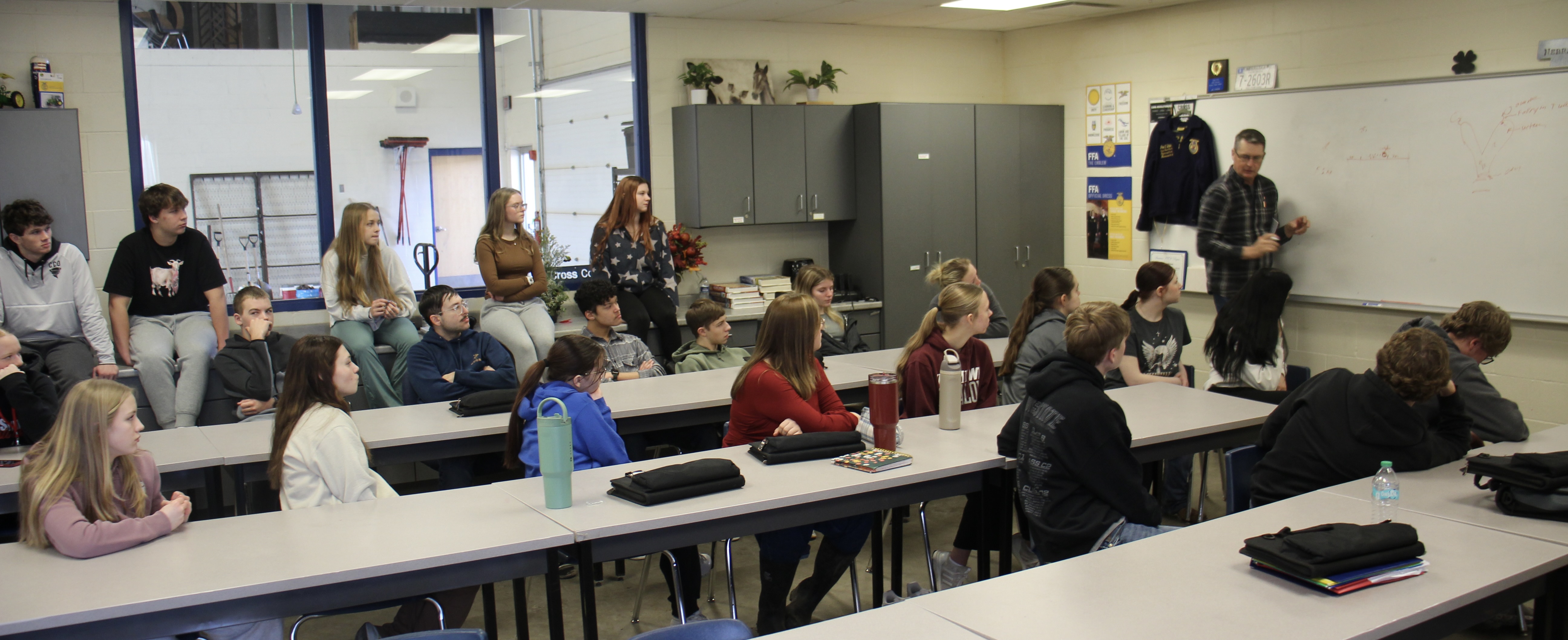
An embryologist from Columbus is coming to implant an embryo in one of their cattle, and all of Cross County’s Ag students are invited to Joe O’Brien’s classroom. Two students from York are there to visit, too. The room is packed with students eager for a new experience.
At Cross County, those grow on trees.
“Bring your muck boots,” Hollinger told us. “You’re going to see something pretty cool.”
O’Brien, who teaches a wide variety of Ag classes and serves as the school’s FFA advisor, arrived at Cross County seven years ago. The facility was already impressive. The community’s investment was obvious. So was its culture. Originally from the Tilden area, and a Newman Grove graduate himself, O’Brien felt at home.
“When I interviewed, it was clear what kind of push this community had in agriculture,” O’Brien said. “That was a huge drawing point for me. And then getting in and just seeing how much the kids wanted to be involved in the process of planning and making the future of this program grow, that was so cool to see.”
At Cross County, there’s a commitment to student opportunity, real world experiences and hands-on learning. There’s also a belief in ag, both as a rich part of their community’s past and an important part of its future.
The livestock program itself goes back years (NPSA featured Rosie the cow in February, 2017), but the working facility is new this year. The idea grew from student conversations sparked during a unit on Temple Grandin and livestock handling systems. Students didn’t just study best practices. They started designing their own. You almost have to see it to believe it.
Christine Jarosz is a former ag teacher who is now a program assistant. She’s seen students who don’t even come from farming backgrounds find their niche, be it in design, in construction, or in daily herd management.
“There’s something for everyone,” Jarosz said. “From designing to implementing to just the hands-on work with the herd.”
The buy-in runs deep, a prime example of student empowerment and ownership. Students who’ve graduated two or three years ago still call to check on the cattle.
“That makes a guy feel pretty good,” O’Brien said.
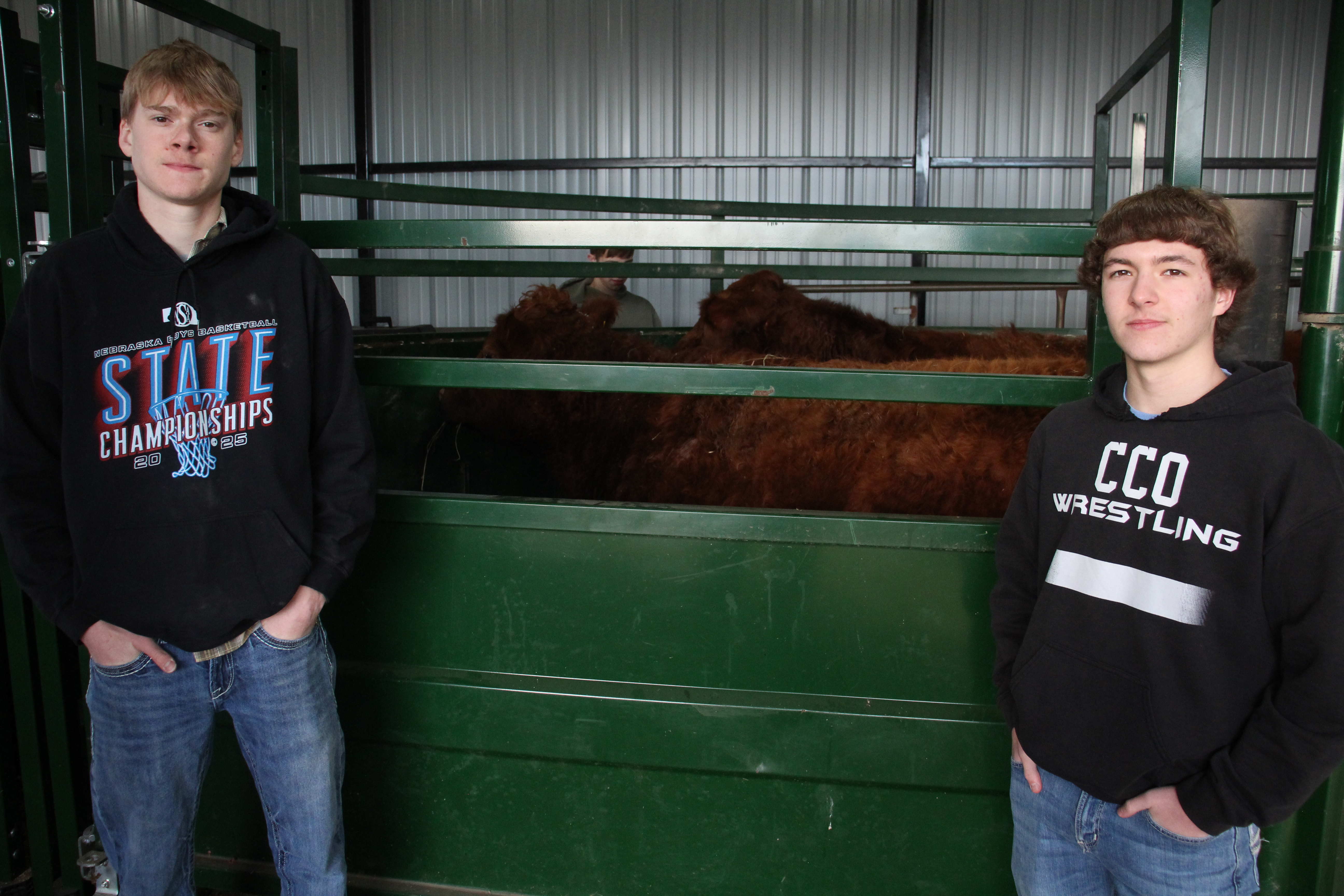
By third period, seniors Wyatt Smith and Sawyer Anderson have already logged quite a busy day.
On an average day, their animal science class heads outside to feed a calf, check water, inspect fencing and weigh animals weekly. They track growth and adjust feed. They troubleshoot problems before they escalate.
“There’s always something to do or something to work on,” Smith said. “They’re all learning experiences.”
Like spending an hour with embryologist Phil Buhman, owner of Preferred Genetics for Bovine, who stood at the head of the classroom and explained in great detail the science behind embryo transfer. He walked them through synchronization protocols, timing windows and what it takes to ensure a viable pregnancy.
For many of the students, even the ones who grew up on a farm, last Tuesday was their first time seeing the process up close.
“It really is neat,” Buhman said afterward, reflecting on the facility and the students’ engagement. “We need the youth in the cattle industry. It’s been older people doing it for quite a while. So it’s nice to see interest and the ability for kids to have this opportunity. Not everyone gets something like this.”
Anderson, who plans to attend Northeast Community College for utility line work while farming and raising cattle on the side, sees the value immediately.
“On our farm, we don’t use AI,” he said, referring to artificial insemination. “We usually use bulls. So it’s an experience that I learned a lot from.”
Wyatt, who has been involved in ag since seventh grade, has valued his time in Cross County’s shop.
“There’s been a lot of good memories with my friends,” he said. “Every day, we’re learning something new and just having fun.”
For both Smith and Anderson, hands-on learning beats a PowerPoint every time.
“You definitely learn a lot more by actually doing it,” Anderson said. “It also helps you be more confident when you go out into the real world.”
Students are introduced to the ag program early on in their journey at Cross County. Like Smith and Anderson, many of them come from farming backgrounds. Eighth graders learn the basics of animal handling and safety. By the time they’re seniors, and even before then, they’re taking ownership.
“They just get things done,” O’Brien said. “They come motivated to learn every day. They’re creative. If they have an idea, they come with a plan to execute it. They’re problem solvers.”
You could say the kids are a reflection of their community. Proud products of a proud environment, and they’ve claimed ownership of the program.
“Everybody's really friendly here,” Smith said. “We have a really nice facility and we're really welcoming to anyone that wants to come tour or learn about what we have going on here.”
Just a day before the embryo procedure, Cross County students sat for state FFA degree interviews. Outside educators conducting the interviews marveled at the pride students expressed in their livestock facility.
“Their stories made the interviewers feel proud of our program,” O’Brien said. “And they’re not even teachers here. That was cool to hear.”
Jarosz sees it too, especially on days when schedules bend to accommodate real-world opportunities like this one.
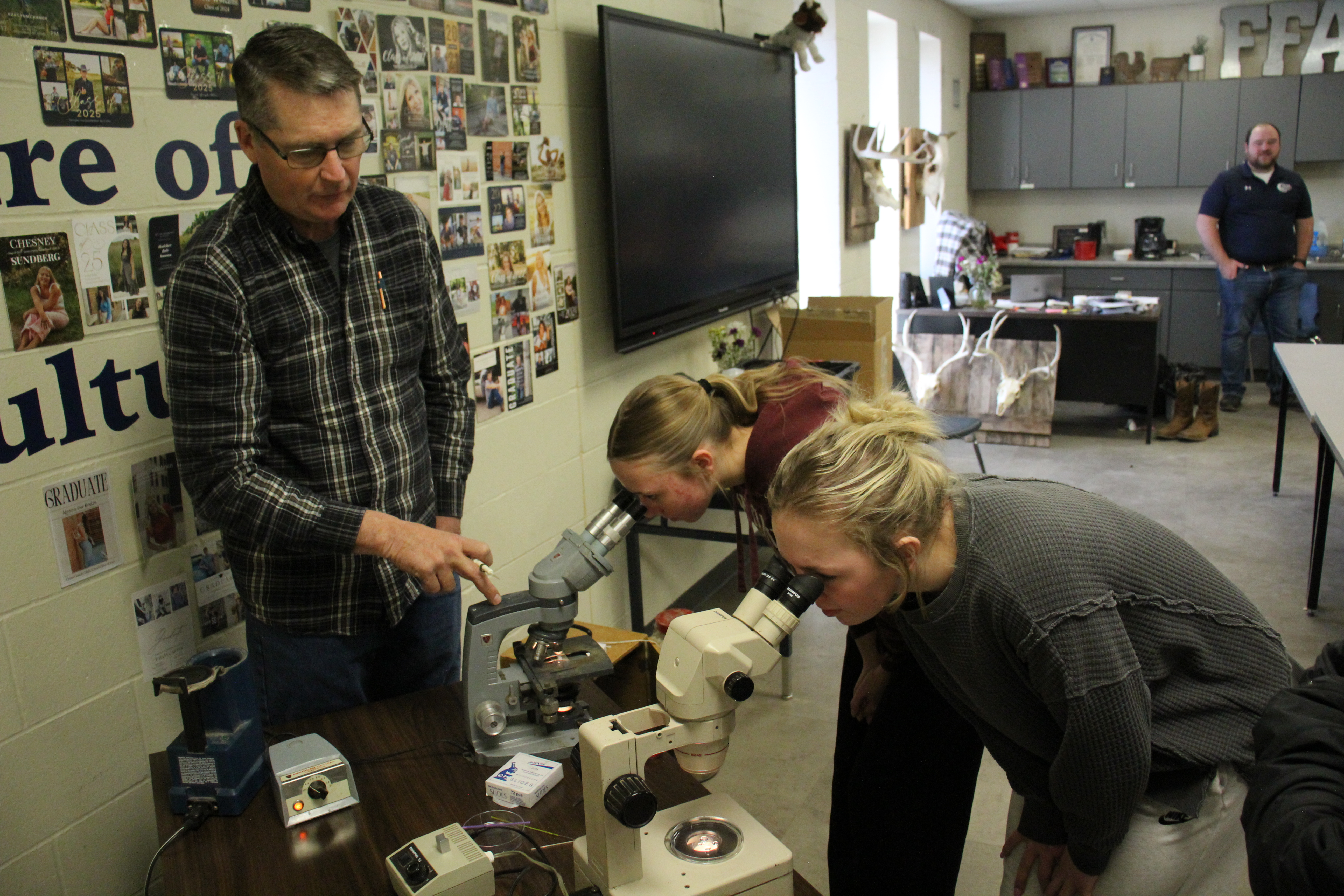
“We have staff who have to be a little flexible on days like today when the vet can come at this particular time and so kids are getting out of different classes so they're able to come participate,” Jarosz said. “Everyone's always very supportive.”
Administrators don’t just support these ventures. They show up to listen and learn alongside the students on days like this. The school board continues to prioritize career and technical student organizations.
“We never feel like what we’re doing is being judged or not good enough,” O’Brien said. “We have incredible support.”
That support is deeply appreciated, reflected in concrete, steel, and in cattle chewing cud as students prepare for an advanced reproductive procedure.
Just another Tuesday morning in Stromsburg.
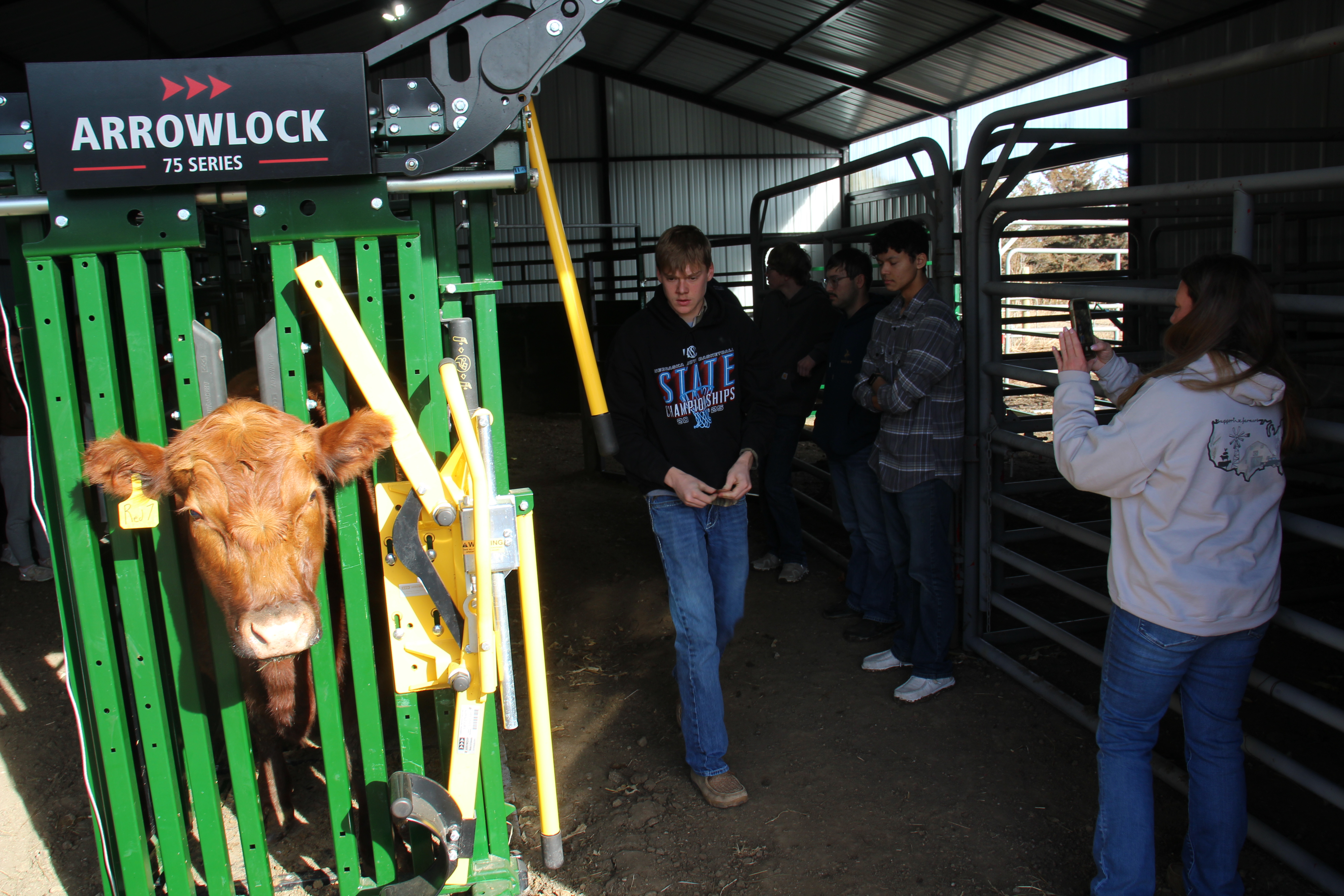
Outside, after Buhman’s classroom presentation, students gather along the fence line and near the chute system they helped construct. Some lean forward. Others whisper questions.
The cow stands secured. The process is precise and time-sensitive, the result of careful coordination days earlier. Students had inserted CIDRs, monitored cycles and prepared the animal for this exact window.
Now, they watched as science and agriculture intersect. For many, this is the first time they’ve seen embryo transfer performed live. For some, it may not be the last.
Buhman works efficiently, narrating along the way. He hopes a few details about timing, technique and opportunity stick. The students are laser focused, and ask good questions.
“Hopefully one or two of the kids will remember something I said,” he said later with a smile.
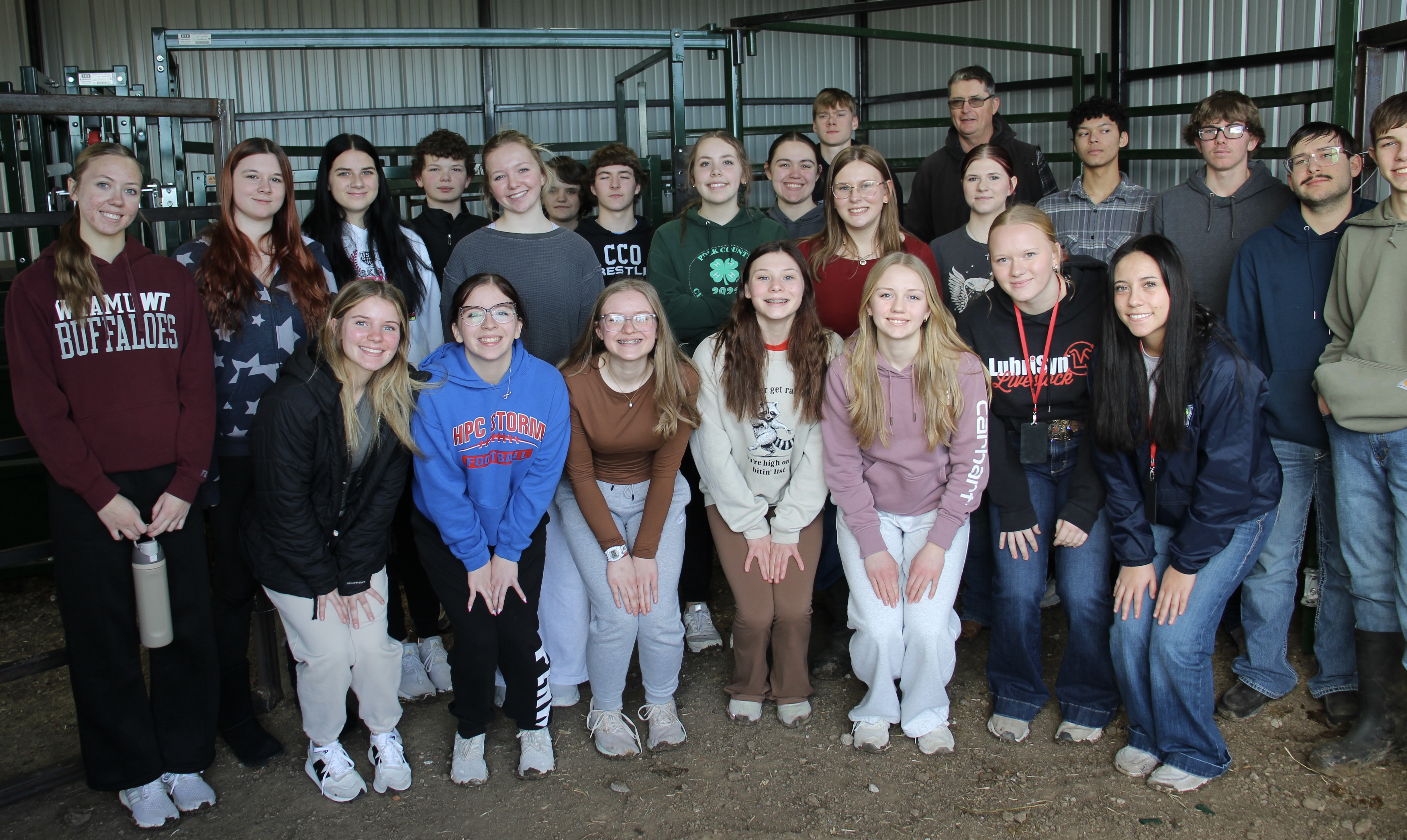
Buhman successfully plants the embryo, and the group gathers for a picture.
“I’ve told you everything I know in one hour,” Buhman jokes with the class, which eventually files back into the shop. It’s been a successful morning, and a core learning experience for a group of students who appreciate every opportunity afforded to them.
“We have great kids, and it’s really impressive how they’ve taken this thing as their own,” O’Brien said.
Legacy matters in a proud rural community like this, where agriculture is a whole lot more than curriculum. It’s culture, economy, identity, and this facility’s part of theirs.
That’s fun to think about, said Smith. Long after he and his classmates have gone off into the real world, students at Cross County will be in here enjoying days like this.
“It’s going to be kind of cool someday to look back and say, ‘I helped build that.’”